
IPS Battery

Best Lithium Battery for IPS in Bangladesh (2026): LiFePO₄ Price, Cycle Life & Buying Guide

Best Lithium Battery for IPS in Bangladesh (2026)

If you’re shopping for the best lithium battery for IPS in Bangladesh in 2026, you’ve already noticed something: the rules have changed. Prices range from 30,000৳ to over 380,000৳, dozens of “lithium” brands have flooded online stores, and traditional tubular battery brands like Rahimafrooz and Luminous now have to compete with imported LiFePO₄ systems that promise 25+ years of life.

So which one should you actually buy? This 2026 buying guide breaks down lithium battery prices in Bangladesh, explains why LiFePO₄ (Lithium Iron Phosphate) cycle life matters more than capacity, and gives you a clear shortlist of the best lithium IPS batteries you can buy this year — with a 10-year total-cost comparison that will probably surprise you. By the end, you’ll know exactly which battery fits your home, your inverter, and your budget.

Why Lithium Batteries Are Replacing Tubular IPS Batteries in Bangladesh

Bangladesh’s power grid is under serious strain. As of mid-2026, peak demand is hitting 17,000–18,500 MW while generation routinely falls 2,000–3,000 MW short. Rural areas in Khulna, Mymensingh, Sylhet, and Chattogram are reporting 6–10 hours of daily load shedding, and Dhaka residents are seeing 2–3 hours of outages even on “good” days.

That has made an IPS (Instant Power Supply) system non-negotiable for most homes and small businesses. But here’s what most people don’t realize: the battery you choose decides 90% of your IPS experience. The inverter is just a converter. The battery is everything.

For 25 years, that battery has been a tubular lead-acid unit from Rahimafrooz, Luminous, Hamko, or Volvo. They cost around 22,000৳–35,000৳, lasted 2–4 years if maintained, and required topping up with distilled water every few months.

In 2026, LiFePO₄ lithium batteries are quietly taking over because they offer:

  • 5× to 20× longer life (no exaggeration — we’ll show the math below)
  • No water topping, no acid leaks, no ventilation requirements
  • Deeper discharge (use 90–100% of capacity vs 50% on tubular)
  • 40–60% lighter weight
  • Faster charging during the short windows when grid power is back
  • Built-in Battery Management Systems (BMS) that protect against overcharge, deep discharge, short circuit, and temperature extremes

The catch? Lithium batteries cost 2–4× more upfront. That’s the real question this guide answers: is it worth it? (Spoiler: it depends on which lithium battery you buy.)

What Is a LiFePO₄ Battery? (And Why It’s Different from “Lithium-Ion”)

Not all lithium batteries are the same. When you hear “lithium battery,” it usually refers to one of these chemistries:

  • Li-ion (NMC, NCA) — Used in laptops, phones, and most EVs. High energy density, but more prone to thermal runaway.
  • Lithium Polymer (Li-Po) — Used in drones and slim devices. Lightweight but fragile.
  • LiFePO₄ (Lithium Iron Phosphate) — Used in solar storage, IPS systems, and home backup. Lower energy density, but dramatically safer and longer-lasting.

For an IPS battery in Bangladesh, LiFePO₄ is the only chemistry that makes sense. Here’s why:

  1. Thermal stability. LiFePO₄ cells don’t catch fire in Bangladesh’s 38–42°C summer heat. Standard Li-ion batteries can.
  2. Cycle life. LiFePO₄ delivers 3,000–11,000+ full charge cycles. Standard Li-ion typically dies after 500–1,000.
  3. Safer chemistry. Even if punctured, LiFePO₄ doesn’t release toxic fumes the way NMC cells can.
  4. Longer calendar life. A premium LiFePO₄ pack can last 20–30 years before significant capacity loss.

This is why every serious energy storage manufacturer — including HiTHIUM, Tesla Powerwall, BYD, and CATL — uses LiFePO₄ for home and commercial backup. Read more about HiTHIUM’s LiFePO₄ technology and global manufacturing.

Lithium Battery Price in Bangladesh (2026 Updated Pricing)

Lithium battery prices in Bangladesh in 2026 typically fall into these brackets:

Capacity Typical Price Range (BDT) Best For
1 kWh / 1,000Wh 40,000৳ – 60,000৳ Single room, lights + fans + WiFi
2 kWh / 2,000Wh 80,000৳ – 1,10,000৳ Small flat (lights, fans, TV, fridge)
4 kWh / 4,000Wh 80,000৳ – 1,30,000৳ Mid-size home, partial AC backup
8 kWh / 8,000Wh 2,80,000৳ – 3,50,000৳ Full home with AC, fridge, fans
16 kWh / 16,000Wh 3,50,000৳ – 4,50,000৳ Large home / small commercial

Why prices vary so much:

  • Cell grade — Grade-A cells (used by HiTHIUM) cost 30–40% more than Grade-B/C cells flooding the grey market.
  • BMS quality — A proper BMS adds 5,000৳–15,000৳ to manufacturing cost.
  • Cycle life rating — A 3,000-cycle battery is much cheaper to make than an 11,000-cycle battery.
  • Certifications — UL 1973, IEC 62619, UN 38.3 testing adds genuine cost (and authenticity).
  • Warranty — 5-year warranties require real provisions; 1-year warranties don’t.

If you see a “100Ah lithium battery” advertised for 18,000৳ on social media, walk away. That’s almost always a Grade-C cell with a fake BMS, no certifications, and no warranty support after the seller disappears in six months.

You can browse all authentic, certified HiTHIUM lithium battery options on the official shop page.

Cycle Life Explained: Why 11,000 Cycles Changes Everything

This is the single most important spec on a lithium battery — and the one most buyers ignore.

A cycle = one full charge + one full discharge. So if you charge your battery during the day and discharge it during evening load shedding, that’s roughly one cycle per day.

Here’s how different battery types stack up:

Battery Type Typical Cycle Life Years (1 cycle/day)
Tubular Lead-Acid (Rahimafrooz, Luminous, Hamko) 500–1,000 1.5–3 years
Sealed Lead-Acid (SLA/AGM) 300–500 <2 years
Standard Li-ion (NMC) 1,000–2,000 3–5 years
Generic LiFePO₄ (Grade B/C cells) 2,000–3,500 6–10 years
Premium LiFePO₄ (HiTHIUM Grade-A cells) 11,000+ 25–30 years

Read that last row again.

A HiTHIUM HeroEE battery, used once per day, will outlast your house’s wiring. Even if you cycle it twice a day during peak summer load shedding, you’ll get 15+ years of useful life — at which point you’ll probably want a newer model anyway.

This is the math that makes lithium batteries the cheaper option in the long run, even at higher upfront prices. We’ll prove it below.

Top 6 Best Lithium Batteries for IPS in Bangladesh (2026)

After comparing capacity, cycle life, BMS quality, certifications, warranty terms, and after-sales availability in Bangladesh, here are the strongest LiFePO₄ options on the market right now — all from HiTHIUM, the global energy storage manufacturer with a 10 GWh facility in Texas and over 1,100 engineers worldwide.

1. HiTHIUM HeroEE Light 1 — Best Entry-Level Lithium Battery for IPS

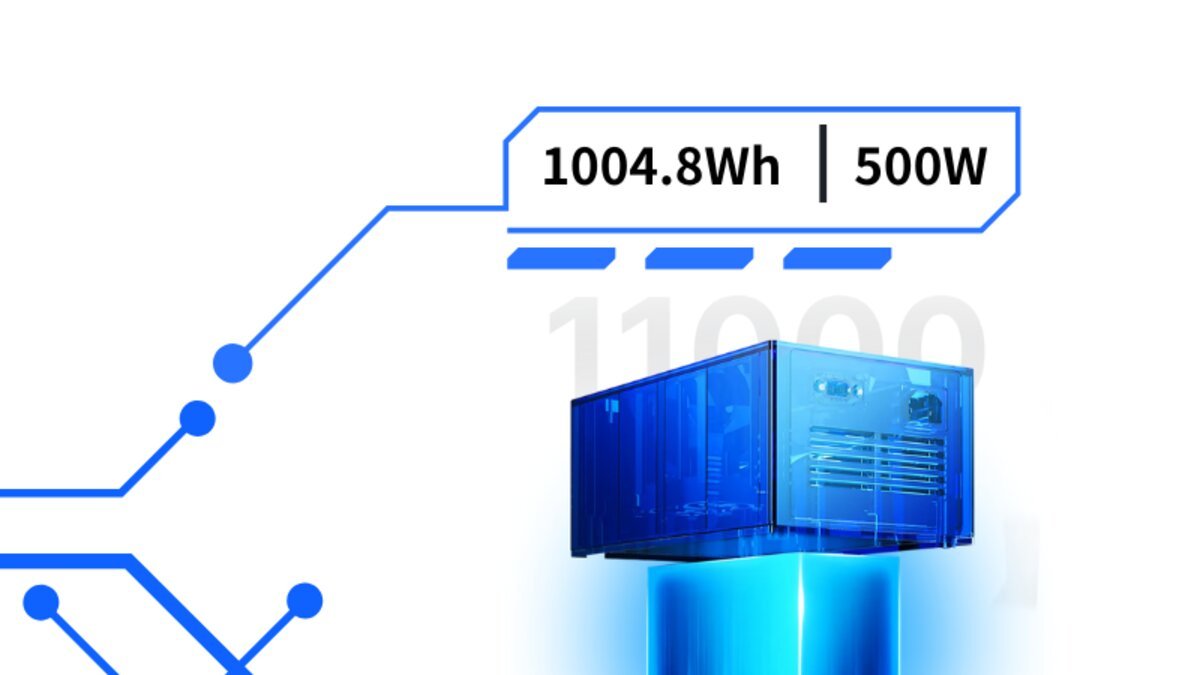
  • Capacity: 1,004.8 Wh (1 kWh)
  • Output: 500W
  • Price: 57,800৳
  • Cycle life: 11,000+ cycles
  • Best for: Small flats, single-room backup, freelancers, students

If your monthly electricity bill is below 2,000৳ and you mainly need to keep lights, fans, a router, and a TV running through a 2–3 hour outage, this is the cheapest authentic LiFePO₄ option in Bangladesh that won’t disappoint you. It’s plug-and-play — no inverter shopping required.

See full HeroEE Light 1 specs and price →

2. HiTHIUM HeroEE 1 — Best Portable Power Station for Home + Travel

  • Capacity: 1 kWh
  • Price: 42,800৳
  • Cycle life: 11,000+ cycles
  • Best for: Backup + outdoor use, professionals working from home

Lighter and more portable than the Light 1, the HeroEE 1 is the right pick if you also want to take your battery to the village, a Cox’s Bazar weekend, or a Sundarbans trip. Pair it with the HiTHIUM HC200 200W foldable solar panel for true off-grid capability.

See full HeroEE 1 specs and price →

3. HiTHIUM HeroEE 2 — Best Mid-Range Lithium IPS for a Bangladeshi Family

  • Capacity: 2 kWh
  • Output: 1000W
  • Price: 88,600৳
  • Cycle life: 11,000+ cycles (314Ah Grade-A cells)
  • Best for: 2–3 bedroom flats, families running fridge + fans + lights + TV

This is HiTHIUM’s most popular model in Bangladesh, and it’s not hard to see why. At 88,600৳, it costs about 4× a tubular battery — but it will outlast 8–10 tubular replacements. For most Dhaka families, this is the sweet-spot recommendation.

See full HeroEE 2 specs and price →

4. HiTHIUM HeroEE L12314ES — Best Modular Lithium Battery for Custom IPS Setups

  • Capacity: 4,019 Wh (12.8V, 314Ah)
  • Price: 84,600৳
  • Cycle life: 11,000+ cycles
  • Best for: Replacing existing tubular battery banks, solar setups, custom inverter pairing

If you already own a hybrid inverter (Luminous, Sukam, MUST, Growatt) and just want to swap out your tubular battery bank for lithium, this is the model. You can connect multiple units in parallel to scale up to 8 kWh, 12 kWh, or more — at a much lower per-kWh cost than buying a single large unit.

See full HeroEE L12314ES specs →

5. HiTHIUM HeroEE MaxPower 8 AIO — Best All-in-One Solar + Battery System

  • Capacity: 8 kWh battery
  • Output: 5 kW continuous, 9 kW MPPT solar input
  • Price: 3,22,150৳
  • Best for: Whole-home backup, solar-ready households, net-metering candidates

The MaxPower 8 AIO bundles the lithium battery, hybrid inverter, MPPT solar charge controller, and BMS into one wall-mounted unit. If you’re planning to install rooftop solar at any point in the next 5 years, buying this now is much smarter than buying a battery + inverter separately.

See full MaxPower 8 AIO specs →

6. HiTHIUM HeroEE 16 — Best Whole-House Lithium IPS for Large Homes

  • Capacity: 16 kWh
  • Price: 3,80,300৳
  • Cycle life: 11,000+ cycles
  • Best for: 4+ bedroom homes, AC + fridge + full lighting through long outages

If you want to run 1.5-ton AC through a 6-hour outage, or you live in a rural area with daily 8+ hour load shedding, the HeroEE 16 is the only lithium battery in Bangladesh built to handle that kind of load without breaking a sweat.

See full HeroEE 16 specs →

How to Choose the Right Lithium Battery for Your IPS

Don’t just pick by price. Use this 5-step framework:

Step 1 — Calculate your actual load. List every appliance you want to run during a power cut. Multiply each by its wattage. The free HiTHIUM Watt Calculator does this for you with Bangladeshi appliance models pre-loaded (Walton, Miyako, Vision, Konka — all of them).

Step 2 — Decide your backup duration. A 1-hour outage in Dhaka is very different from a 6-hour outage in rural Khulna. Multiply your total load (in watts) by your target backup hours (in hours) to get watt-hours (Wh) needed. Add 20% buffer for inefficiency.

Step 3 — Match the voltage. Most home inverters run on 12V or 24V. Larger systems run on 48V. The HeroEE L12314ES is 12.8V (perfect for typical Bangladesh inverters), while the MaxPower 8 AIO is a 48V system.

Step 4 — Check inverter compatibility. LiFePO₄ batteries have different charging profiles than tubular batteries. If your existing inverter is a basic UPS-style unit without lithium support, you may need to upgrade to a hybrid inverter — or just buy an all-in-one unit like the MaxPower 8 AIO.

Step 5 — Verify warranty and after-sales support. HiTHIUM Bangladesh provides up to 5-year warranty on energy storage batteries with a dedicated after-sales service center in Tejgaon, Dhaka. Avoid sellers who ship from abroad with no local support.

Lithium vs Tubular Battery: 10-Year Cost Comparison

Here’s the math that makes the LiFePO₄ decision obvious. Let’s compare a HiTHIUM HeroEE L12314ES (4 kWh LiFePO₄) against a typical 200Ah tubular battery setup.

Cost Item Tubular Battery (Rahimafrooz/Luminous 200Ah) HiTHIUM HeroEE L12314ES
Initial purchase 28,000৳ 84,600৳
Replacements over 10 years 3 (every 2.5 years) 0
Total replacement cost 84,000৳ 0৳
Distilled water + maintenance (10 yrs) 6,000৳ 0৳
Inefficiency loss (50% DoD vs 95% DoD) ~22,000৳ extra grid charging Minimal
10-year total cost ~1,40,000৳ 84,600৳
Useful life remaining after 10 years 0 years 15+ years

The tubular setup costs 65% more over 10 years — and at the end, you have nothing. The lithium setup leaves you with at least another decade of reliable backup.

This isn’t theory. It’s what hundreds of HiTHIUM Bangladesh customers are already experiencing. Read more about why HiTHIUM systems deliver ROI in just 2.5 years.

5 Common Mistakes When Buying a Lithium Battery in Bangladesh

Mistake 1: Buying grey-market imports from Facebook Marketplace. Cheap “lithium” batteries with no brand name, no UN 38.3 certification, and no local warranty are almost always Grade-C cells that will fail within 2 years. You will not find the seller again.

Mistake 2: Ignoring the BMS. A Battery Management System protects against overcharge, over-discharge, short-circuit, and temperature extremes. Cheap batteries either skip the BMS or use a single-MOSFET cheap version that fails first. HiTHIUM batteries use multi-stage smart BMS as standard.

Mistake 3: Choosing the wrong voltage. A 48V battery on a 12V inverter won’t just fail to work — it can damage your equipment. Always confirm your inverter’s voltage before buying.

Mistake 4: Skipping certifications. Authentic LiFePO₄ batteries should carry UL 1973, IEC 62619, and UN 38.3 certifications at minimum. Without UN 38.3, the battery technically can’t even be legally air-shipped — which tells you something about its safety.

Mistake 5: Trusting marketing “cycle life” claims with no warranty backing. If a seller claims “8,000 cycle life” but only offers a 1-year warranty, the math doesn’t add up. Real cycle-life claims come with multi-year warranties. HiTHIUM batteries are backed by up to 5-year warranties from the local Bangladesh entity.

Where to Buy Authentic Lithium Batteries in Bangladesh

To make sure you’re getting a genuine LiFePO₄ battery with full warranty support:

  1. Buy directly from HiTHIUM Bangladesh at hithiumbd.com/shop for guaranteed authentic Grade-A cells with full warranty.
  2. Buy from authorized HiTHIUM dealers. If you’re in retail and want to become an authorized partner, apply to become a HiTHIUM Bangladesh dealer here.
  3. Register your product at the HiTHIUM Customer Registration Form within 30 days of purchase to activate warranty.
  4. Verify the serial number with the HiTHIUM Bangladesh after-sales team if you have any doubt about authenticity.

The head office is at 6th Floor, House #320, Road #21, Mohakhali DOHS, Dhaka, with a separate after-sales service center in Shahinbag, Tejgaon. You can get in touch via the contact page for any pre-purchase questions.

Frequently Asked Questions

Q1: What is the price of a 1kWh lithium battery in Bangladesh in 2026?

Ans: A genuine 1 kWh LiFePO₄ battery in Bangladesh costs between 42,800৳ and 60,000৳ depending on cell grade, BMS quality, and warranty. The HiTHIUM HeroEE 1 is the most affordable certified option at 42,800৳.

Q2: How long does a lithium battery last for IPS use in Bangladesh?

Ans: A premium LiFePO₄ battery rated for 11,000+ cycles will last 25–30 years if cycled once daily. Even with twice-daily cycling during peak load-shedding seasons, you should expect 12–15 years of reliable performance.

Q3: Can I replace my tubular battery with a lithium battery using my existing inverter?

Ans: Sometimes yes, sometimes no. Basic UPS inverters often don’t support lithium charging profiles. Modern hybrid inverters (Luminous Cruze, Sukam Falcon, MUST, Growatt) usually do. The safest path is an all-in-one unit like the HiTHIUM MaxPower 8 AIO, which integrates everything.

Q4: Are LiFePO₄ batteries safe in Bangladesh’s hot weather?

Ans: Yes — LiFePO₄ is the most thermally stable lithium chemistry available. HiTHIUM cells are tested to UL 9540A standards and operate safely in temperatures up to 55°C, which exceeds Bangladesh’s worst summer conditions.

Q5: What’s the warranty on HiTHIUM lithium batteries in Bangladesh?

Ans: HiTHIUM Bangladesh provides up to 5-year warranty on energy storage batteries and 2–5 years on hybrid/off-grid inverters, depending on the model. Full warranty terms are detailed in the HiTHIUM Bangladesh Terms & Conditions page.

Q6: Can I use a HiTHIUM lithium battery with solar panels?

Ans: Yes — all HiTHIUM HeroEE batteries support both grid charging and solar charging. The MaxPower 8 AIO supports up to 9 kW of solar input. Pair smaller HeroEE units with the HiTHIUM HC200 200W foldable solar panel for portable off-grid use.

Q7: How do I size a lithium battery for my home?

Ans: Use the free HiTHIUM Watt Calculator, which lets you select your actual appliances (including local Bangladeshi brands like Walton, Miyako, Vision) and calculates exact battery capacity needed.

Final Recommendation: Which Lithium Battery Should You Buy?

For most Bangladeshi households, here’s the simple decision tree:

The bottom line: a lithium battery isn’t a 2-year purchase like tubular. It’s a 25-year decision. Buy a Grade-A cell from a manufacturer with a real local presence, real certifications, real warranty, and a real service team — and you’ll never have to think about your IPS battery again. Ready to upgrade? Browse the full HiTHIUM Bangladesh shop or contact the HiTHIUM Bangladesh team for a free home consultation and quote.


Leave a Reply

Your email address will not be published. Required fields are marked *