




Blog
Lithium IPS for Cold Storage and Deep Freezer in Bangladesh 2026

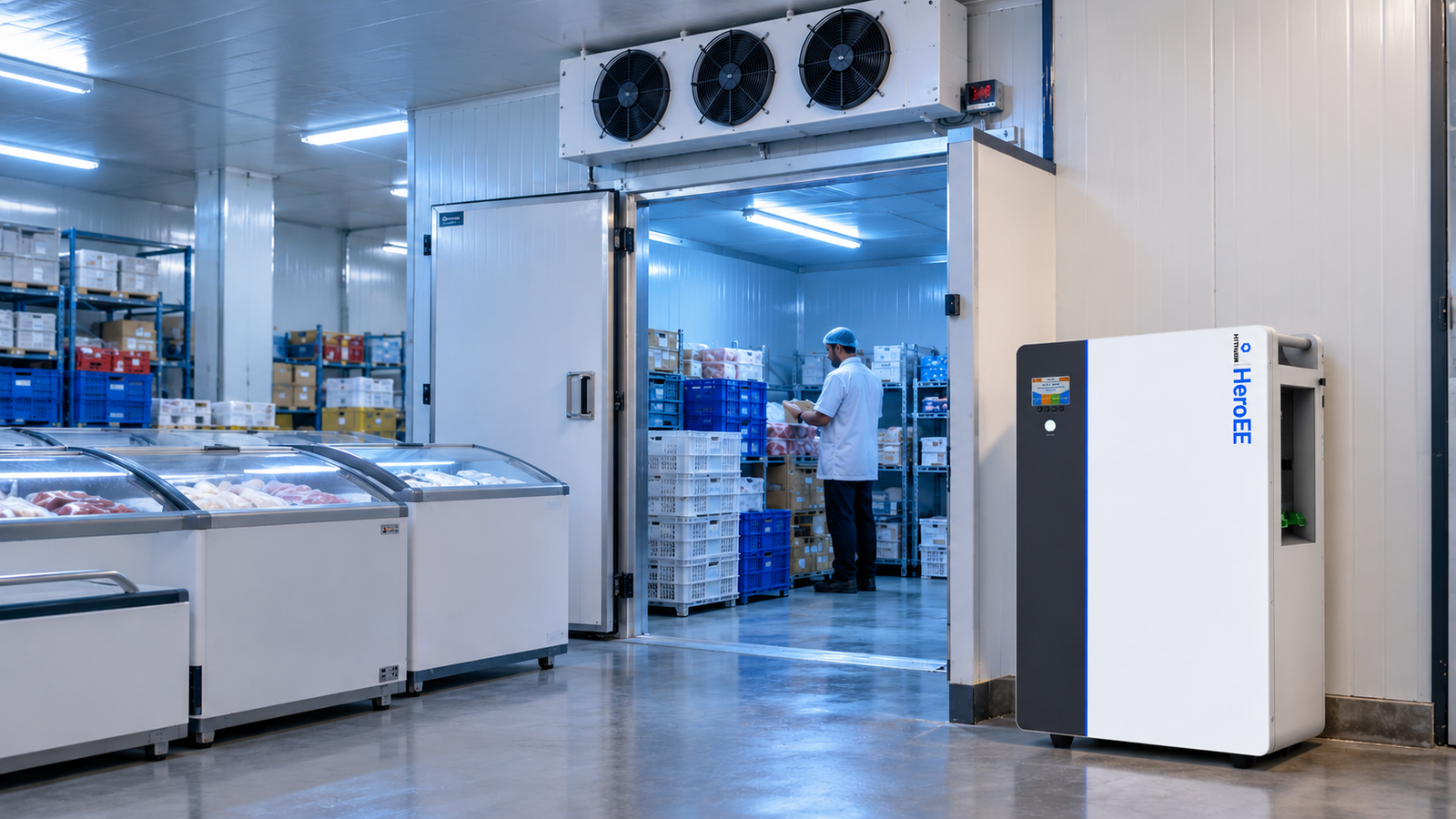
Lithium IPS for Cold Storage and Deep Freezer in Bangladesh — 2026 Complete Guide
Running a cold storage facility or commercial deep freezer business in Bangladesh without reliable backup power is a recipe for disaster. Every hour of power failure during load-shedding puts thousands of taka worth of perishable goods at risk. Fish, ice cream, meat, pharmaceuticals — none of these can survive a few hours without cooling.
A lithium IPS (Inverter Power System) built with LiFePO4 batteries is the most reliable, cost-effective solution for cold storage backup power in Bangladesh. Unlike diesel generators, a lithium IPS switches instantly, runs silently, and costs 60% less to operate over its lifetime.
Why Cold Storage Operations Need Reliable Backup Power in Bangladesh
Bangladesh experiences 6–8 hours of load-shedding daily during peak summer months (April–September). For businesses that depend on continuous cooling, even a 30-minute power gap can cause:
- Ice cream and frozen food: Partial thawing and refreezing ruins texture and safety — entire batches become unsellable
- Fish and seafood: Temperature above -18°C accelerates spoilage; a single incident can mean ৳50,000–৳500,000 in losses
- Pharmaceutical cold chain: Vaccines and medicines stored between 2–8°C become ineffective if temperature excursions occur
- Dairy products: Milk, yogurt, and cheese require consistent 2–4°C; even brief warming accelerates bacterial growth
- Ice cream parlors: Display freezers at -18°C to -22°C need constant power; customer-facing businesses lose revenue and reputation during outages
A diesel generator seems like the obvious answer, but generators have significant limitations: they take 10–30 seconds to start (meaning your compressors shut down and restart under load), they produce harmful fumes (bad for food safety compliance), they require constant fuel purchases (diesel costs ৳110–125 per liter in 2026), and they need regular oil/filter maintenance every 250 hours of operation.
A lithium IPS solves all these problems: instant switchover (0 milliseconds on UPS models), zero emissions, silent operation, and minimal maintenance over a 20+ year battery lifespan.
How Much Backup Power Do You Need for Cold Storage?
The first step is calculating your actual power consumption. Here are typical load profiles for common cold storage setups in Bangladesh:
| Equipment | Typical Wattage | Daily Runtime | Energy (kWh/day) |
|---|---|---|---|
| Deep Freezer (300L–500L) | 150–250W | 18–24 hours | 3.5–6.0 |
| Cold Room (10×10 ft) | 800–1,500W | 18–24 hours | 14.4–36.0 |
| Display Freezer (Glass Door) | 200–350W | 24 hours | 4.8–8.4 |
| Ice Cream Showcase | 300–500W | 24 hours | 7.2–12.0 |
| Walk-in Cooler (15×15 ft) | 1,200–2,000W | 18–24 hours | 21.6–48.0 |
| Water Chiller (Commercial) | 500–1,000W | 12–16 hours | 6.0–16.0 |
Example calculation: A fish dealer in Chittagong with 2 deep freezers (250W each) and 1 display freezer (300W) needs 800W continuous load. For 8 hours of load-shedding backup, that’s 800W × 8h = 6.4 kWh. A single HiTHIUM HeroEE 16 (16 kWh) running at 90% depth of discharge provides 14.4 kWh — enough for 18 hours of backup with margin to spare.
Best Lithium IPS Solutions for Cold Storage in Bangladesh
For cold storage operations, you need a system with high continuous output, large battery capacity, and the ability to handle compressor startup surges (compressors draw 3–5× their running wattage for 1–2 seconds when they kick in).
Option 1: HiTHIUM HeroEE 16 — 16kWh Battery Pack (Best for Large Cold Rooms)
The
| Specification | HiTHIUM HeroEE 16 |
|---|---|
| Battery Chemistry | LiFePO4 (Lithium Iron Phosphate) |
| Capacity | 16 kWh |
| Cycle Life | 11,000+ cycles (at 25°C) |
| Rated Voltage | 51.2V DC |
| Max Charge/Discharge Current | 200A |
| Depth of Discharge | 90% |
| Scalability | Up to 16 units in parallel = 256 kWh |
| Compatible Inverters | Victron, Deye, GoodWe, Growatt, Voltronic, SMA, TBB, MUST |
| Built-in Communication | CAN/RS485/RS232, WiFi/Bluetooth (optional) |
| Display | LCD Touchscreen |
| Operating Temp | Charge: 0°C–40°C / Discharge: -20°C–40°C |
| Protection | Over-temp, under-voltage, over-voltage, over-current, short-circuit, reverse connection |
| Dimensions | 540.6 × 240 × 781.2 mm |
| Weight | 110 kg (with wheels) |
| Certification | UN38.3, MSDS, IEC62619 |
Why this is ideal for cold storage: The 200A maximum discharge current handles compressor startup surges easily. The 11,000-cycle lifespan means 20–25 years of daily use — far exceeding the 2–3 year replacement cycle of lead-acid batteries. The scalability option (up to 256 kWh) means you can start with one unit and expand as your cold storage business grows.
Option 2: HiTHIUM MaxPower 8 AIO — 8kWh All-in-One Solar IPS (Best for Small Shops)
For smaller operations — ice cream parlors, small fish shops, or pharmacies with 1–2 freezers — the HiTHIUM MaxPower 8 AIO is an all-in-one unit with built-in 5kW inverter and 9kW MPPT solar charging.
| Specification | HiTHIUM MaxPower 8 AIO |
|---|---|
| Battery Type | LiFePO4 |
| Capacity | 314Ah / 8,038 Wh (~8 kWh) |
| Cycle Life | 11,000+ cycles |
| Nominal Voltage | 25.6V |
| Inverter Output | 5,000W / 5,000VA |
| Output Voltage | 208/220/230/240V options |
| Max PV Input | 9,000W |
| MPPT Efficiency | 99.5% |
| Inverter Efficiency | 93.5% |
| Dimensions | 500 × 230 × 757 mm |
| Weight | 75 kg |
Solar advantage: With 9kW MPPT solar input, you can charge the battery during daytime while it powers your freezers. In Bangladesh, where 5–6 peak sun hours are available daily, even 4–5 solar panels (550W each) can significantly reduce grid electricity costs while keeping your cold storage running at night.
Lithium IPS vs Diesel Generator for Cold Storage
| Factor | Lithium IPS | Diesel Generator |
|---|---|---|
| Switchover Time | 0 ms (instant on UPS models) | 10–30 seconds (compressors restart) |
| Fuel/Operating Cost | ৳0 (grid + solar charging) | ৳800–2,000/day (4–8 hrs diesel) |
| Annual Maintenance | ৳0–5,000 (visual inspection) | ৳15,000–30,000 (oil, filters, belts) |
| Lifespan | 15–25 years (11,000 cycles) | 8–12 years (with maintenance) |
| Noise Level | Silent (0 dB from battery) | 70–95 dB (requires soundproofing) |
| Emissions | Zero | CO, NOx, particulates (food safety risk) |
| Space Required | Indoor, compact (one unit) | Outdoor shed, ventilation required |
| Fuel Availability | Grid electricity (always available) | Diesel supply chain disruptions |
| 5-Year Total Cost | ৳2.5–5L (one-time investment) | ৳5–8L (fuel + maintenance) |
The instant switchover is the most critical factor for cold storage. When a diesel generator takes 15 seconds to start, your freezer compressor shuts down, the refrigerant pressure equalizes, and when power returns, the compressor restarts under full load — a surge that stresses the compressor motor and can trip the generator’s circuit breaker. A lithium IPS with UPS functionality avoids this entirely.
How to Set Up a Lithium IPS for Your Cold Storage Business
Step 1: Calculate Your Total Load
Add up the wattage of all refrigeration equipment that needs backup. Include compressor startup surge — multiply each compressor’s running wattage by 3 for the startup wattage. Example: a 250W deep freezer has a startup surge of ~750W for 1–2 seconds.
Step 2: Determine Required Backup Hours
Most Bangladesh cold storage businesses need 6–10 hours of backup during evening load-shedding (6 PM–midnight is peak outages in most districts). Multiply total load (in kW) by backup hours to get required kWh capacity.
Step 3: Choose Your System
Small shop (1–2 freezers, 300–800W load): HiTHIUM MaxPower 8 AIO (8 kWh) — self-contained, plug-and-play, add solar panels for daytime savings.
Medium business (3–5 freezers, 1–2kW load): HiTHIUM HeroEE 16 (16 kWh) paired with a 5–8kW inverter (Deye or GoodWe recommended) — handles startup surges with room to grow.
Large cold room (10+ kW load): Multiple HeroEE 16 units in parallel (up to 16 units for 240 kWh) — contact HiTHIUM Bangladesh for a custom cold room IPS solution.
Step 4: Install with Proper Wiring
Cold storage IPS installations require thicker cables due to high continuous current. For a 16 kWh system at 51.2V drawing 200A, you need 70mm² copper cables for the DC side. Hire a certified electrician — incorrect wiring is the #1 cause of IPS failures in commercial installations.
Step 5: Monitor and Maintain
Connect to WiFi monitoring (available on HeroEE 16) to track battery state of charge, power consumption, and system health from your phone. LiFePO4 batteries need virtually no maintenance — just keep the terminals clean and check connections every 6 months.
Real Cost Analysis: 3-Year TCO for a Fish Dealer in Dhaka
Let’s compare the real-world total cost of ownership for a typical small fish dealer running 2 deep freezers and 1 display freezer (800W continuous load, 8 hours daily backup):
| Cost Component | Lithium IPS (16 kWh) | Diesel Generator (3.5 kVA) |
|---|---|---|
| Initial Purchase | ৳3,50,000–5,00,000 | ৳1,20,000–1,80,000 |
| Year 1 Fuel/Ops | ৳0 (grid only) | ৳2,88,000 (৳800/day × 360 days) |
| Year 2 Fuel/Ops | ৳0 | ৳2,88,000 |
| Year 3 Fuel/Ops | ৳0 | ৳2,88,000 |
| 3-Year Maintenance | ৳10,000 | ৳75,000 |
| 3-Year Total | ৳3,60,000–5,10,000 | ৳9,71,000–10,31,000 |
| Savings with Lithium | ৳4,61,000–6,71,000 over 3 years | |
The lithium IPS pays for itself within 12–15 months compared to diesel. After that, every month of operation is pure savings. And the battery still has 10,000+ cycles remaining — another 15+ years of service.
Common Mistakes When Buying IPS for Cold Storage
| # | Mistake | Why It’s a Problem | What to Do Instead |
|---|---|---|---|
| 1 | Buying a UPS-sized IPS for commercial freezers | Home IPS units (1–3 kVA) can’t handle compressor surges | Size for 3× the running load to handle startup current |
| 2 | Using lead-acid batteries | 300–500 cycles at best, 2–3 year replacement, and deep discharge destroys them quickly | Choose LiFePO4 with 11,000+ cycle rating |
| 3 | Ignoring ambient temperature | Cold rooms can be 0–5°C ambient; batteries near freezers may be too cold to charge | Install battery in a separate, ventilated room at 10–30°C |
| 4 | Not planning for load growth | Adding more freezers without upgrading IPS leads to overloads | Choose scalable systems (HeroEE 16 supports up to 16 units in parallel) |
| 5 | Skipping the surge calculation | Compressor startup draws 3–5× running wattage; undersized IPS trips on overload | Multiply each compressor’s wattage by 4 for startup surge budget |
Frequently Asked Questions
How long can a lithium IPS keep a deep freezer running during load-shedding?
A 16 kWh lithium IPS (like the HiTHIUM HeroEE 16) running a single 250W deep freezer can provide approximately 57 hours of backup at 90% depth of discharge. For a setup with 3 freezers totaling 800W, expect 18 hours of backup — more than enough for overnight load-shedding in Bangladesh.
Can I use solar panels to charge my lithium IPS during the day?
Yes. The HiTHIUM MaxPower 8 AIO supports up to 9 kW of solar panel input with 99.5% MPPT efficiency. For the HeroEE 16, pair it with a compatible MPPT charge controller and solar panels. In Bangladesh, 5–6 peak sun hours daily means even 4–5 solar panels (550W each) can charge the battery during daytime while it powers your freezers at night.
Will a lithium IPS damage my freezer compressor?
No — a pure sine wave lithium IPS provides cleaner power than the grid itself. The instant switchover (0 ms on UPS models) actually protects your compressor because it never experiences the voltage dip and surge that happens with generator startup. Compressors last longer when connected to a quality lithium IPS with voltage regulation.
How much does a lithium IPS cost for a small ice cream shop in Bangladesh?
For a small ice cream shop running 2 display freezers (600–800W total), a HiTHIUM MaxPower 8 AIO (8 kWh, all-in-one with inverter) provides 10–12 hours of backup. The total system cost including installation is ৳2,00,000–3,50,000 — it pays for itself within 12–15 months compared to daily diesel costs of ৳800–1,200.
What is the difference between a lithium IPS and a regular IPS for cold storage?
A regular IPS uses lead-acid batteries (tubular or SMF) that last 300–500 cycles and require frequent replacement every 2–3 years. A lithium IPS uses LiFePO4 batteries with 11,000+ cycle life (20–25 years), deeper depth of discharge (90% vs 50%), faster charging, and lower weight. For cold storage, the deeper discharge and longer life make lithium dramatically more cost-effective over time.
Can I scale up my lithium IPS later if I add more freezers?
Yes. The HiTHIUM HeroEE 16 supports up to 16 units in parallel, scaling from 16 kWh to 256 kWh total capacity. Start with one unit and add more as your business grows. The built-in CAN/RS485 communication ports ensure all units work together seamlessly.
Protect Your Business with Reliable Cold Storage Power
Every hour of power failure costs your cold storage business money in spoiled goods, lost customers, and damaged reputation. A lithium IPS from HiTHIUM Bangladesh gives you instant, silent, emission-free backup power that pays for itself within the first year.
Whether you run a small fish shop in Chittagong, an ice cream parlor in Dhaka, or a pharmaceutical cold chain across multiple districts, there’s a HiTHIUM solution sized for your needs.
Ready to protect your cold storage business? Contact HiTHIUM Bangladesh for a free load calculation and IPS recommendation. Browse the full product range or visit the About page to learn more about our lithium IPS solutions.
For related guides, read our complete IPS backup time calculator and our detailed best lithium IPS in Bangladesh comparison guide.
- Lithium IPS vs Tubular Battery — Which System Saves More Money in Bangladesh?
- Best Lithium IPS in Bangladesh 2026 | Top 5 Picks Compared
- What Can a Lithium IPS Run During Load Shedding? Real Backup Times for a Banglad
- Lithium IPS vs Generator in Bangladesh — Which Is Better?
- 🛒 Buy HiTHIUM HeroEE — Official Bangladesh Store
