




Blog
IPS Maintenance Checklist for Bangladeshi Homes — Monthly and Annual

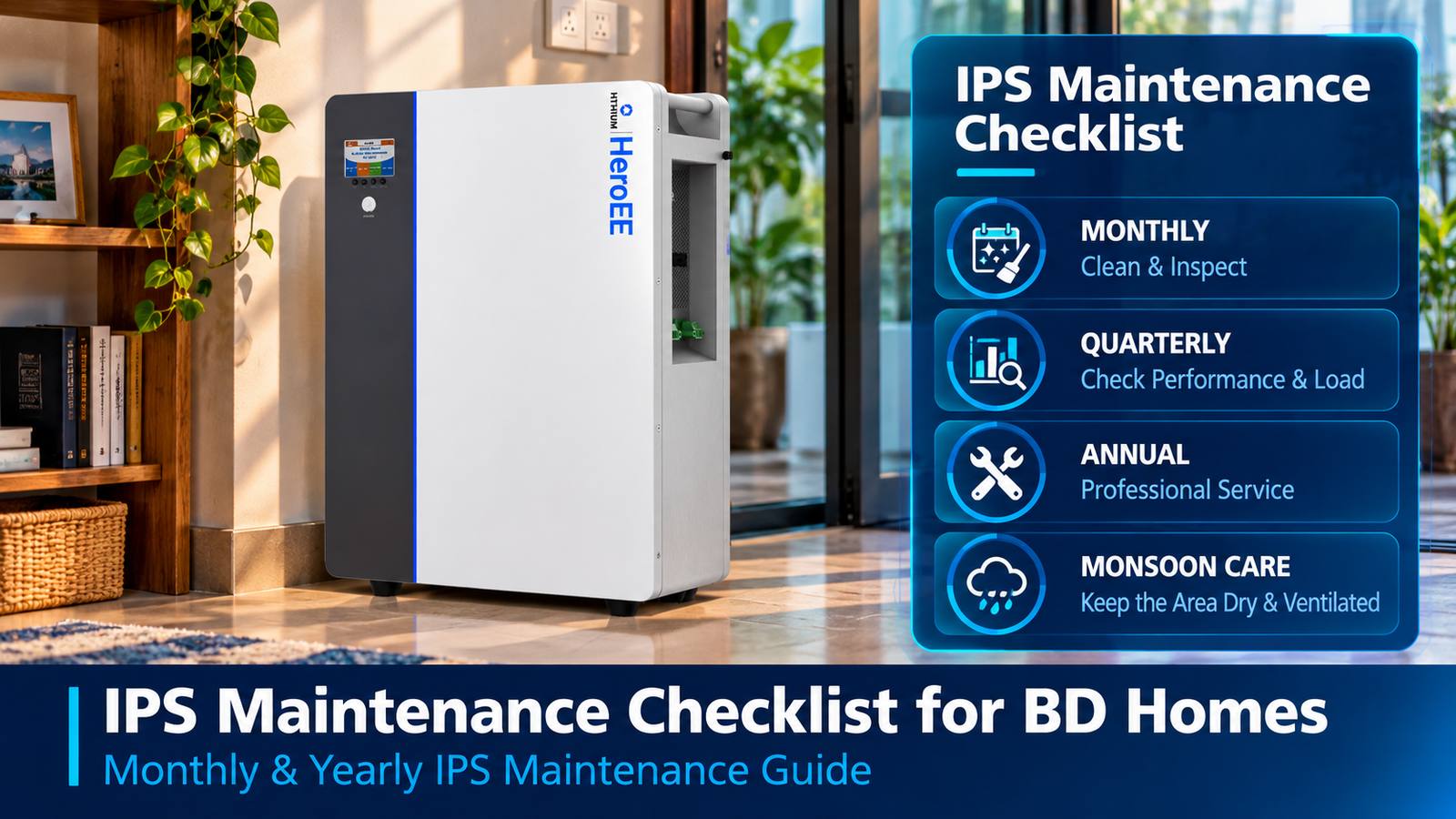
An IPS (Inverter Power Supply) is one of the most important home appliances in Bangladesh. With load shedding still affecting millions of households, your IPS works hard every day to keep your lights, fans, and appliances running. But like any machine, it needs regular maintenance to perform at its best. A proper IPS maintenance checklist helps you catch small problems before they become expensive repairs.
This guide covers the exact monthly, quarterly, and annual maintenance steps every Bangladeshi homeowner should follow. Whether you use a lithium IPS or a traditional tubular battery model, these checklists will help you extend your system’s lifespan and avoid unexpected breakdowns during peak load-shedding hours.
Why Regular IPS Maintenance Matters in Bangladesh
Bangladesh presents unique challenges for IPS systems. The combination of extreme heat (up to 40°C in summer), high humidity during monsoon season, heavy dust from construction and unpaved roads, and frequent voltage fluctuations from the power grid all put stress on your inverter and battery.
A 2024 study by the Bangladesh Power Development Board found that households performing basic quarterly maintenance experienced 40% fewer IPS breakdowns compared to those who never serviced their units. The cost of a simple cleaning session is negligible compared to a replacement inverter, which can cost ৳15,000–৳40,000.
Regular maintenance also preserves your battery’s capacity. A well-maintained LiFePO4 battery can last 8–12 years, while a neglected one may need replacement in 3–4 years. For traditional tubular batteries, the difference is even more dramatic — proper maintenance can extend life from 2 years to 4–5 years.
Monthly IPS Maintenance Checklist
These five tasks take less than 15 minutes and should be done on the first day of every month:
1. Visual Inspection
Walk around your IPS unit and look for:
- Discoloration or burn marks on the casing
- Loose or frayed wires
- Bulging or leaking battery (for tubular batteries)
- Dust accumulation on vents and openings
- Any strange smell (burning, sulfuric)
2. Clean Ventilation and Air Filters
Dust is the number one enemy of IPS electronics in Bangladesh. Blocked vents cause the inverter to overheat, reducing efficiency and potentially triggering shutdowns.
- Power off the IPS and disconnect from mains
- Use a soft brush or vacuum cleaner to remove dust from ventilation grilles
- If your model has removable air filters, wash them with clean water and dry completely before reinserting
- Wipe the exterior casing with a dry cloth
3. Check Battery Terminals
Loose or corroded terminals cause poor connections, which reduce backup time and can damage the battery:
- Ensure terminal connections are tight (do not over-tighten)
- Look for white or greenish corrosion on lead-acid/tubular battery terminals
- For lithium batteries, terminals are usually sealed — just check that the connector is secure
- If you find corrosion on tubular batteries, clean with a baking soda solution (1 tablespoon per cup of water) and apply petroleum jelly
4. Test Backup Mode
Simulate a power cut to verify the IPS switches to battery backup correctly:
- Turn off the main circuit breaker
- Confirm the IPS beeps and switches to backup mode
- Check that connected appliances (fans, lights) continue running
- Restore mains power and confirm the IPS switches back and begins charging
- Note any delay, flickering, or unusual sounds during the switch-over
5. Monitor Battery Charge Level
After the backup test, watch the battery charge indicator as it recharges:
- A healthy battery should return to full charge within the expected time (varies by capacity)
- If charging takes significantly longer than before, the battery may be degrading
- For lithium IPS units, check that the BMS (Battery Management System) LED indicators show normal status
Quarterly IPS Maintenance Checklist
Every three months, perform these deeper checks:
Load Testing
Run a full load test to verify the IPS can handle your typical household load:
- Turn on all devices you normally use during a power outage (fans, lights, TV, router)
- Check that the IPS does not beep or trip
- Time how long the backup lasts with your usual load
- Compare with the manufacturer’s rated backup time — a significant drop (more than 20%) indicates battery or inverter issues
Connection Inspection
Open the IPS access panel (if your model allows) and check:
- All internal wire connections are secure
- No wires are touching hot components
- The transformer is not vibrating excessively
- The cooling fan spins freely without wobbling
Voltage and Frequency Check
Use a multimeter to check output voltage:
- Output voltage should be 220–240V AC when on mains
- Battery voltage should match the manufacturer’s specification
- If you don’t have a multimeter, check that appliances run normally without flickering
Annual IPS Maintenance Checklist
Once a year, schedule a more thorough inspection. This is best done before the summer and monsoon seasons (March–April in Bangladesh):
| Task | What to Check | Who Should Do It |
|---|---|---|
| Professional inspection | Internal electronics, solder joints, capacitor health | Certified technician |
| Battery capacity test | Actual capacity vs. rated capacity | Technician or use IPS diagnostics |
| Wiring inspection | Main wiring from meter to IPS and from IPS to distribution board | Licensed electrician |
| Circuit breaker test | All MCBs trip correctly at rated current | Electrician |
| Firmware update | Check manufacturer website for IPS firmware updates (smart models) | DIY or technician |
| Full system load test | Run at 80–100% rated capacity for 30 minutes | Technician |
IPS Maintenance During Monsoon Season in Bangladesh
The monsoon season (June–September) brings extra humidity that can damage IPS electronics. Here are specific steps for this period:
- Location: Keep your IPS on a raised surface (at least 6 inches off the floor) to avoid flood water damage. In ground-floor apartments, consider moving the unit to a higher shelf or room during heavy rain days.
- Moisture control: Place silica gel packets or a small dehumidifier near the IPS. Moisture causes corrosion on circuit boards and reduces the unit’s lifespan.
- Ventilation: Ensure the IPS has at least 6 inches of clearance on all sides. Do not cover it with cloth or place it inside a closed cabinet — this traps heat and moisture.
- After flooding: If water has touched the IPS or battery, do NOT turn it on. Disconnect all power sources and have a technician inspect it before use. Wet electronics can short-circuit and cause fires.
- Lightning protection: Install a surge protector or lightning arrester on the main power line. Bangladesh experiences frequent lightning during monsoon, and power surges can destroy IPS inverters.
Common IPS Maintenance Mistakes to Avoid
| Mistake | Why It’s Harmful | What to Do Instead |
|---|---|---|
| Running IPS at 100% load daily | Causes overheating and shortens component life | Keep load at 70–80% of rated capacity |
| Placing IPS in an enclosed cabinet | Blocks airflow, causes overheating | Keep in open area with 6-inch clearance |
| Neglecting battery water level (tubular) | Exposes battery plates, causing permanent damage | Check and top up distilled water monthly |
| Ignoring unusual sounds | Beeps, buzzing, or clicking can indicate failing components | Investigate immediately or call a technician |
| Using tap water to clean batteries | Minerals cause corrosion and short circuits | Use distilled water or baking soda solution |
| Connecting high-load appliances (AC, geyser) | Exceeds IPS capacity, triggers overload shutdown | Check wattage rating before connecting any appliance |
IPS Maintenance Cost in Bangladesh
Basic IPS maintenance is very affordable. Here’s what to expect:
| Service | Estimated Cost (BDT) |
|---|---|
| DIY monthly cleaning | Free (use household supplies) |
| Professional annual inspection | ৳500–৳1,500 |
| Battery terminal cleaning (tubular) | ৳200–৳500 |
| Full system servicing | ৳1,500–৳3,000 |
| Inverter repair (if needed) | ৳2,000–৳8,000 |
Compare this with the cost of a replacement: a new lithium IPS can cost ৳35,000–৳80,000. Spending ৳1,500 per year on maintenance is a smart investment that protects your ৳50,000+ system.
Keep Your IPS Running Strong — Start Your Maintenance Routine Today
A well-maintained IPS protects your home from load-shedding disruptions for years. By following this monthly and quarterly checklist, you can extend your IPS lifespan, maintain battery capacity, and avoid expensive emergency repairs.
If you need a new IPS or want to upgrade to a low-maintenance lithium IPS system, visit our shop to see the full range of HiTHIUM products. For personalized advice on choosing the right IPS for your home, contact our team — we help Bangladeshi families find the perfect backup power solution.
📖 Related Guides — HiTHIUM Bangladesh
Recommended HiTHIUM Products
Based on your needs, here are the best HiTHIUM lithium IPS and power station options for Bangladesh:
| Product | Capacity | Best For | Price |
|---|---|---|---|
| HiTHIUM HeroEE 2 (1000W, 2kWh) | 1000W, 2kWh | Medium homes, fridge + fans + TV + lights | ৳78,100 |
| HiTHIUM HeroEE 16 (16kWh) | 16kWh | Large homes, offices, factories | ৳3,36,000 |
Free delivery across Bangladesh. WhatsApp us for consultation: Contact HiTHIUM

5 thoughts on “IPS Maintenance Checklist for Bangladeshi Homes — Monthly and Annual”