




Blog
Lithium IPS for Restaurant & Food Business Backup in Bangladesh

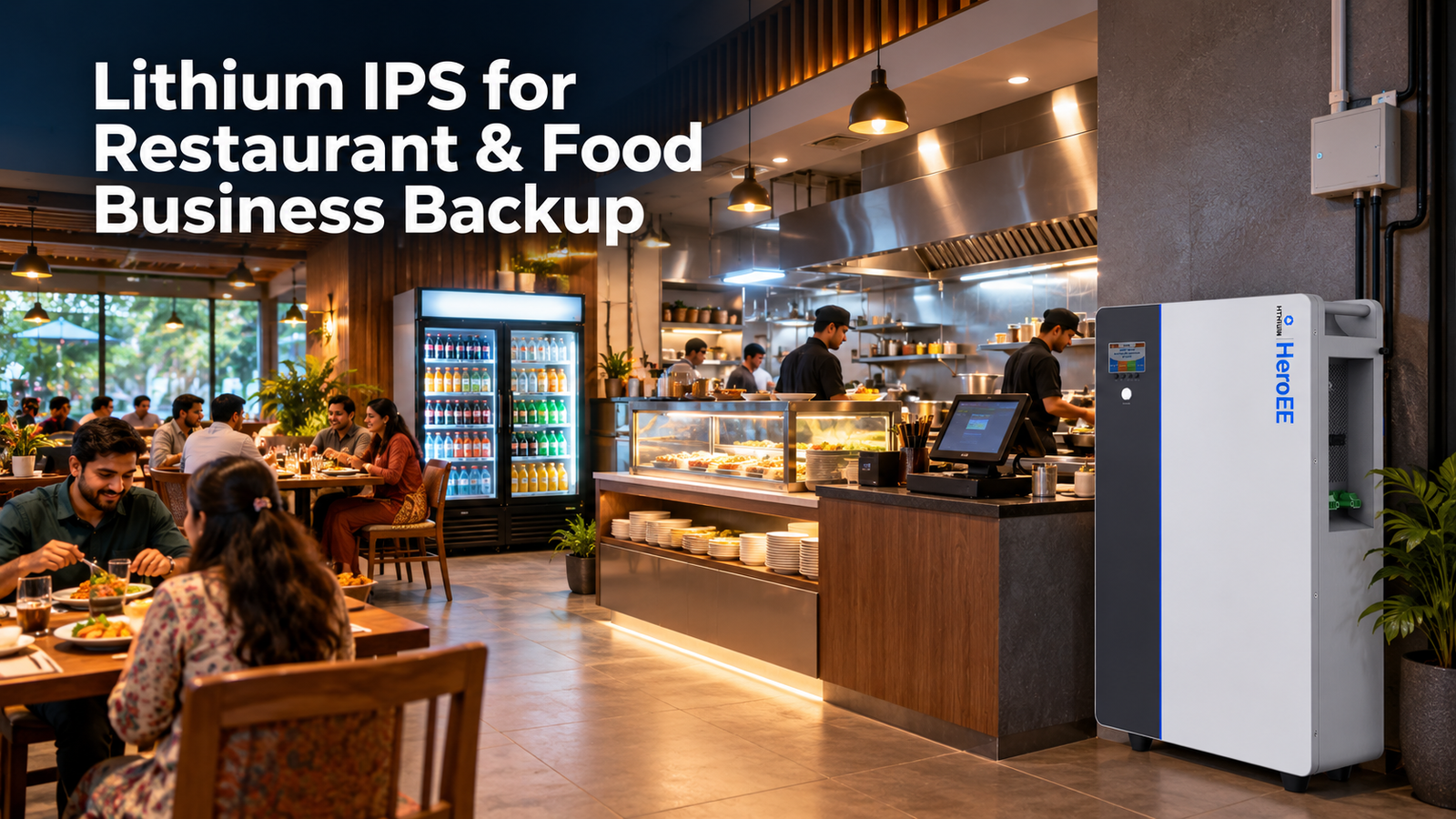
Why Restaurants in Bangladesh Need Reliable Backup Power
Power outages cost Bangladeshi restaurants more than just lost hours. A single evening of load-shedding during peak dinner service can mean spoiled inventory, cancelled reservations, and damaged reputation. With the national grid still facing supply constraints in 2026, restaurants in Dhaka, Chattogram, and beyond are switching to lithium IPS systems for seamless, maintenance-free backup.
Unlike noisy diesel generators that disturb diners and require fuel logistics, a lithium IPS (Integrated Power System) switches over in milliseconds — fast enough to keep POS terminals, refrigeration units, and kitchen equipment running without interruption. This guide covers capacity planning, key features, and model recommendations tailored for Bangladesh’s food service industry.
What Load Does a Typical Restaurant Need?
Before selecting an IPS, calculate your critical load. Most restaurants need backup for three categories:
- Cold storage: Walk-in cooler (1.5–3 kW), reach-in freezers (500–1000 W each), display fridges (200–400 W)
- Kitchen equipment: Coffee machine (1500–2000 W), microwave (1000–1500 W), blender/food processor (500–800 W), ventilation hood (1–2 kW)
- Front-of-house: POS terminals (100–200 W each), WiFi router & modem (30 W), lighting (LED 10–15 W per fixture), ceiling fans (75 W each), air conditioning (exclude from IPS — too heavy)
For a mid-size restaurant (40–60 seats) in Dhaka, the critical load typically falls between 3–6 kW. A 3000 VA / 2400 W lithium IPS covers essential circuits; a 5000 VA / 4000 W unit handles full kitchen backup excluding heavy AC compressors.
Lithium IPS vs Generator for Restaurants
| Factor | Lithium IPS | Diesel Generator |
|---|---|---|
| Switchover time | < 20 ms (seamless) | 10–30 seconds |
| Noise level | Silent (0 dB) | 70–85 dB |
| Fuel & maintenance | None (10+ year battery life) | Daily fuel, oil changes, filter service |
| Space required | Wall-mounted, < 0.5 sq m | Outdoor pad, ventilation, fuel tank |
| Cold storage protection | Instant — no temperature rise | Gap causes temp spike |
| 10-year TCO (5 kW) | ৳3.2–4.5 lakh | ৳8–12 lakh (fuel + service) |
The economics are clear: lithium IPS pays for itself in 2–3 years through fuel savings alone, while preserving your cold chain and guest experience.
Key Features to Look For
Auto-Transfer Switch (ATS) with <20 ms Switchover
Restaurant equipment — especially POS systems, refrigeration compressors, and ventilation fans — cannot tolerate power gaps. HiTHIUM’s lithium IPS units feature built-in ATS that detects grid failure and transfers load in under 20 milliseconds. Your freezers never cycle off; your POS never reboots.
Battery Management System (BMS) with Cell Balancing
LiFePO4 batteries last 3000–5000 cycles (10+ years in daily use) but only with proper cell balancing. HiTHIUM’s BMS monitors voltage, temperature, and state-of-charge per cell, preventing overcharge, deep discharge, and thermal runaway. This is non-negotiable for commercial installations where uptime is revenue.
WiFi Monitoring & Mobile App
Smart IPS models (see our Smart IPS Buying Guide) let you check battery health, load percentage, and runtime from your phone. Get alerts before battery hits 20% — critical during extended outages when you need to decide whether to reduce load or fire up a backup generator.
LCD Display with Real-Time Data
Front-panel LCD showing input/output voltage, battery %, load watts, and estimated runtime lets staff verify status at a glance without opening an app.
Capacity Selection Guide for Food Businesses
| Business Type | Typical Critical Load | Recommended IPS | Estimated Runtime |
|---|---|---|---|
| Coffee shop / bakery (15–25 seats) | 1.5–2.5 kW | 2000 VA / 1600 W | 3–4 hours |
| Casual dining (30–50 seats) | 3–4 kW | 3000 VA / 2400 W | 2.5–3.5 hours |
| Full-service restaurant (50–80 seats) | 4–6 kW | 5000 VA / 4000 W | 2–3 hours |
| Large venue / banquet (100+ seats) | 6–10 kW | Parallel 2×5000 VA (see Parallel Installation Guide) | 2–3 hours |
Pro tip: Always size for 120% of your measured peak load. Restaurant equipment draws surge current on startup (compressors, motors). A 3000 VA unit running at 2400 W continuous handles 3000 W surges comfortably.
Installation Considerations for Commercial Kitchens
- Dedicated sub-panel: Wire critical circuits (cold storage, POS, ventilation, lighting) to a separate distribution board fed by the IPS output. Keeps installation clean and code-compliant.
- Ventilation: LiFePO4 batteries don’t off-gas, but the inverter electronics generate heat. Install in a ventilated utility area — not inside a walk-in cooler or above cooking equipment.
- Earthing: Proper earthing per Bangladesh Electrical Code protects sensitive electronics from surges. Use a dedicated earth rod for the IPS.
- Cable sizing: Undersized cables cause voltage drop and overheating. Follow our IPS Cable Size Guide — for 5000 VA at 230 V, use minimum 10 mm² copper for DC battery leads and 6 mm² for AC output.
Real-World Example: Dhaka Restaurant Case Study
A 60-seat restaurant in Gulshan installed a HiTHIUM 4kWh lithium IPS in early 2025. Critical circuits: two walk-in coolers (2.2 kW), three reach-in freezers (1.8 kW), POS system (200 W), WiFi & security (150 W), dining area LED lighting (300 W). Total measured peak: 4.65 kW.
During a 4-hour grid outage in April 2025, the IPS powered all critical loads for 3 hours 12 minutes before hitting 20% reserve. The owner received a low-battery push notification at the 2.5-hour mark and reduced non-essential lighting to extend runtime. Zero inventory loss, zero customer complaints.
Annual fuel savings vs. 15 kVA generator: approximately ৳1.8 lakh. Payback period: 22 months.
Frequently Asked Questions
Can a lithium IPS run a commercial refrigerator compressor?
Yes. LiFePO4 IPS units with pure sine wave output and high surge capacity (3× rated power for 100 ms) start compressor motors reliably. Size the IPS for 120% of the compressor’s running wattage to handle inrush current.
How long does a lithium IPS battery last in daily restaurant use?
LiFePO4 cells rated for 3000–5000 cycles at 80% depth of discharge. With one full cycle per day (typical for load-shedding), that’s 8–13 years. HiTHIUM provides 5-year warranty on battery modules.
Is it safe to install lithium IPS in a commercial kitchen area?
Yes, LiFePO4 chemistry is thermally stable and does not emit gas. Install the unit in a dry, ventilated utility space away from direct heat, steam, and water splashes. IP20 rating is standard — add an enclosure if the environment is harsh.
Can I add solar panels to charge the IPS during the day?
Absolutely. HiTHIUM lithium IPS units support MPPT solar charge controllers. Adding 2–3 kW of solar reduces grid dependency and extends battery life by keeping it in float charge during daylight. See our Solar Panel Setup Guide for wiring details.
What happens if the outage lasts longer than the battery runtime?
The IPS shuts down cleanly at 10–15% reserve to protect battery health. For extended outages, pair with a small standby generator (5–7 kW) that auto-starts when IPS battery hits 25%. This hybrid approach gives you seamless short-outage coverage + unlimited runtime for major events.
Does HiTHIUM offer installation service in Bangladesh?
Yes. HiTHIUM has authorized service partners in Dhaka, Chattogram, Sylhet, Rajshahi, and Khulna divisions. Professional installation includes sub-panel wiring, earthing, commissioning, and staff training. Contact HiTHIUM Bangladesh for a site survey and quote.
Next Steps for Your Food Business
Power reliability is no longer optional for competitive restaurants in Bangladesh. A lithium IPS protects your inventory, your revenue, and your reputation — silently and without daily fuel runs.
- Step 1: List every critical circuit and measure actual load with a clamp meter during peak service.
- Step 2: Use our capacity table above to shortlist 2–3 models.
- Step 3: Request a site survey from HiTHIUM Bangladesh — we’ll confirm sizing, provide a formal quote, and schedule installation.
Don’t wait for the next extended outage to realize your cold storage is at risk. Invest in lithium IPS backup today and keep your kitchen running, your customers happy, and your profits protected.
Recommended HiTHIUM Products
Based on your needs, here are the best HiTHIUM lithium IPS and power station options for Bangladesh:
| Product | Capacity | Best For | Price |
|---|---|---|---|
| HiTHIUM HeroEE Light 1 (500W, 1kWh) | 500W, 1kWh | Small homes, 5 fans + 4 lights + router | ৳50,800 |
| HiTHIUM HeroEE 2 (1000W, 2kWh) | 1000W, 2kWh | Medium homes, fridge + fans + TV + lights | ৳78,100 |
Free delivery across Bangladesh. WhatsApp us for consultation: Contact HiTHIUM

One thought on “Lithium IPS for Restaurant & Food Business Backup in Bangladesh”