




Blog
IPS Earthing Guide Bangladesh — Safe Grounding for Your Home

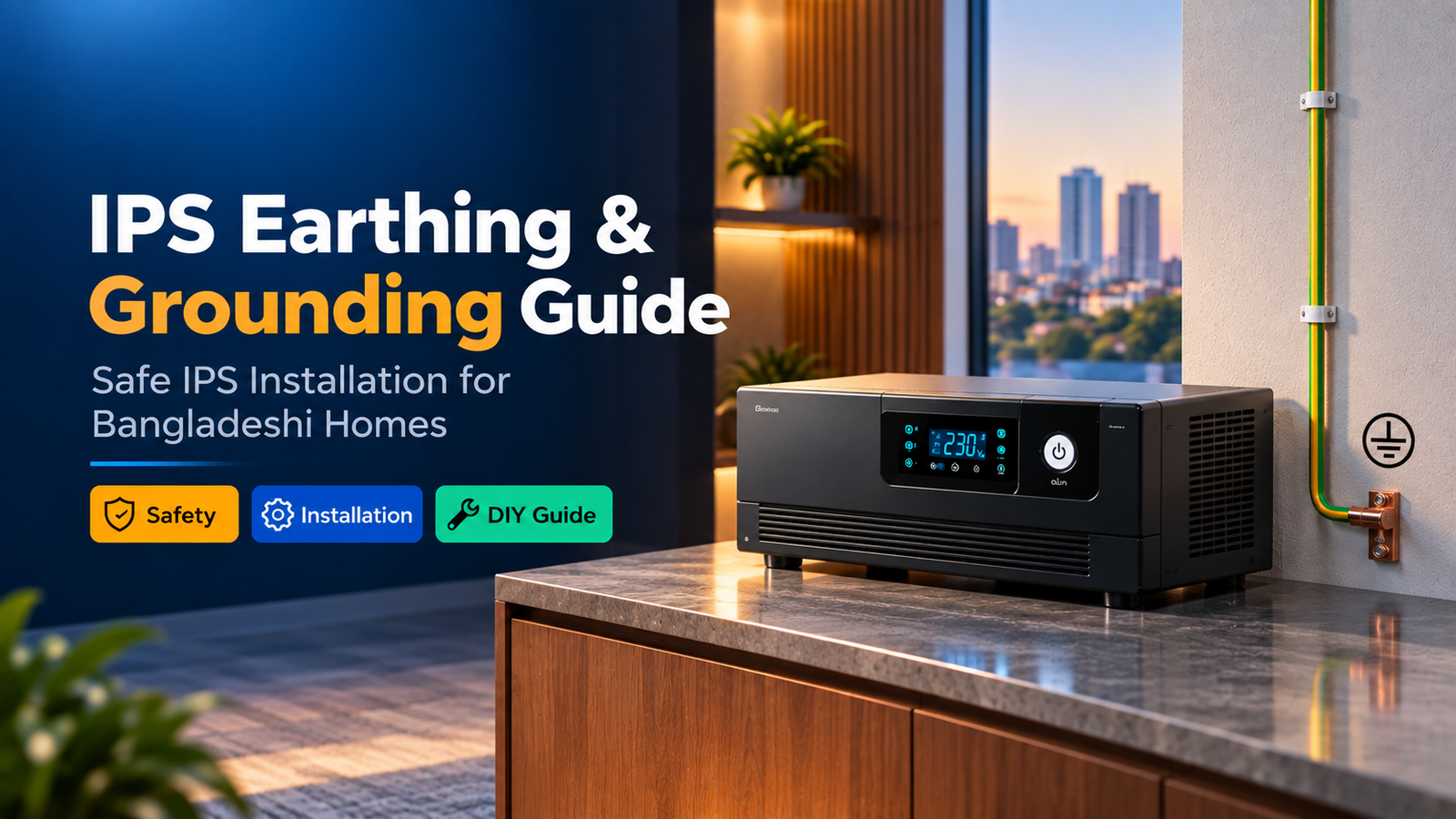
IPS Earthing Guide Bangladesh — Safe Grounding for Your Home
When you buy an IPS (home inverter system) for your home in Bangladesh, you probably think about battery capacity, inverter size, and backup time. But there is something equally important that many homeowners ignore: earthing (also called grounding).
A properly earthed IPS protects your family from electric shock, prevents damage to your appliances, and keeps the IPS itself running safely for years. Without proper earthing, your expensive lithium battery and inverter are at risk — and so are you.
In this guide, you will learn everything about IPS earthing in Bangladesh: why it matters, how to install it, how to test it, and what mistakes to avoid.
What Is IPS Earthing and Why Does It Matter?
Earthing means connecting the metal body of your IPS (and all connected appliances) to the ground through a copper rod or plate buried in the earth. This creates a safe path for any stray electricity to flow into the ground instead of through your body.
Here is why earthing is non-negotiable for every IPS installation in Bangladesh:
- Prevents electric shock: If the IPS casing becomes live due to a fault, earthing diverts the current to the ground. Without it, touching the metal casing can be fatal.
- Protects appliances: Voltage surges and fluctuations (very common in Bangladesh) can damage TVs, refrigerators, and computers. Earthing provides a safe discharge path.
- Extends IPS lifespan: A properly earthed inverter experiences less internal stress from stray currents and surges.
- Complies with electrical code: Bangladesh’s electrical safety rules require proper earthing for all home installations.
- Required for insurance: Many home insurance policies require proof of proper earthing for electrical claims to be valid.
In countries like the United States and United Kingdom, earthing is mandatory by law. In Bangladesh, it is also required by the Bangladesh Energy Regulatory Commission (BERC) rules, but enforcement is inconsistent — which leaves many homes unprotected.
| Risk Without Earthing | Consequence | Likelihood in Bangladesh |
|---|---|---|
| Electric shock from IPS body | Injury or fatality | High (poor wiring common) |
| Appliance damage from surges | Expensive repairs | Very high (voltage fluctuates daily) |
| Fire from short circuits | Property loss | Moderate |
| IPS inverter failure | Premature replacement cost | Moderate to high |
IPS Earthing Components — What You Need
To earth your IPS system properly in Bangladesh, you need the following components:
1. Earth Rod (Ground Rod)
A copper-clad steel rod, typically 1.5 to 2 meters long and 12 to 16 mm in diameter. Copper rod is best because it does not rust. In Dhaka, a 2-meter copper earthing rod costs approximately ৳1,200–৳2,000 depending on quality and thickness. Do NOT use iron rods — they rust quickly in Bangladesh’s humid climate and lose effectiveness within months.
2. Earthing Wire
Use green or green-with-yellow-stripe insulated copper wire. The wire must be thick enough to carry fault current without overheating.
| IPS Capacity | Recommended Earthing Wire Size | Approximate Price (per meter, BD) |
|---|---|---|
| 600VA – 1000VA | 4 mm² (12 AWG) | ৳50–80 |
| 1200VA – 2000VA | 6 mm² (10 AWG) | ৳80–120 |
| 2500VA – 5000VA | 10 mm² (7 AWG) or thicker | ৳120–200 |
| 5000VA+ (commercial) | 16 mm² (6 AWG) | ৳200–350 |
3. Earth Pit / Ground Chamber
A small pit (about 60 cm × 60 cm × 60 cm) dug in the ground where the earth rod is installed. The pit is filled with a mixture of salt, charcoal, and soil to reduce soil resistance. In areas with sandy or rocky soil, you may need a deeper pit or multiple rods.
4. Earthing Clamp
A brass or copper clamp that connects the earthing wire to the ground rod. Avoid using aluminum clamps — they react with copper and cause corrosion.
How to Install IPS Earthing in Bangladesh — Step by Step
You can hire a licensed electrician for this job (cost: approximately ৳1,500–৳3,000 in Dhaka). If you understand basic electrical work, you can do it yourself. Here is the step-by-step process:
Step 1: Choose the Right Location
Pick a spot near your IPS unit, preferably outside the building wall. The location should be:
- At least 1 meter away from the building foundation
- Away from water pipes, gas lines, and septic tanks
- In soil that stays moist (not sandy or completely dry)
- Easily accessible for future maintenance and testing
Step 2: Dig the Earth Pit
Dig a pit approximately 60 cm × 60 cm × 60 cm (or deeper if you live in an area with sandy soil, like Cox’s Bazar or parts of Dhaka’s Uttara). Keep the excavated soil nearby.
Step 3: Drive the Earth Rod
Drive the copper-clad rod into the ground at the center of the pit. The rod should go at least 1.5 meters deep. If the rod is 2 meters, drive it until only 10-15 cm remains above the pit floor. In rocky areas, you may need to drill a pilot hole first.
Step 4: Prepare the Soil Mix
Mix the excavated soil with:
- 1 kg of common salt (table salt — about ৳50)
- 2-3 kg of charcoal powder (available at electrical shops — about ৳100)
The salt and charcoal reduce the soil’s electrical resistance. Without this, the earthing may not work effectively, especially in dry winter months.
Step 5: Backfill and Water
Fill the pit with the salt-charcoal-soil mixture. Add 10-15 liters of water to activate the salt. The moisture helps conduct electricity into the ground. In Bangladesh’s summer heat, you may need to add water every 2-3 months to maintain effectiveness.
Step 6: Connect the Earthing Wire
Run the earthing wire from the IPS unit to the earth rod:
- Use a brass or copper clamp to secure the wire to the rod
- Ensure the connection is tight and free of rust
- Run the wire through a PVC conduit to protect it from damage
- Do NOT bend the wire sharply — maintain gentle curves
Step 7: Connect Inside the IPS
Inside your IPS distribution board, connect the earthing wire to the earth bus bar (the green terminal). From there, all appliance earth wires should also connect to this same bus bar. The neutral and earth should NOT be connected together in your home (they are connected at the utility transformer, not inside your house).
Step 8: Test the Earthing
You must test your earthing to ensure it is working. The standard test uses an earth resistance tester (megger). A licensed electrician can do this test for ৳500–৳1,000.
| Earthing Resistance | Rating | Action Needed |
|---|---|---|
| Less than 1 ohm | Excellent | No action needed |
| 1 – 5 ohms | Good | No action needed |
| 5 – 10 ohms | Acceptable | Consider adding moisture if dry season |
| 10 – 25 ohms | Poor | Add more salt and water, or install a second rod |
| 25+ ohms | Dangerous | Reinstall earthing system immediately |
If you don’t have a megger, a simple test: plug a 3-pin plug into a socket and check that the earth pin shows continuity to the IPS casing using a multimeter. This is not as accurate but can catch broken connections.
IPS Earthing Mistakes Bangladeshi Homeowners Make
After installing IPS systems for homes across Dhaka, Chattogram, and Sylhet, our team has seen these common earthing mistakes:
| Mistake | Why It’s Dangerous | How to Fix |
|---|---|---|
| Skipping earthing entirely | No protection from shock or surge | Install proper earthing before using the IPS |
| Using the water pipe as earth | PVC pipes don’t conduct; metal pipes can give shocks in bathroom | Install dedicated earth rod |
| Using the neutral wire as earth | Illegal and dangerous — neutral carries current | Install proper earth rod |
| Thin earthing wire (1.5 mm²) | Can melt under fault current, causing fire | Use minimum 4 mm² copper wire |
| Iron rod instead of copper | Rusts within 6-12 months in BD climate | Replace with copper-clad rod |
| Not watering the pit in dry season | Soil becomes too dry to conduct electricity | Add 10-15L water every 2-3 months |
| Connecting earth and neutral inside home | Can trip RCCB and create shock risk | Separate earth and neutral in home wiring |
Testing Your IPS Earthing — Frequency and Method
Earthing is not a “set and forget” thing. Bangladesh’s weather — heavy monsoon rains, hot dry summers, and humid conditions year-round — affects soil resistance. You should test your IPS earthing at these intervals:
- Every 3 months: Visual inspection — check the clamp, wire, and pit cover for damage
- Every 6 months: Earth resistance test with megger by a licensed electrician
- After any lightning strike nearby: Test immediately — lightning can damage earthing connections
- After construction work near the pit: Contractors may damage the earthing wire
In Bangladesh, the best time for annual professional earthing testing is November to February (dry season), when soil resistance is highest. If your earthing passes in dry season, it will certainly pass in wet season.
IPS Earthing Cost for Bangladeshi Homes
| Item | Cost (BDT) |
|---|---|
| Copper-clad earth rod (2m, 14mm) | ৳1,200 – ৳2,000 |
| Earthing wire (6 mm², 10 meters) | ৳800 – ৳1,200 |
| Brass earthing clamp | ৳150 – ৳300 |
| Salt and charcoal | ৳150 – ৳200 |
| PVC conduit (10 meters) | ৳300 – ৳500 |
| Earth pit cover (RCC/concrete) | ৳300 – ৳600 |
| Licensed electrician labor | ৳1,500 – ৳3,000 |
| Total (approximate) | ৳4,400 – ৳7,800 |
Compared to the cost of an IPS system (৳25,000–৳1,00,000+), earthing is a small investment that protects a much larger one. And it might save your life.
Grounding Faults and Their Effect on Lithium IPS Batteries
Lithium-ion batteries (like the LiFePO4 batteries used in HiTHIUM IPS systems) are particularly sensitive to improper earthing. Here is why:
- Battery Management System (BMS) interference: Without proper earth reference, the BMS may misread voltage levels and trigger false cutoffs or fail to detect actual faults.
- Electrolyte leakage risk: In extreme fault conditions, ungrounded systems can cause internal heating that damages lithium cells.
- Reduced cycle life: Stray currents caused by poor earthing can stress the battery chemistry, reducing its charge cycles from 6,000+ to as few as 2,000-3,000.
- Void warranty: HiTHIUM and other quality IPS manufacturers require proper earthing for warranty claims. If your IPS fails and earthing is not up to standard, the warranty may be void.
This is especially important for homes in Dhaka and other cities where electrical wiring standards vary widely. A proper IPS installation with correct earthing is the foundation of a safe, long-lasting home backup system.
Frequently Asked Questions About IPS Earthing in Bangladesh
Do I need earthing for a small 600VA IPS?
Yes. Even a small 600VA IPS must be properly earthed. Fault current does not depend on size — even a small system can deliver a lethal shock if the casing becomes live.
Can I use my building’s existing earthing for my IPS?
Only if the building earthing was professionally installed and tested within the last 12 months. Many apartment buildings in Dhaka have old or corroded earthing systems. It is safer to install a dedicated earth rod for your IPS.
How do I know if my IPS is properly earthed?
The most reliable way is an earth resistance test (megger test) by a licensed electrician. A resistance below 5 ohms is good. A simpler check: use a multimeter to test continuity between the IPS earth terminal and the earth rod.
Does earthing protect against lightning?
Standard home earthing provides some protection against indirect lightning surges, but it does NOT replace a dedicated lightning arrestor. For complete protection, install a surge protection device (SPD) alongside proper earthing.
Can I install earth rod inside my home?
No. The earth rod must be in contact with natural ground soil. Installing it inside a concrete slab or basement does not provide proper earthing. The rod must be driven into the earth outside your building.
How often should I replace the earthing rod?
A good copper-clad steel rod lasts 15-20 years in Bangladesh’s climate. However, the clamp connection should be inspected annually. If the rod shows more than 20% corrosion (visible rust flaking), replace it immediately.
Is IPS earthing the same as electrical earthing?
It is the same principle, but your IPS system should ideally have its own dedicated earth connection. Sharing earthing with other home appliances can create ground loops and reduce safety effectiveness.
What happens if I don’t earth my IPS at all?
You risk electric shock, appliance damage, fire, and voiding your IPS warranty. In Bangladesh’s humid climate, the IPS casing can develop leakage current even without a specific fault. Earthing is the only protection.
Conclusion — Don’t Skip Earthing
Installing an IPS for your home in Bangladesh is a smart investment. But without proper earthing, that investment becomes a safety hazard. The cost of earthing (৳4,400–৳7,800) is small compared to the value of your IPS system and the safety of your family.
At HiTHIUM Bangladesh, we recommend earthing for every IPS installation — whether it is a 500W unit for a single room or a 5000W system for an entire home. We provide earthing guidance with every IPS purchase and can connect you with licensed electricians in Dhaka, Chattogram, and other cities.
Need help with your IPS installation? Contact HiTHIUM Bangladesh for expert advice on IPS sizing, installation, and earthing. We also stock copper earth rods, earthing wire, and all components for safe IPS installation.
Explore our range of lithium IPS systems with built-in BMS protection — designed for safe, efficient backup power in Bangladeshi homes.
Also read: IPS Maintenance Checklist for Bangladeshi Homes and IPS Installation Guide — Step by Step for Bangladeshi Homes.
Recommended HiTHIUM Products
Based on your needs, here are the best HiTHIUM lithium IPS and power station options for Bangladesh:
| Product | Capacity | Best For | Price |
|---|---|---|---|
| HiTHIUM HeroEE 2 (1000W, 2kWh) | 1000W, 2kWh | Medium homes, fans + TV+ Bulbs | ৳78,100 |
| HiTHIUM HeroEE 16 (16kWh) | 16kWh | Large homes, offices, factories | ৳3,36,000 |
Free delivery across Bangladesh. WhatsApp us for consultation: Contact HiTHIUM

4 thoughts on “IPS Earthing Guide Bangladesh — Safe Grounding for Your Home”