




Blog
Best Solar Panel Wattage for IPS Charging in Bangladesh — Complete Guide 2026

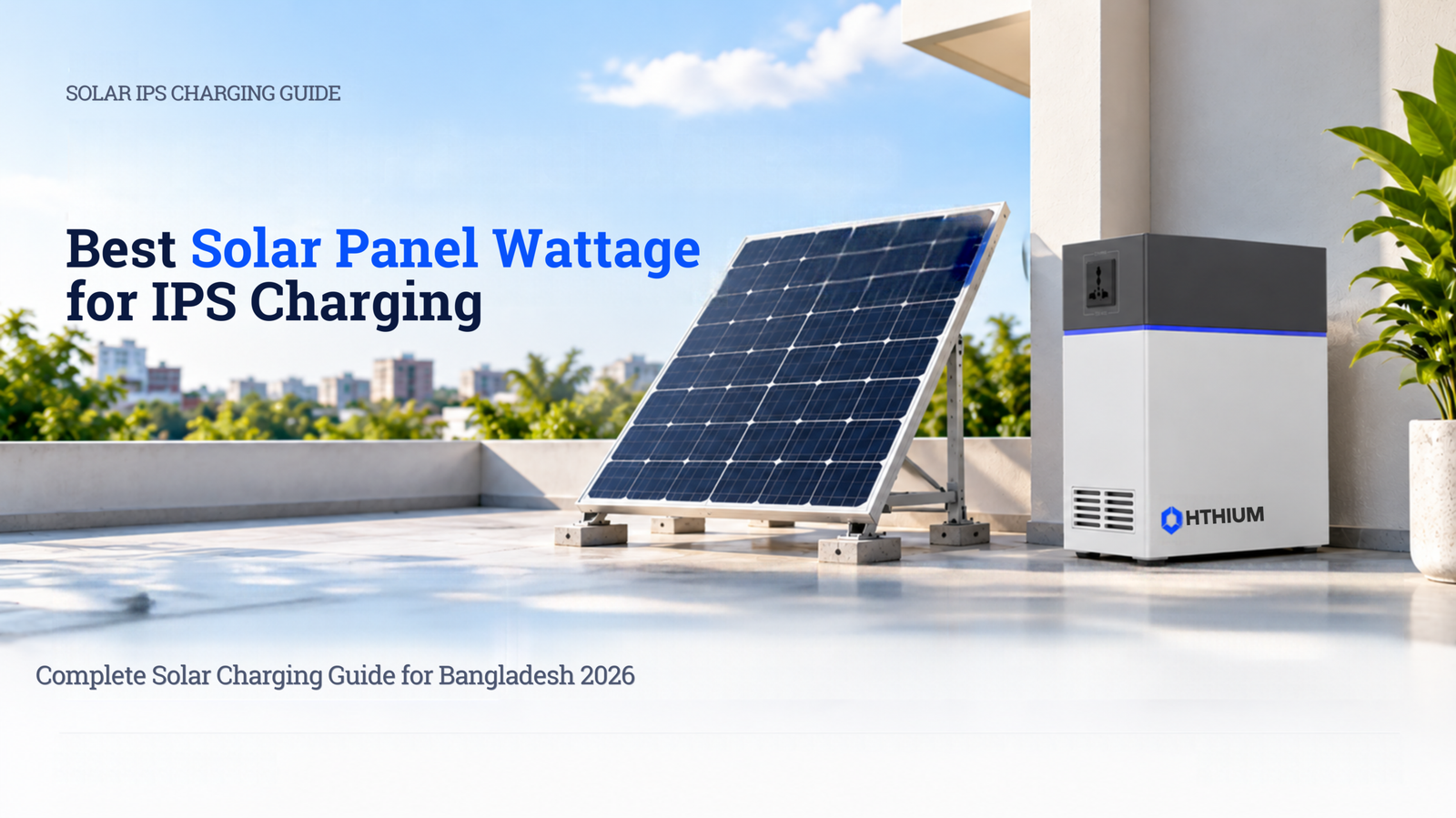
Best Solar Panel Wattage for IPS Charging in Bangladesh — Complete Guide 2026
Choosing the right solar panel wattage for your IPS is one of the most important decisions Bangladeshi homeowners make when setting up a hybrid power system. Get it wrong, and you’ll face longer load-shedding outages, higher electricity bills, or an undersized system that can’t keep up. Get it right, and you’ll enjoy clean energy savings year-round with minimal maintenance.
This comprehensive guide covers everything Bangladeshi users need to know about solar panel wattage selection for IPS charging — from 100W portable panels for small apartments to 500W+ systems for whole-home backup. We’ll use real HiTHIUM products as examples to show you exactly what works best for different household sizes and budgets across Bangladesh.
Understanding Solar Panel Wattage Basics
Solar panel wattage represents the maximum power output under standard test conditions (STC: 1000W/m² irradiance, 25°C cell temperature). In practical terms, this tells you how much electricity the panel can generate in ideal conditions. For Bangladeshi users, understanding wattage helps you match your solar investment to your actual energy needs.
Key concepts to understand:
- Peak Wattage (Wp): The rated power output under ideal laboratory conditions
- Real-World Output: Typically 70-85% of rated wattage due to heat, shading, and system losses
- Daily Energy Production: Measured in watt-hours (Wh) or kilowatt-hours (kWh)
For example, a 200W solar panel in Bangladesh might produce 800-1000Wh daily (200W × 4-5 peak sun hours), depending on weather conditions and installation quality.
How to Calculate the Right Solar Panel Wattage for Your IPS
The first step in selecting solar panel wattage is understanding your IPS capacity and daily energy consumption. In Bangladesh, where load-shedding typically lasts 4-8 hours daily during summer and 2-4 hours during winter, your solar panel needs to recharge your IPS battery fast enough to handle the next outage.
Basic calculation formula:
Solar Panel Wattage Needed = (IPS Battery Capacity in Wh ÷ Peak Sun Hours) × 1.2 (safety margin)
- For Dhaka and most of Bangladesh, peak sun hours average 4.5-5.5 hours daily
- Monsoon season (June-September) reduces peak sun hours to 3-4 hours
- Winter months (November-February) can provide 5-6 peak sun hours
- The 1.2 multiplier accounts for system losses (cable resistance, temperature derating, charge controller efficiency)
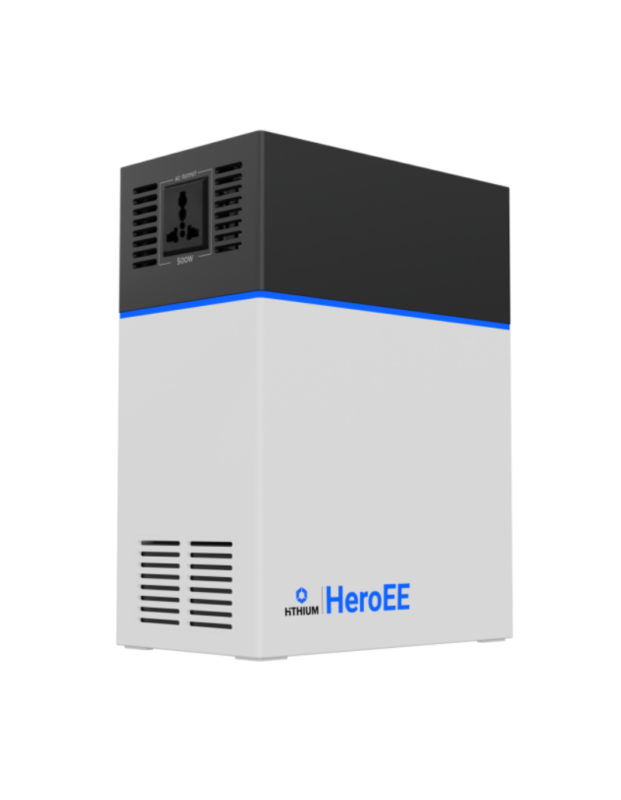
Example calculation for a 1000Wh IPS (like HeroEE Light 1):
- 1000Wh ÷ 5 hours = 200W minimum panel size
- 200W × 1.2 = 240W recommended solar panel
- Practical choice: 200W-300W solar panel for optimal charging
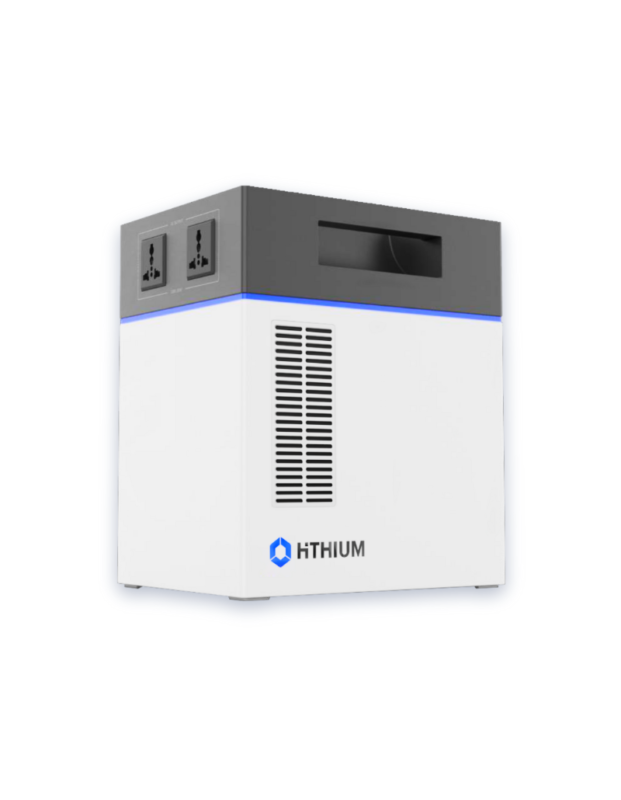
Example calculation for a 2kWh IPS (like HeroEE 2):
- 2000Wh ÷ 5 hours = 400W minimum panel size
- 400W × 1.2 = 480W recommended solar panel
- Practical choice: 400W-500W solar array (2x 200W panels)
Solar Panel Wattage Recommendations by IPS Capacity
Here’s a practical breakdown of solar panel wattage recommendations for different IPS capacities commonly used in Bangladeshi homes and businesses:
| IPS Capacity | Recommended Solar Panel | Battery Charging Time | Budget (BDT) | Best For |
|---|---|---|---|---|
| 500Wh-1kWh (small apartment) | 100W-200W | 3-5 hours (full charge) | 15,000-35,000 | Single room, fans, lights, phone charging |
| 1kWh-2kWh (medium home) | 200W-300W | 4-6 hours (full charge) | 30,000-55,000 | Multiple rooms, TV, fan, laptop |
| 2kWh-5kWh (large home) | 300W-600W | 5-8 hours (full charge) | 50,000-120,000 | Whole home backup, refrigerator support |
| 5kWh-10kWh (whole home/business) | 600W-1500W+ | 6-10 hours (full charge) | 100,000-250,000+ | AC units, water pump, office equipment |
Best Solar Panels for HiTHIUM IPS Systems
HiTHIUM Bangladesh offers several solar panel options that pair perfectly with our HeroEE and MaxPower IPS systems. Here are the top picks for Bangladeshi users:
1. HiTHIUM HC200 — 200W Portable Foldable Solar Panel
The HiTHIUM HC200 is our flagship 200W portable solar panel, specifically designed for HeroEE series IPS systems. Key specifications:
- Power Output: 200W maximum
- Efficiency: Up to 23.4% (monocrystalline cells)
- Vmp: 20.4V | Imp: 9.7A
- Voc: 24.6V | Isc: 10.8A
- Protection: IP67 waterproof, ETFE laminated
- Temperature Range: -10°C to +65°C (perfect for Bangladesh climate)
- Certifications: CE, FCC, RoHS
- Weight: ~8kg (portable design)
- Dimensions: Folded 600×550×50mm, Open 1700×1100×25mm
Best for: HeroEE Light 1 (1kWh), HeroEE 2 (2kWh), and other portable IPS systems. The foldable design makes it ideal for apartments, small homes, and even camping trips. The IP67 rating ensures it survives Bangladesh’s monsoon rains.
Price range: BDT 24,500 (check current pricing on our shop page)
2. Custom Solar Arrays for MaxPower 8 AIO
For our larger systems like the MaxPower 8 AIO (8kWh capacity), we recommend custom solar arrays ranging from 800W to 2000W. These systems typically use multiple 200W-400W panels connected in series or parallel, depending on your IPS charge controller input requirements.
The MaxPower 8 AIO accepts up to 9kW solar input, making it compatible with large residential solar installations. Our team can design and install custom arrays tailored to your roof space and energy needs.
3. HeroEE Series Integrated Solar Compatibility
All HeroEE IPS systems come with built-in MPPT charge controllers optimized for HiTHIUM solar panels. This ensures maximum charging efficiency and protects your battery from overcharging. The HeroEE Light 1 supports up to 300W solar input, while the HeroEE 2 supports up to 450W, and the MaxPower 8 AIO supports up to 9kW.
Solar Panel Wattage vs IPS Charging Speed
Understanding the relationship between solar panel wattage and charging speed helps you make informed decisions. Here’s how different panel sizes perform with common IPS capacities in Bangladesh:
With a 200W Solar Panel (like HC200):
- HeroEE Light 1 (1004.8Wh): ~2-4 hours to full charge from 20% (typical Bangladeshi summer conditions)
- HeroEE 2 (2kWh): ~2-4 hours to full charge (may need two days in cloudy weather)
- MaxPower 8 (8kWh): ~2-5 hours
- With a 400W Solar Array (2x 200W panels):
- HeroEE Light 1: ~2 hours (excellent for quick top-ups during load-shedding)
- HeroEE 2: ~2hours (ideal for daily use)
- MaxPower 8: ~1.5-2 hours (good for regular household backup)
With a 800W Solar Array (4x 200W panels):
- HeroEE Light 1: ~2-3 hours (maximum charging speed)
- HeroEE 2: ~2-4 hours (fast recharge)
- MaxPower 8: ~2-5 hours (full daily cycle)
Installation Tips for Solar Panels in Bangladesh
Getting the best performance from your solar panel setup requires proper installation. Here are expert tips for Bangladeshi users:
1. Optimal Panel Orientation
In Bangladesh (latitude ~23.5°N), your solar panels should face true south for maximum year-round performance. Tilt angle should be approximately equal to your latitude (20-25°) for optimal annual performance, or adjusted seasonally:
- Summer (March-September): Tilt 15-20° from horizontal to capture higher sun angle
- Winter (October-February): Tilt 25-30° from horizontal to capture lower sun angle
Fixed installations should use a permanent tilt of 20-25° for best annual performance. Adjustable mounts allow seasonal optimization but cost more.
2. Avoiding Shade Issues
Even partial shade can reduce solar panel output by 50% or more. Common shading problems in Bangladesh:
- Nearby buildings or trees casting shadows during peak sun hours
- Rooftop AC units, water tanks, or satellite dishes
- Overhead power lines or telephone cables
- Neighbor’s construction projects
Solution: Use micro-inverters or power optimizers if shading is unavoidable. HiTHIUM HeroEE systems include built-in MPPT charge controllers that handle partial shade better than older PWM controllers. Consider a site survey before installation to identify potential shading issues.
3. Temperature Considerations
Bangladesh summers can push solar panel temperatures to 65-70°C, which reduces output by 10-15% compared to standard test conditions (25°C). This is why we recommend oversizing your panel array by 20% — the HC200’s 200W rating assumes ideal conditions, but real-world output in Dhaka summer is closer to 160-170W.
Tip: Install panels with airflow underneath to reduce operating temperature. Raised mounting frames improve cooling and can recover 5-10% of lost output.
4. Wiring and Connection Best Practices
- Use UV-resistant PV cable (minimum 4mm² for 200W+ panels)
- Keep cable runs short to minimize voltage drop
- Use proper MC4 connectors for weatherproof connections
- Install surge protection devices for monsoon seasons
- Label all connections for easy maintenance
Solar Panel Wattage vs Tubular Battery Charging
If you’re comparing solar IPS to traditional tubular battery systems, here’s a quick comparison:
| Feature | Solar IPS (LiFePO4) | Tubular Battery + Solar |
|---|---|---|
| Charging Efficiency | 90-95% (MPPT) | 70-80% (PWM) |
| Lifespan | 11,000+ cycles (10+ years) | 11,000 cycles (3-5 years) |
| Maintenance | Zero (sealed cells) | Regular water top-ups |
| Space Required | Compact (wall-mounted) | Floor space (heavy batteries) |
| Total Cost (5 years) | Lower (no replacements) | Higher (battery replacements) |
| Solar Panel Compatibility | Direct MPPT integration | Requires separate charge controller |
For detailed comparisons, see our Lithium IPS vs Tubular Battery — Which Saves More Money? guide.
Seasonal Performance in Bangladesh
Solar panel performance varies significantly across Bangladesh’s seasons. Understanding these patterns helps you size your system correctly:
- Summer (March-June): Highest output, 5-6 peak sun hours daily, but temperature derating reduces efficiency by 10-15%
- Monsoon (June-September): Lowest output, 3-4 peak sun hours, frequent cloud cover, but rainfall cleans panels naturally
- Autumn (September-November): Good output, 4.5-5.5 peak sun hours, clear skies return
- Winter (November-February): Best efficiency, 5-6 peak sun hours, cooler temperatures boost output
Recommendation: Size your solar array for monsoon performance (the worst-case scenario). If your system can charge adequately during June-September, it will perform excellently the rest of the year.
Frequently Asked Questions (FAQ)
Q1: What solar panel wattage do I need for a 1kWh IPS in Bangladesh?
A 200W solar panel is ideal for charging a 1kWh IPS like the HeroEE Light 1. In Bangladesh’s 4.5-5.5 peak sun hours, a 200W panel will fully charge your battery in 5-6 hours on a sunny day. For faster charging or cloudy conditions, consider a 300W setup. During monsoon season, you may need 2-3 days for a full charge with a 200W panel.
Q2: Can I use a 100W solar panel with my 2kWh IPS?
Yes, but charging will be slow. A 100W panel will take 12-15 hours to fully charge a 2kWh IPS in good sunlight. For daily use in Bangladesh, we recommend at least 200W for a 2kWh system, or 300W+ for larger installations. During monsoon season, a 100W panel may not provide enough charge to offset daily usage.
Q3: How do I connect multiple solar panels to my IPS?
You can connect panels in series (increases voltage) or parallel (increases current). Check your IPS charge controller’s maximum input voltage and current. For HeroEE systems, we provide detailed solar panel connection guides for each model. Always use identical panel types and orientations when connecting multiple panels.
Q4: Is a larger solar panel always better?
Not necessarily. Oversizing your panel array without upgrading your IPS charge controller can waste money. Match your panel wattage to your IPS specifications, then add 20% headroom for Bangladesh’s hot climate and seasonal cloud cover. Contact our team for a free consultation at hithiumbd.com/contact.
Q5: What’s the best solar panel brand for IPS in Bangladesh?
HiTHIUM HC200 panels are designed specifically for our HeroEE IPS systems, ensuring perfect compatibility and optimal charging curves. They feature ETFE lamination for Bangladesh’s humid climate and -10°C to +65°C operating range. For other brands, ensure they have CE/RoHS certification and IP65+ water resistance. Look for panels with 25-year linear power warranties.
Q6: How much does a 200W solar panel cost in Bangladesh?
A quality 200W solar panel costs between BDT 25,000-45,000 in Bangladesh, depending on brand, efficiency, and features. The HiTHIUM HC200 (200W, 23.4% efficiency, ETFE laminated) is priced at BDT 24,500. Budget options may cost less but often have lower efficiency and shorter warranties.
Q7: Can I use solar panels during power outages?
Yes! HiTHIUM HeroEE IPS systems with solar input can charge your battery while simultaneously powering your home during load-shedding. This “solar pass-through” feature means you can charge your battery and use appliances at the same time, maximizing your solar energy utilization.
Troubleshooting Common Solar Panel Issues
Even well-installed solar panels can experience issues. Here’s how to diagnose and fix common problems:
Low Output During Sunny Days
Possible causes:
- Dirty or dusty panels (common in Dhaka’s dusty environment)
- Shading from new construction or tree growth
- Loose or corroded connections
- Charge controller fault
Solutions:
- Clean panels weekly with soft cloth and water
- Trim nearby vegetation
- Check all connections for corrosion
- Test charge controller display for error codes
Reduced Winter Performance
While winter has more sunny days, cold temperatures can affect panel output. Most panels actually perform better in cold weather, but shorter days reduce total energy production. Adjust tilt angles for winter sun position and consider cleaning panels more frequently during dusty winter months.
Conclusion: Choose the Right Solar Panel Wattage for Your Needs
Selecting the correct solar panel wattage for your IPS system is crucial for maximizing backup time during Bangladesh’s frequent load-shedding. Remember these key takeaways:
- Small apartments (500Wh-1kWh): Start with a 200W portable panel like the HC200
- Medium homes (1kWh-3kWh): 300-400W solar array for reliable daily charging
- Large homes/businesses (5kWh+): 800W-2000W+ custom solar installations
- Monsoon sizing: Oversize by 20% to account for cloudy weather
- Temperature derating: Expect 10-15% output reduction in Bangladesh summers
Our Best Lithium IPS in Bangladesh 2026 guide covers the full HeroEE range. For personalized recommendations based on your home’s energy needs, visit our shop or contact our team at contact page.
Call to Action: Ready to optimize your IPS charging with solar? Browse our solar panels and IPS systems or contact us for a free consultation. We offer free delivery across Bangladesh and 3-year warranty on all HiTHIUM products. Our technical team can help you calculate the exact solar panel wattage you need for your specific IPS model and household load.
Related Posts
Solar + LiFePO4 Battery System Cost Analysis Bangladesh 2026: Complete Price Guide

How to Calculate Solar Panel Wattage for LiFePO4 Battery in Bangladesh (2026 Guide)
Best LiFePO4 Battery for Solar Home System in Bangladesh 2026 — Complete Buying Guide
Discover the best LiFePO4 batteries for solar home systems in Bangladesh. Compare HiTHIUM HeroEE L12314ES (4019Wh), MaxPower 8 AIO, and HeroEE 2 — with prices, specs, and buying tips for 2026.

2 thoughts on “Best Solar Panel Wattage for IPS Charging in Bangladesh — Complete Guide 2026”