




Blog
LiFePO₄ vs Tubular Battery in Bangladesh: Which Is Cheaper Over 10 Years?

If you walked into any IPS shop in Dhaka a decade ago, the question was simple: which tubular battery? Rahimafrooz, Luminous, or Hamko?
In 2026, the question has changed.
Lithium iron phosphate (LiFePO₄) batteries are now widely available in Bangladesh — but they cost 3 to 4 times more upfront than a tubular battery. Naturally, every buyer asks the same thing: is a LiFePO₄ battery actually worth the price, or is it cheaper to just keep replacing tubular batteries every few years?
This 2026 cost analysis answers that question with real Bangladesh prices, real cycle life data, and a head-to-head 10-year breakdown that includes the hidden costs nobody mentions when you’re standing at the counter.
The result will surprise you.
TL;DR — The Quick Answer
Over 10 years of typical Bangladeshi household use:
- Tubular battery total cost: 1,38,000৳–1,55,000৳ (3–4 replacements + maintenance + electricity inefficiency loss)
- LiFePO₄ battery total cost: 74,500৳–78,100৳ (one purchase, zero replacements, still 15+ years of life left)
A premium LiFePO₄ battery is 35–45% cheaper than a tubular battery over 10 years, and you walk away with a battery that still works for another 15+ years.
The “cheap” tubular battery is, in fact, the more expensive option. Here’s why.
The Battery Decision Most Bangladeshi Homes Are Making in 2026
With Bangladesh experiencing 2,000–3,000 MW power shortfalls during peak summer 2026, and rural areas seeing 6–10 hours of daily load shedding, the IPS battery is no longer optional equipment in most homes. It’s essential infrastructure.
That makes the battery choice a long-term financial decision, not a quick purchase. A bad choice will cost you 50,000৳ extra over a decade in replacements you didn’t see coming. A good choice will outlast your house’s wiring.
So let’s look at both options honestly — what they actually cost, how long they actually last, and which one wins when you do the real math.
Meet the Contenders
Tubular Lead-Acid Battery (The Incumbent)
Tubular lead-acid batteries have been the default IPS battery in Bangladesh for over 25 years. The market is dominated by Rahimafrooz (Bangladesh), Luminous (India), Hamko (Bangladesh), Volvo, Saif Power, and Eastern.
Typical specs (200Ah model, 12V):
- Capacity: ~2,400 Wh (200Ah × 12V), but only ~1,200 Wh usable due to 50% Depth of Discharge limit
- Cycle life: 500–11,000 cycles
- Calendar life: 2–4 years in Bangladeshi conditions
- Weight: 55–65 kg
- Maintenance: Distilled water topping every 2–3 months
- Ventilation: Required (releases hydrogen gas during charging)
- Price (2026): 22,000৳–35,000৳ depending on brand and capacity
Why people still buy them: Low upfront cost, easy availability, familiar to every electrician in Bangladesh, repairable in some cases.
LiFePO₄ Lithium Battery (The Challenger)
LiFePO₄ (Lithium Iron Phosphate) is the chemistry powering modern energy storage worldwide — from Tesla Powerwalls to Bangladesh-grid-scale projects. It’s a fundamentally different technology than tubular.
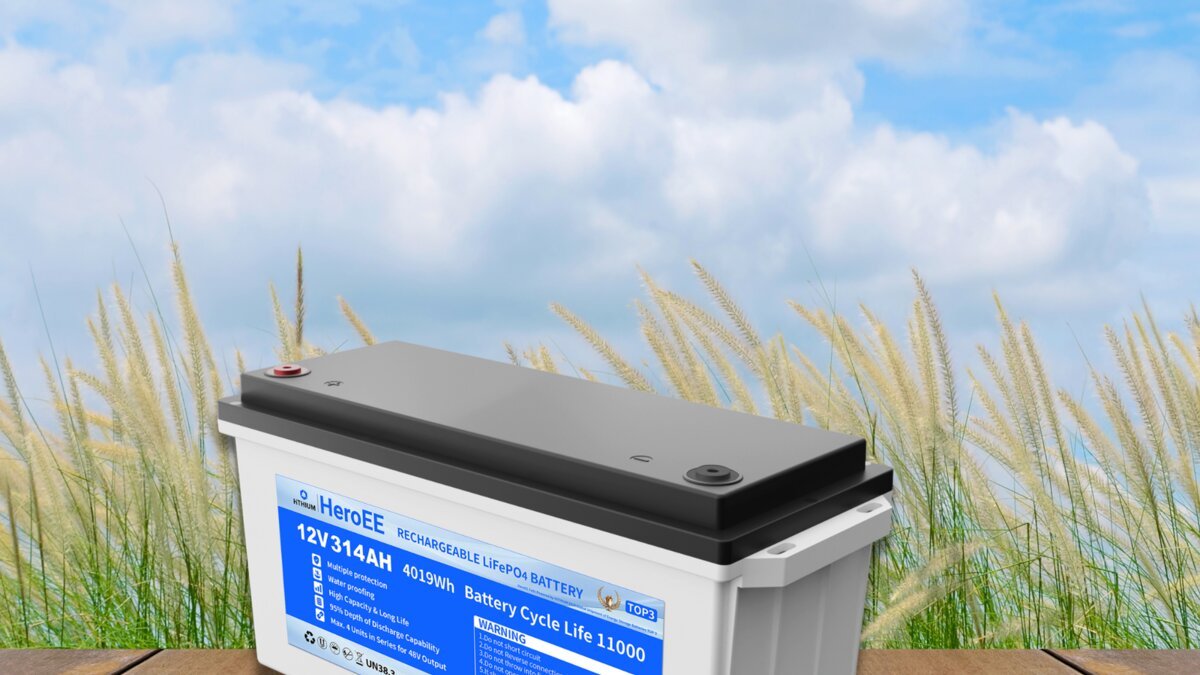
Typical specs (HiTHIUM HeroEE 4, 4 kWh, 12.8V):
- Capacity: 4,019 Wh, fully usable (95% Depth of Discharge)
- Cycle life: 11,000+ cycles (Grade-A cells)
- Calendar life: 25–30 years
- Weight: ~30 kg (50% lighter than equivalent tubular bank)
- Maintenance: Zero
- Ventilation: Not required
- Price (2026): 74,500৳
Why people are switching: Massive cycle life advantage, no maintenance, deeper usable capacity, faster charging, longer warranty.
If you want a deeper introduction to LiFePO₄ technology and the full HiTHIUM lineup, see our complete Best Lithium Battery for IPS in Bangladesh (2026) buying guide.
Head-to-Head: The Specs That Actually Matter
| Spec | Tubular Lead-Acid (200Ah) | HiTHIUM LiFePO₄ (HeroEE 4) |
| Upfront price (2026) | 22,000৳–35,000৳ | 74,500৳ |
| Nominal capacity | 2,400 Wh | 4,019 Wh |
| Usable capacity (DoD) | ~1,200 Wh (50%) | ~3,818 Wh (95%) |
| Cycle life | 500–1,000 | 11,000+ |
| Calendar life | 2–4 years | 25–30 years |
| Charging efficiency | 70–75% | 95–98% |
| Weight | 55–65 kg | ~30 kg |
| Maintenance | Distilled water every 2–3 months | None |
| Self-discharge per month | 10–15% | 1–3% |
| Operating temperature | 25°C ideal (degrades quickly above 35°C) | -20°C to +55°C |
| Warranty in Bangladesh | 12–24 months | Up to 5 years |
| Safe gas emission | Yes, hydrogen during charging | None |
The most important number in that table isn’t the price — it’s the cycle life difference. A 11,000-cycle battery will outlast a 1,000-cycle battery by 11x. That’s not a small advantage; that’s a different category of product.
The Real 10-Year Cost: Tubular vs LiFePO₄
This is the math nobody at the IPS shop wants you to do. Let’s run it carefully.
Assumed usage: Typical Dhaka/Chattogram household with 1 cycle per day during load-shedding seasons (March–October) and 0.5 cycles per day in cooler months. Roughly 300 cycles per year.
Scenario A: Tubular Battery (Rahimafrooz / Luminous 200Ah class)
| Year | Event | Cost |
| Year 0 | Buy first tubular battery | 28,000৳ |
| Year 0–3 | Distilled water + servicing | 1,800৳ |
| Year 3 | Replace battery (cycle life exhausted) | 28,000৳ |
| Year 3–6 | Distilled water + servicing | 1,800৳ |
| Year 6 | Replace battery again | 28,000৳ |
| Year 6–9 | Distilled water + servicing | 1,800৳ |
| Year 9 | Replace battery a third time | 28,000৳ |
| Year 9–10 | Distilled water + servicing | 600৳ |
| Year 0–10 | Extra grid electricity from 25–30% inefficiency loss | ~22,000৳ |
| Total 10-year cost | ~1,40,000৳ | |
| Useful life remaining at year 10 | 0–2 years on the latest battery |
Scenario B: HiTHIUM LiFePO₄ Battery (HeroEE 4, 4 kWh)
| Year | Event | Cost |
| Year 0 | Buy HiTHIUM LiFePO₄ battery | 74,500৳ |
| Year 0–10 | Maintenance | 0৳ |
| Year 0–10 | Replacements needed | 0৳ |
| Year 0–10 | Charging inefficiency loss (only ~3%) | ~2,500৳ |
| Total 10-year cost | ~87,100৳ | |
| Useful life remaining at year 10 | 25+ years |
The Verdict
Tubular battery 10-year cost: ~1,40,000৳ (and you start over at year 10 with a worn-out battery)
LiFePO₄ battery 10-year cost: ~87,100৳ (and you have 25+ years of life remaining)
You save roughly 53,000৳ by buying the lithium battery — about the price of a brand-new mid-range Walton smartphone. Plus, at year 10 the lithium battery is still going strong while the tubular owner is shopping for their fourth replacement.
If we extend to 15 or 20 years, the gap becomes much wider. The tubular owner spends another 56,000৳–84,000৳ on more replacements. The lithium owner spends 0৳.
The Hidden Costs of Tubular Batteries Nobody Talks About
The 1,40,000৳ figure above is actually conservative. Here are five real costs most buyers never factor in:
- Distilled water and topping-up time. A 200Ah tubular battery needs distilled water topping every 2–3 months. Across 10 years, that’s roughly 40 sessions. The water itself is cheap; the time and the risk of forgetting (and frying your battery) are not.
- Battery replacement labor and transport. Each replacement involves carrying a 60 kg lead-acid battery up your stairs, paying a technician to swap it (often 1,000৳–2,000৳), and disposing of the old one. Three replacements over a decade = 6,000৳–10,000৳ in fees that nobody quotes upfront.
- Inverter inefficiency at low battery state. Lead-acid batteries lose voltage rapidly as they discharge. Once they hit 50%, your inverter starts pulling extra current to compensate, increasing electricity cost during the recovery charge.
- Reduced backup time over the battery’s life. A new tubular battery might give 3 hours of backup. By year 2, that drops to 2 hours. By year 3, you’re getting 60–90 minutes — and still paying full price for “200Ah” of nominal capacity. Lithium batteries lose only 1–3% capacity per year.
- Heat-related capacity loss in summer. Bangladesh’s summer heat (38–42°C) accelerates lead-acid degradation by 30–50%. The “4-year life” claim on the box assumes 25°C operating conditions you’ll never see in Dhaka or Chattogram.
LiFePO₄ batteries from HiTHIUM are tested to UL 9540A standards and operate normally up to 55°C — well above any temperature you’ll encounter inside a Bangladesh home.
Performance During Load Shedding: Which Battery Actually Wins?
Cost is one thing. Real-world load-shedding performance is another. Here’s how the two compare in the moments that actually matter.
Backup runtime per kWh of nominal capacity: A 200Ah / 2.4 kWh tubular gives you about 1.2 kWh usable. A 4 kWh LiFePO₄ gives you about 3.8 kWh usable. Per dollar spent, lithium delivers 2–3× more backup time.
Charge time when grid power returns: Tubular batteries often need 8–12 hours for a full recharge, which is brutal in a country where grid power may only return for a few hours at a time. LiFePO₄ batteries from HiTHIUM can fully recharge in 2–4 hours, meaning you’re ready for the next outage even with limited grid windows.
Performance under deep load: Running a 1.5-ton AC, fridge, and lighting simultaneously will make a tubular battery sag. Voltage drops, inverter beeps, and the battery degrades faster. LiFePO₄ batteries hold a flat voltage curve until nearly empty — so your AC doesn’t stutter and your inverter doesn’t strain.
Capacity retention after 2 years: Most tubular batteries are at 70–80% of original capacity after 2 years. HiTHIUM LiFePO₄ batteries are at 96–98%. This is the difference between actually getting the runtime you paid for, and constantly upgrading your expectations downward.
Safety: Which Battery Is Safer in Your Home?
This is where the comparison stops being close.
Tubular lead-acid batteries:
- Release hydrogen gas during charging (must be installed in ventilated areas)
- Contain sulfuric acid that can leak, corrode walls, and harm skin/eyes
- Can explode if a spark occurs near the battery during gassing
- Heavy (60+ kg), with real risk of injury during installation/replacement
- Contain lead — a known neurotoxin
LiFePO₄ batteries:
- No off-gassing under normal operation
- No liquid acid — sealed cells
- Thermally stable — don’t catch fire even if punctured (verified by UL 9540A testing)
- Lighter (40–60% less than equivalent tubular)
- Non-toxic chemistry (iron + phosphate vs lead + sulfuric acid)
If you have small children, pets, or a tight indoor installation, this isn’t even a debate. Authentic LiFePO₄ batteries certified to UL 1973, IEC 62619, and UN 38.3 are dramatically safer than any lead-acid battery sold in Bangladesh.
Environmental Impact: The Hidden Cost We All Pay
A tubular battery contains roughly 12–15 kg of lead. When millions of batteries get discarded across Bangladesh every few years, that lead enters the environment through informal recycling — contaminating soil, water, and the workers who break them down.
LiFePO₄ batteries:
- Last 8–10× longer (so 8–10× fewer batteries enter the waste stream)
- Are made from non-toxic materials (iron, phosphate, lithium)
- Are 95%+ recyclable using modern processes
- Don’t contribute to lead poisoning
This isn’t just feel-good marketing — it’s a real cost that Bangladesh as a country pays in healthcare and environmental cleanup. Choosing LiFePO₄ keeps your money out of that cycle.
When Does a Tubular Battery Still Make Sense?
To be fair, tubular batteries aren’t dead. They still make sense in three specific situations:
- You have a very tight upfront budget. If you cannot afford 80,000৳+ today and need backup right now, a 22,000৳ tubular battery is better than no backup at all. Plan to switch to lithium at the next replacement cycle.
- You need backup for under 1 hour per day, max. If you’re in a Dhaka neighborhood with rare, short outages, a tubular battery’s slow degradation may be acceptable. The math only really turns against tubular at higher cycle counts.
- You’re renting and won’t be in the same place for 3+ years. A LiFePO₄ battery is a 25-year investment that pays back in years 4–10. If you’re moving in two years and can’t take the battery with you, the math gets less compelling. (Note: HiTHIUM portable models like the HeroEE 1 and HeroEE 2 are designed to move with you, which solves this.)
In every other scenario — most homeowners, small business owners, anyone planning to stay 3+ years, anyone running a fridge or AC during outages — LiFePO₄ wins decisively.
How to Switch from Tubular to LiFePO₄ in Bangladesh
If this guide convinced you to make the switch, here’s what to do:
Step 1 — Calculate your real load. Use the free HiTHIUM Watt Calculator to get exact wattage for your appliances (it has Walton, Miyako, Vision, Konka, and most local brands pre-loaded). This tells you what battery capacity you actually need.
Step 2 — Check your inverter compatibility. Most modern hybrid inverters in Bangladesh (Luminous Cruze, Sukam Falcon, MUST, Growatt) support LiFePO₄ profiles. Older basic UPS units may not. If yours doesn’t, the cleanest solution is an all-in-one unit like the HiTHIUM MaxPower 8 AIO, which integrates the lithium battery, hybrid inverter, and solar charge controller in one wall-mounted unit.
Step 3 — Pick the right capacity.
- Replacing a single 200Ah tubular battery →HiTHIUM HeroEE 4 (4 kWh)
- Mid-size family home →HiTHIUM HeroEE 16 (16 kWh)
Step 4 — Buy from an authorized source. The grey-market lithium battery problem is severe in Bangladesh. To guarantee Grade-A cells, real BMS, real certifications, and real warranty, buy directly from HiTHIUM Bangladesh or an authorized dealer.
Step 5 — Register your warranty. Submit the HiTHIUM Customer Registration Form within 30 days of purchase to activate full warranty coverage.
Frequently Asked Questions
Q1: Is a 200Ah tubular battery equivalent to a 4 kWh LiFePO₄ battery?
Ans: On paper, the 200Ah tubular has 2.4 kWh nominal capacity. But after factoring in 50% depth-of-discharge limits and 25–30% inefficiency, you only get ~1.2 kWh of real usable energy. A 4 kWh LiFePO₄ delivers ~3.8 kWh usable — over 3× more real backup per cycle.
Q2: Will my Rahimafrooz or Luminous tubular charger work with a HiTHIUM lithium battery?
Ans: Probably not without modification. Tubular chargers use voltage profiles designed for lead-acid, which can damage lithium cells. You’ll need either a hybrid inverter with lithium support or an all-in-one unit like the HiTHIUM MaxPower 8 AIO.
Q3: How much can I really save by switching to LiFePO₄?
Ans: Over 10 years of typical Bangladesh use, you save ~53,000৳ on direct replacement costs alone. Over 15 years, savings exceed 80,000৳. Over 20 years, the lithium battery has paid for itself nearly twice over.
Q4: Are there any drawbacks to LiFePO₄ batteries?
Ans: Three honest drawbacks: (1) higher upfront cost, (2) some old IPS chargers aren’t compatible, and (3) the grey-market problem makes it critical to buy from authorized sources only. There are no functional drawbacks compared to tubular.
Q5: How do I know if a “lithium battery” being sold to me is actually LiFePO₄ Grade-A?
Ans: Check for: UL 1973, IEC 62619, and UN 38.3 certifications on the label; a serial number you can verify with the manufacturer; written warranty of 3+ years; and a verified authorized dealer status. HiTHIUM Bangladesh provides full traceability and a registered after-sales service center in Tejgaon, Dhaka.
Q6: Can I use my old tubular battery alongside a new LiFePO₄ battery?
Ans: No — never mix battery chemistries in the same bank. They have different voltage curves and charge profiles, and mixing them will damage both. If you’re upgrading, the tubular battery should be retired or repurposed for a separate, isolated load.
Q7: What about Rahimafrooz lithium batteries vs HiTHIUM?
Ans: Rahimafrooz has begun introducing some lithium options, but the core difference is cell quality and global manufacturing scale. HiTHIUM operates a 10 GWh module factory in Texas and is one of the world’s top energy storage cell manufacturers. Learn more about HiTHIUM’s manufacturing scale and certifications.
Final Verdict
The “cheap” tubular battery is, in fact, the more expensive battery. Once you account for replacements every 2–4 years, distilled water, replacement labor, charging inefficiency, and capacity loss in summer heat, a typical Bangladesh household pays 35–45% more over 10 years than they would with a single LiFePO₄ battery — and ends up with no battery at the end.
A LiFePO₄ battery from a manufacturer with real certifications, a real local presence, and a real 5-year warranty is the rare upgrade that’s both better and cheaper. The only real question is whether you have the upfront capital to make the smart long-term decision, or whether you’ll keep paying the “cheap battery tax” every few years. Ready to do the math for your own home? Browse the HiTHIUM Bangladesh lithium battery range, or contact the HiTHIUM Bangladesh team for a free home assessment and exact quote based on your appliance load. If you’d also like to compare specific lithium models head-to-head, see the Best Lithium Battery for IPS in Bangladesh (2026) buying guide.
For the most up-to-date IPS battery price in Bangladesh 2026, check our complete price guide with BDT rates for all models.
For a complete overview of the best IPS options for Bangladesh homes, read our Best IPS in Bangladesh guide.
Related Guides
- Best Lithium Battery for IPS in Bangladesh
- Lithium vs Tubular Battery for IPS
- Best Lithium IPS in Bangladesh 2026
- Lithium IPS Maintenance Guide
Related reading: Best Lithium IPS | Lithium vs Tubular | Best Lithium Battery for IPS | IPS Battery Price

One thought on “LiFePO₄ vs Tubular Battery in Bangladesh: Which Is Cheaper Over 10 Years?”