




Blog
Lithium IPS vs Tubular Battery — Which System Saves More Money in Bangladesh?

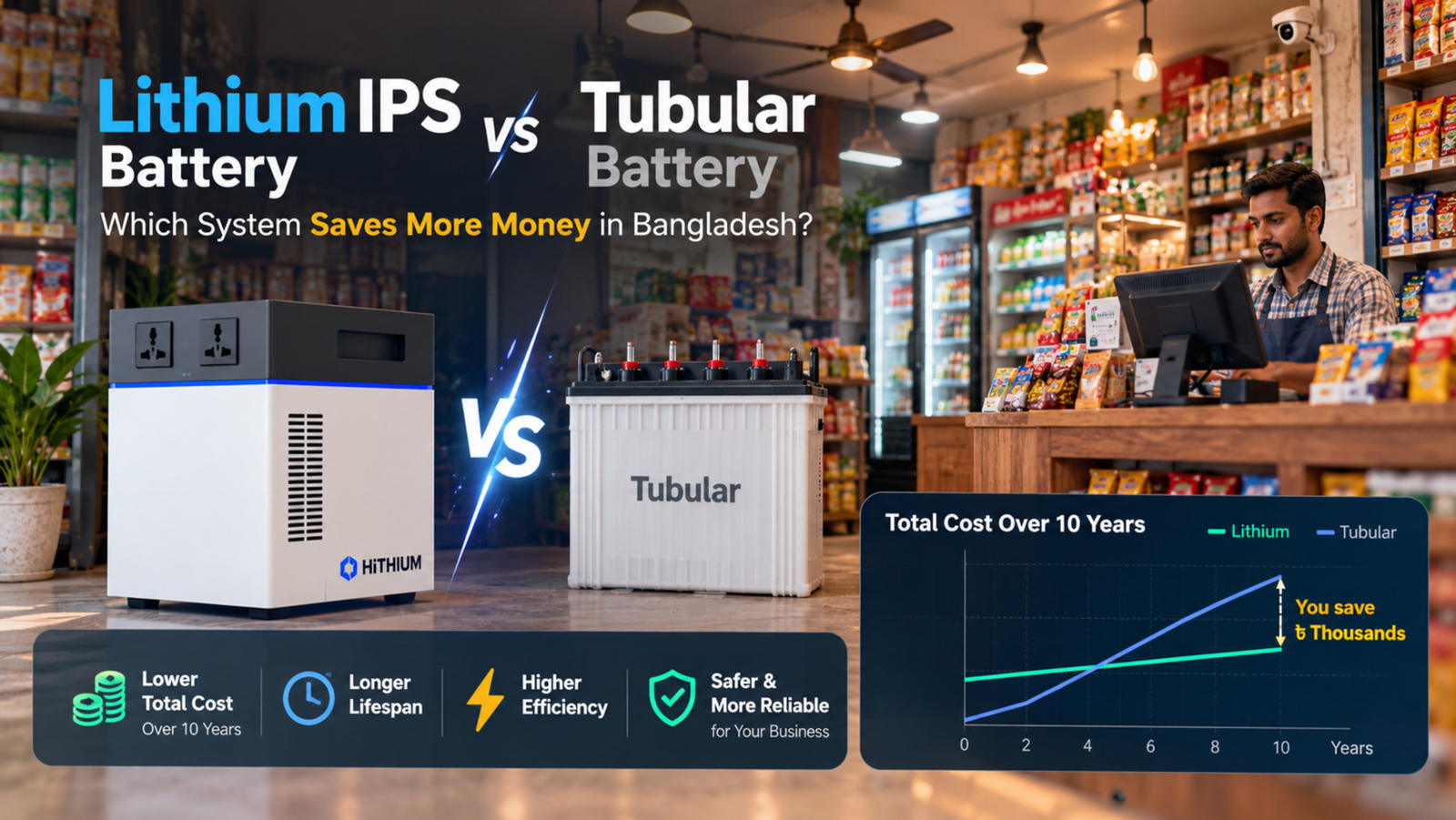
When load shedding hits your Dhaka home or office, your IPS system is your lifeline. But the biggest question every buyer faces today is: should I buy a lithium IPS (an all-in-one unit with a built-in LiFePO₄ battery) or stick with a traditional IPS + tubular battery combination?
In Bangladesh, both options are widely available. But one saves you significant money over time — while the other keeps costing you year after year. This comprehensive comparison of lithium IPS vs tubular battery systems looks at real-world pricing, runtime, maintenance, and long-term costs specific to Bangladesh in 2026.
Understanding the Two Systems
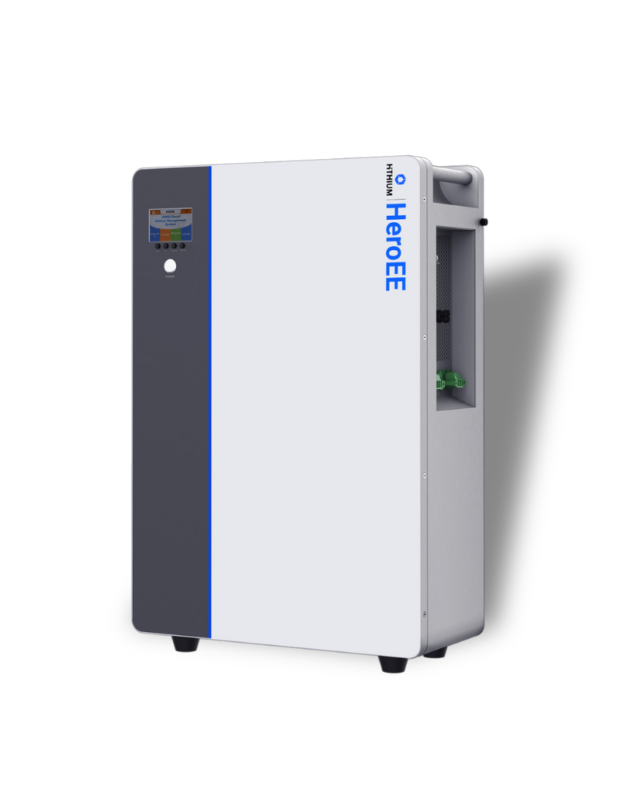
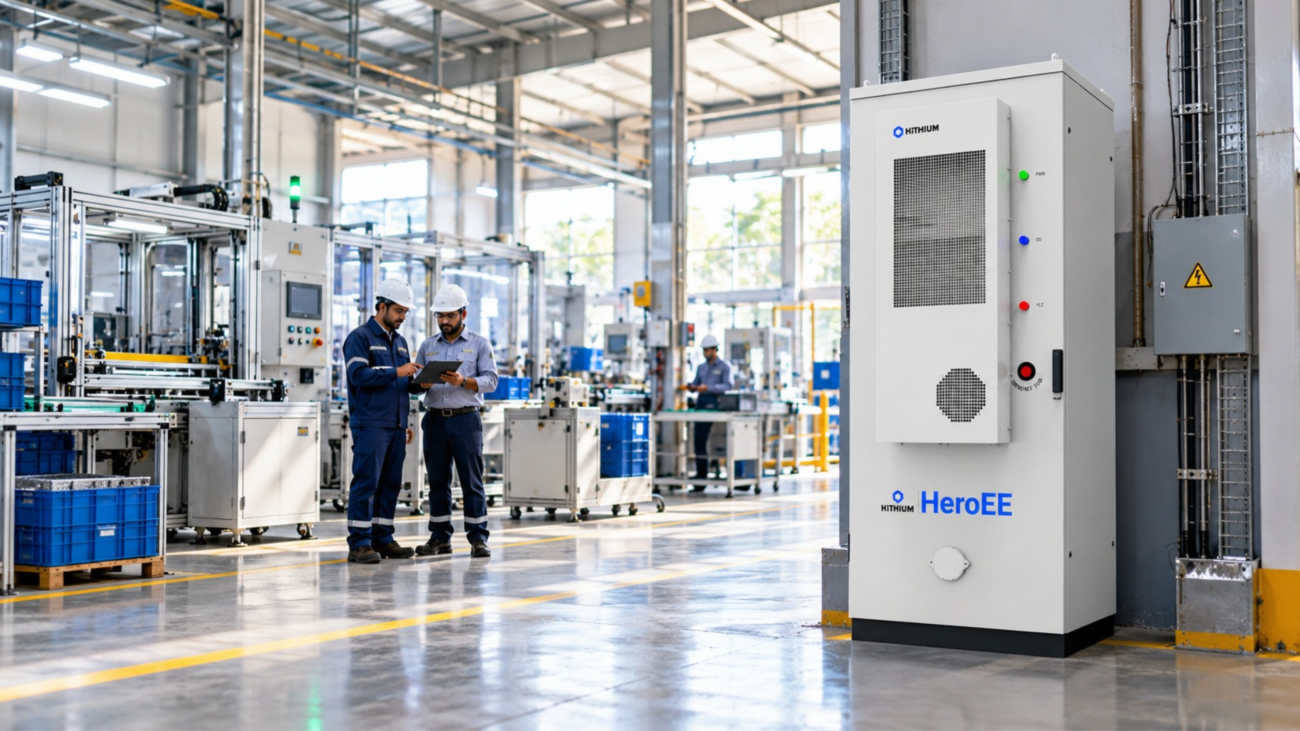
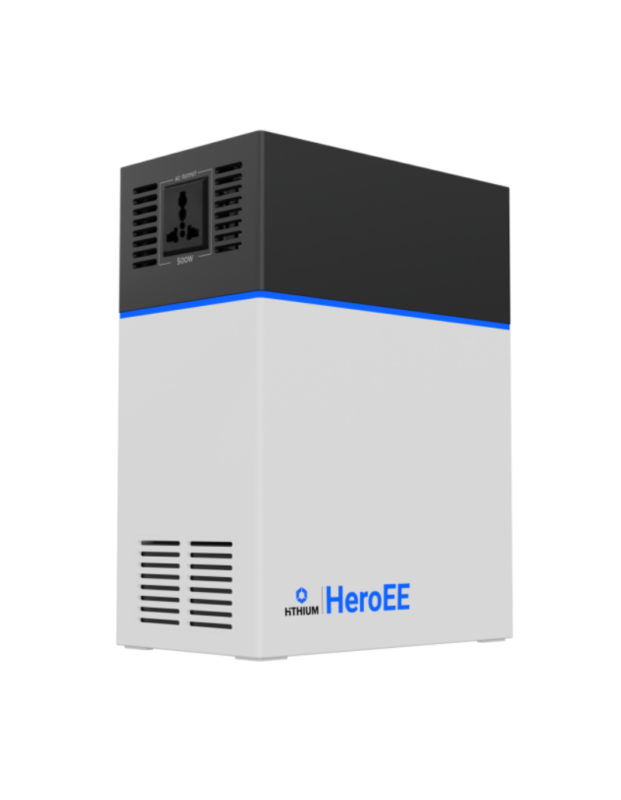
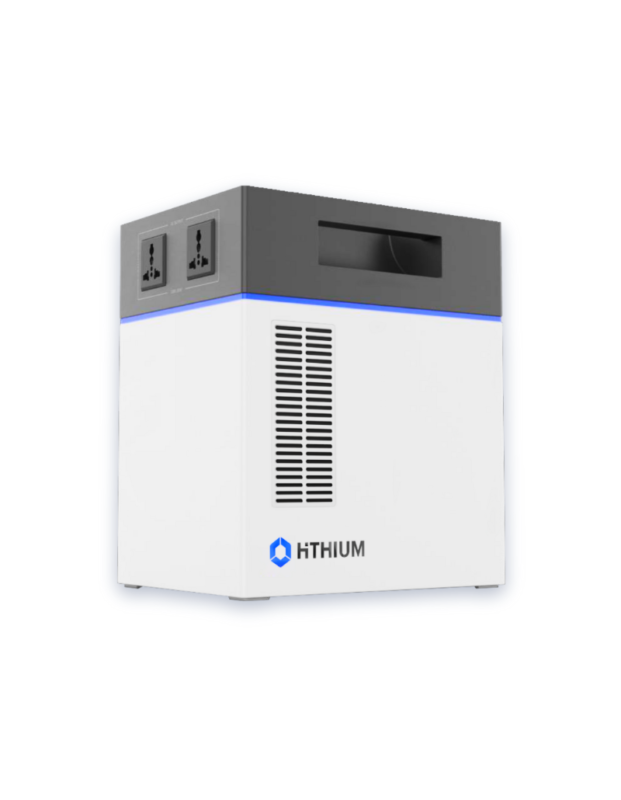
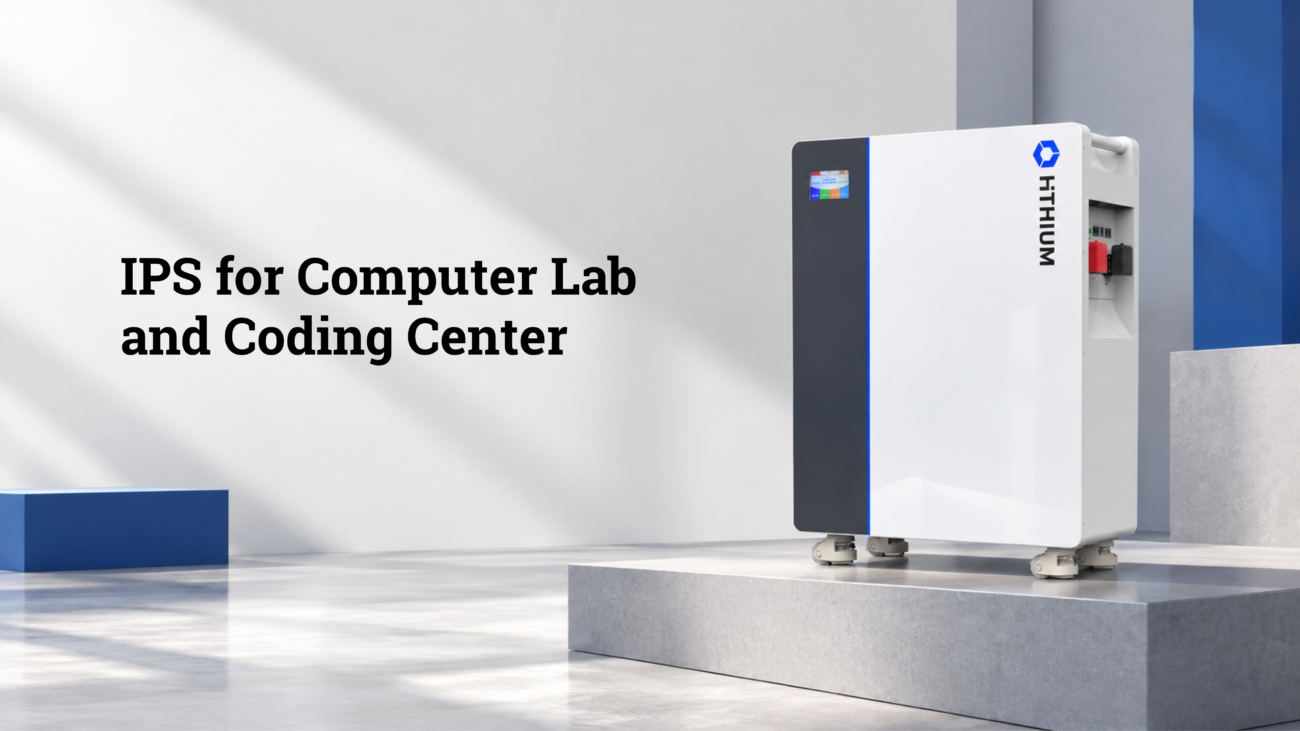
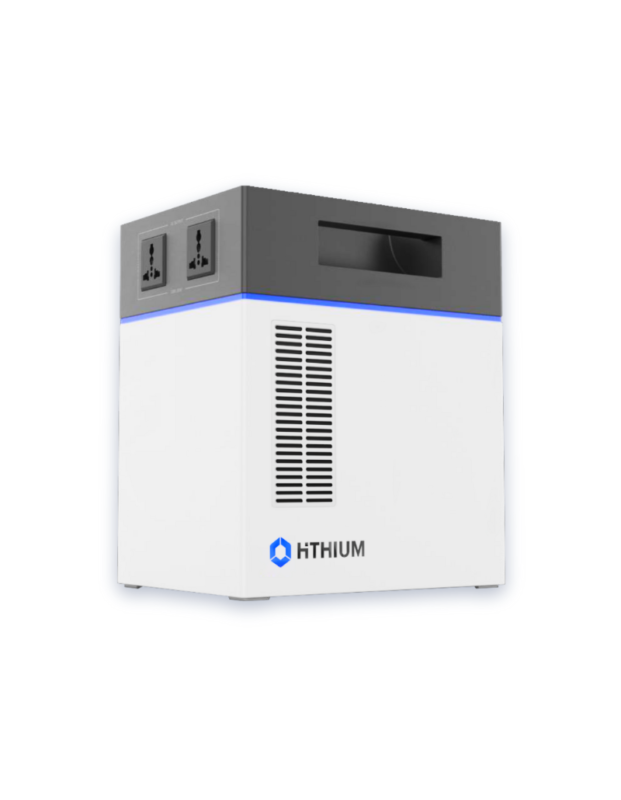
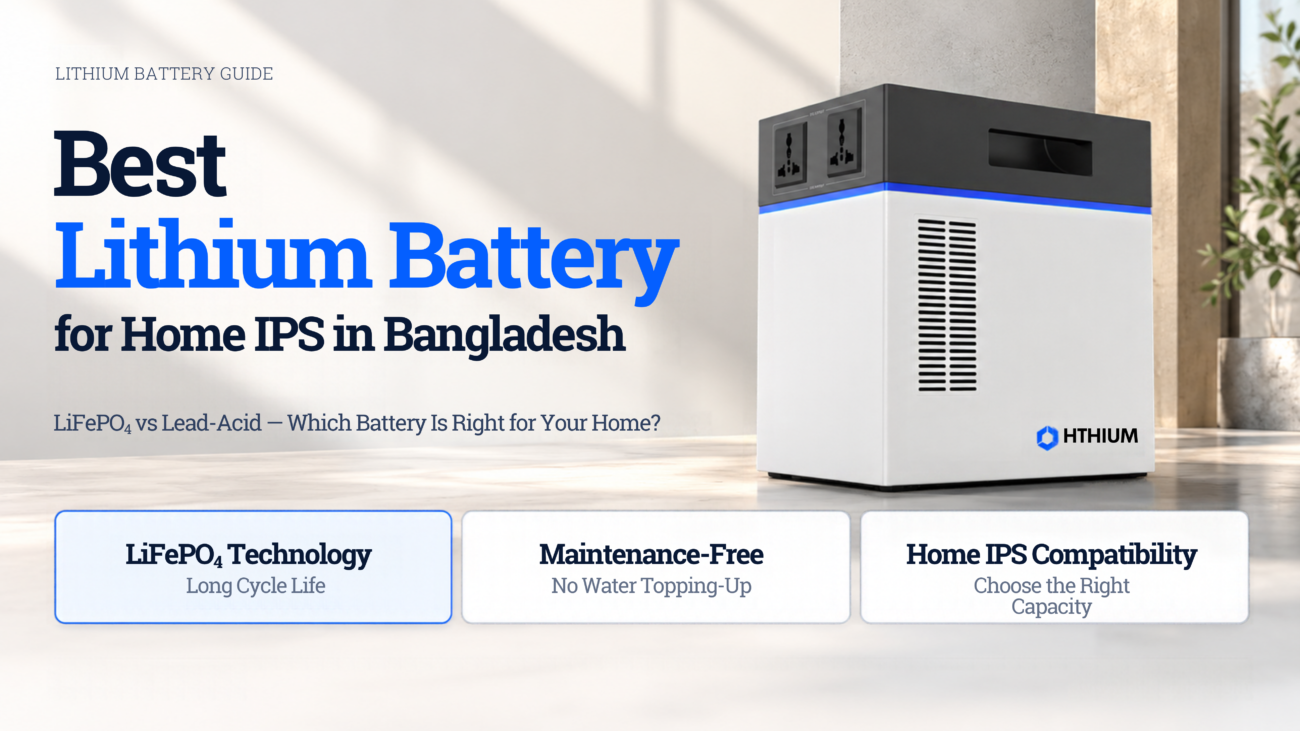
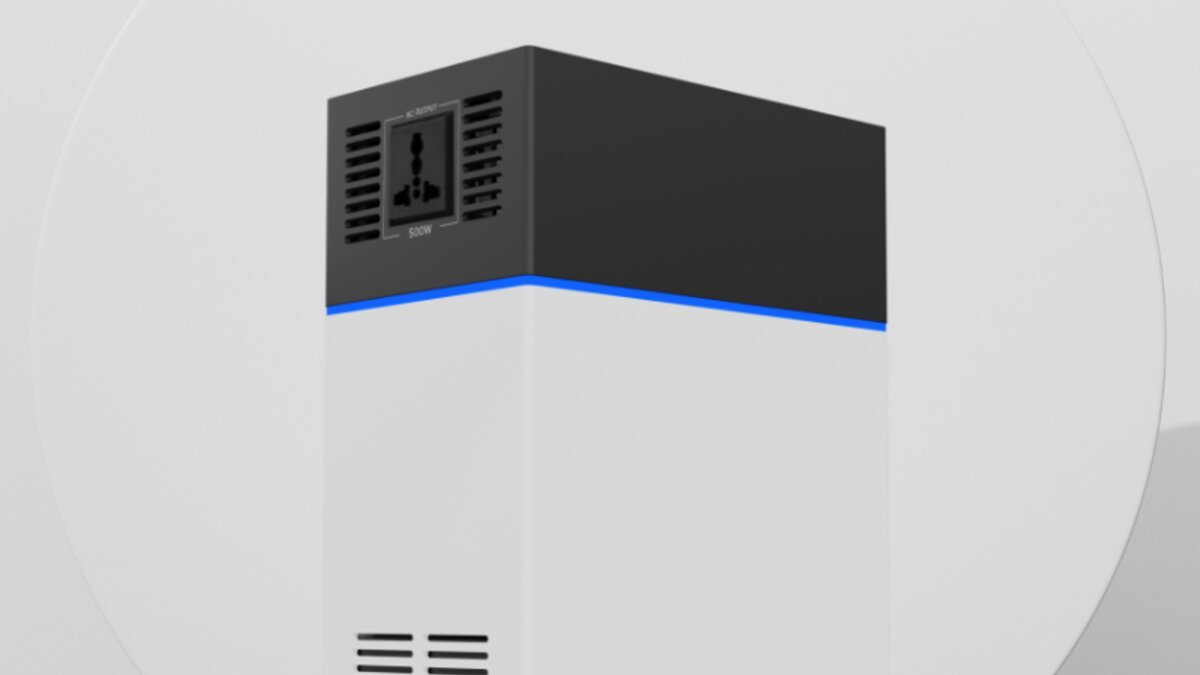
Before we talk money, let’s clarify what we’re comparing. A lithium IPS (like the HiTHIUM HeroEE or HiTHIUM All-in-One series) is a complete unit with a lithium iron phosphate (LiFePO₄) battery built inside the same chassis. You buy one device, plug it in, and it works.
A traditional IPS + tubular battery system consists of two separate components: the IPS inverter unit (the electronic box) and a separate tubular battery (a lead-acid battery with tall cylindrical cells). You buy the inverter and one or two tubular batteries separately, set them up, connect cables, and then it works — with ongoing maintenance.
The distinction matters because your purchasing decision isn’t just about battery chemistry — it’s about the complete system cost, reliability, and what you get in return.
Lithium IPS vs Tubular Battery System: Complete Cost Comparison
| Cost Factor | Lithium IPS (e.g., HiTHIUM 1kwh) | Traditional IPS + Tubular Battery |
|---|---|---|
| Initial purchase price | BDT 33,725–50,800 | BDT 12,000–25,000 |
| Battery lifespan | 25 years | 2–4 years |
| Battery replacement cost (per cycle) | None | BDT 8,000–15,000 every 3 years |
| Water refilling | Never needed | Every 2–3 months (free but time) |
| Electricity wasted (charging loss) | 3–5% | 15–25% |
| Usable battery capacity | 90–95% | 50–60% (DoD limit) |
| Maintenance cost (10 years) | BDT 0 | BDT 3,000–8,000 |
| Battery replacements (10 years) | 0 | 2–3 times |
| Total 10-year cost (estimated) | BDT 33,725–50,800 | BDT 40,000–90,000 |
Why Lithium IPS Systems Save More Money Over Time
Here’s where the numbers get interesting. A lithium IPS costs more upfront — there’s no denying that. But over 10 years of use in a typical Bangladeshi home with 2–4 hours of daily load shedding, the lithium system saves you BDT 15,000 to 45,000. Here’s exactly how that money adds up:
1. No Battery Replacements
A tubular battery lasts 2–4 years in Bangladeshi conditions. A LiFePO₄ pack, by contrast, lasts far longer — see exactly how long a LiFePO₄ battery lasts in Bangladesh. Heat, humidity, and regular deep discharges during load shedding degrade lead-acid plates faster than advertised. Over 10 years, you will buy 2 to 3 replacement tubular batteries. That’s BDT 16,000–45,000 spent on batteries alone.
A LiFePO₄ battery in a lithium IPS lasts 25 years — most warranties cover 5 years, but actual lifespan often exceeds that. At 11,000+ cycles, even with daily load shedding (1 cycle per day = 11,000 cycles in 25 years), you’ll still have 60–70% capacity left after a decade.
2. Higher Usable Capacity Means You Need Less
Here’s a key fact many buyers miss: you can only drain a tubular battery to 50% depth of discharge (DoD). If you buy a 100Ah tubular battery, you only get 50Ah of usable power. Drain it further and the battery dies in months.
A lithium battery allows 90–95% DoD. A 100Ah LiFePO₄ battery gives you 314Ah of usable power. That means a 60Ah lithium IPS can provide the same usable runtime as a 120Ah tubular battery system. You’re effectively getting more than double the usable capacity for the same Ah rating.
3. Lower Electricity Bills from Charging Efficiency
Tubular lead-acid batteries lose 15–25% of the electricity used to charge them as heat. This is called charging efficiency — and it’s terrible for lead-acid. For every BDT 100 of electricity you put into charging, BDT 15–25 is wasted as heat.
Lithium batteries have 95–97% charging efficiency. Only 3–5% is lost as heat. Over months of daily charging, this difference adds up to noticeable savings on your electricity bill — especially during heavy load shedding months (April–September in Bangladesh).
4. Zero Maintenance Costs
Tubular batteries need distilled water refills every 2–3 months. If you forget, the plates dry out and the battery fails prematurely. Terminals corrode. Acid spills happen. The battery needs an annual equalization charge. While these tasks aren’t expensive in materials, they cost you time and the risk of forgetting is real.
Lithium batteries are completely sealed and maintenance-free. No water, no terminal cleaning, no acid smell, no corrosion. Install it and forget it for a decade.
Head-to-Head: Which System Wins for Your Use Case?
| Use Case | Recommended System | Why |
|---|---|---|
| Home with light loads (lights, fans, TV) | Lithium IPS (600–1000VA) | Lower total cost over 5+ years, no maintenance, silent |
| Home with heavy loads (fridge, AC, motor) | Lithium IPS (2000VA+) or hybrid | Lithium handles deep cycles better; tubular struggles with fridge compressors |
| Office / shop | Lithium IPS | Professional look, no acid fumes, no water refilling, consistent runtime |
| Short budget (under BDT 15,000) | Traditional IPS + tubular | Lower entry cost; upgrade to lithium later |
| Village / off-grid (frequent long outages) | Solar + Lithium IPS | Deep-cycle capability and solar compatibility of LiFePO₄ |
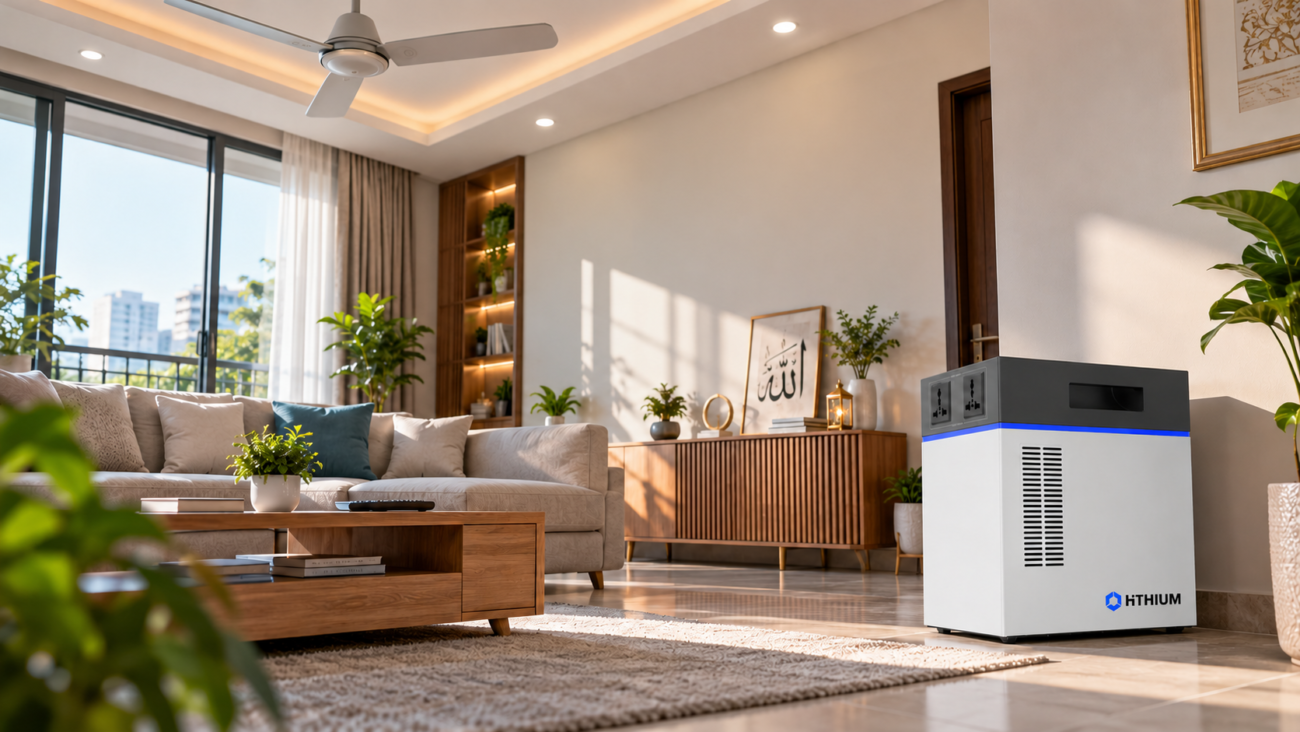
| Apartment (limited space) | Lithium IPS | Wall-mountable, compact, no battery cabinet needed |
When Does a Tubular Battery System Still Make Sense?
Let’s be fair — tubular batteries aren’t obsolete. In 2026, a traditional IPS + tubular battery still makes sense in these scenarios:
- Extremely tight budget: If you can only spend BDT 10,000–15,000, you won’t find a quality lithium IPS in that range. A basic IPS with a 100Ah tubular battery is your entry point.
- Minimal load shedding (less than 1 hour/day): If load shedding is brief and infrequent, the battery doesn’t cycle enough for lithium’s long-life advantage to pay off financially.
- Rental property: If you’re renting and the IPS stays with the property, a cheaper tubular system makes sense — the next tenant can deal with replacements.
- Very high power requirements (3,000VA+): Very large lithium systems are still expensive in Bangladesh. For massive loads (entire building backup), a large tubular bank may be cheaper initially.
But for the vast majority of Bangladeshi homes — with 2–4 hours of daily load shedding, a moderate budget, and a desire for hassle-free backup — the lithium IPS is the clear cost-saving winner.
Frequently Asked Questions
Q: Can I replace just the tubular battery in my existing IPS with a lithium battery?
A: Yes, many modern IPS inverters support lithium batteries. But you need to check if your inverter has a lithium-compatible charging profile (CC/CV). Older inverters may overcharge or undercharge LiFePO₄ cells. A complete lithium IPS is simpler because everything is designed to work together.
Q: How much does a HiTHIUM lithium IPS cost in Bangladesh 2026?
A: HiTHIUM offers lithium IPS units starting from approximately BDT 33,725 for 1kWh models up to BDT 3,36,000 for 16kWh models. Current prices are available on the HiTHIUM Bangladesh website and at authorised dealers across Dhaka, Chattogram, and other major cities.
Q: Is a lithium IPS safe for Bangladeshi homes?
A: Yes. HiTHIUM lithium IPS units use Grade-A LiFePO₄ cells with built-in Battery Management Systems (BMS) that prevent overcharging, over-discharging, short circuits, and overheating. Unlike old lithium-ion batteries (which could overheat), LiFePO₄ is the safest lithium chemistry available and is used in electric vehicles and solar energy storage worldwide.
Q: What happens to old tubular batteries? Are they recyclable?
A: Lead-acid tubular batteries are recyclable — about 95% of lead-acid battery components can be recycled. In Bangladesh, many local recyclers buy used batteries. However, improper disposal is still common and causes environmental damage. Lithium batteries also contain recyclable materials (lithium, iron, phosphate) but recycling infrastructure in Bangladesh is still developing. The good news is a LiFePO₄ battery lasts 8–12 years — 3x longer than tubular — so you dispose of far fewer batteries overall.
Q: Which is lighter — lithium IPS or traditional IPS + tubular battery?
A: A lithium IPS is dramatically lighter. A 100Ah lithium battery weighs about 12–15 kg. A 100Ah tubular battery weighs 30–35 kg. Combined with the inverter unit, a traditional system can weigh 40+ kg. This matters for apartment buildings, upstairs rooms, or any situation where you might need to move the system.
Q: Do I need to change my wiring if I switch from tubular to lithium IPS?
A: In most cases, no. A lithium IPS connects the same way — input from mains, output to your loads. The wiring gauge may even be smaller because lithium units have higher efficiency (less heat, less voltage drop). However, always have a qualified electrician check your setup, especially if you’re running high-current appliances.
Final Verdict: Which System Saves More Money?
After comparing initial cost, lifespan, maintenance, efficiency, and total cost of ownership over 10 years, the answer is clear:
A lithium IPS system saves you BDT 33.725–45,000 over 10 years compared to a traditional IPS + tubular battery combination.
The upfront price is higher — but you get 25 years of maintenance-free, reliable backup power, no battery replacements, lower electricity bills, and a compact, modern system that looks good in your home.
If you’re buying a new IPS system in 2026 and can afford the initial investment, a lithium IPS (especially from HiTHIUM with its Grade-A LiFePO₄ cells and comprehensive warranty) is the smarter financial decision.
If budget is tight today, start with a basic tubular system — but plan to upgrade to lithium when the first battery replacement comes due. That’s where the real savings lie.
Ready to make the switch? Browse the full range of HiTHIUM lithium IPS systems at hithiumbd.com or visit our showroom in Dhaka to see the difference yourself. Your future self — and your wallet — will thank you.
📞 Need help choosing? Contact the HiTHIUM Bangladesh team for a free consultation based on your home’s specific power requirements and budget.
Related Guides
- What Makes an IPS the Best in Bangladesh? — 7 Features to Compare
- IPS Price in Bangladesh 2026 — Complete Price Guide
- Best Lithium IPS in Bangladesh 2026
- How Long Does a Lithium IPS Run During Load Shedding?
- Lithium IPS vs Generator in Bangladesh
Also see our detailed Lithium Battery Vs Tubular Battery Ips Bangladesh comparison.
Also see our detailed Lifepo Vs Tubular Battery In Bangladesh comparison.


12 thoughts on “Lithium IPS vs Tubular Battery — Which System Saves More Money in Bangladesh?”