




Blog
Best IPS for Fish Farming in Bangladesh — Capacity Guide

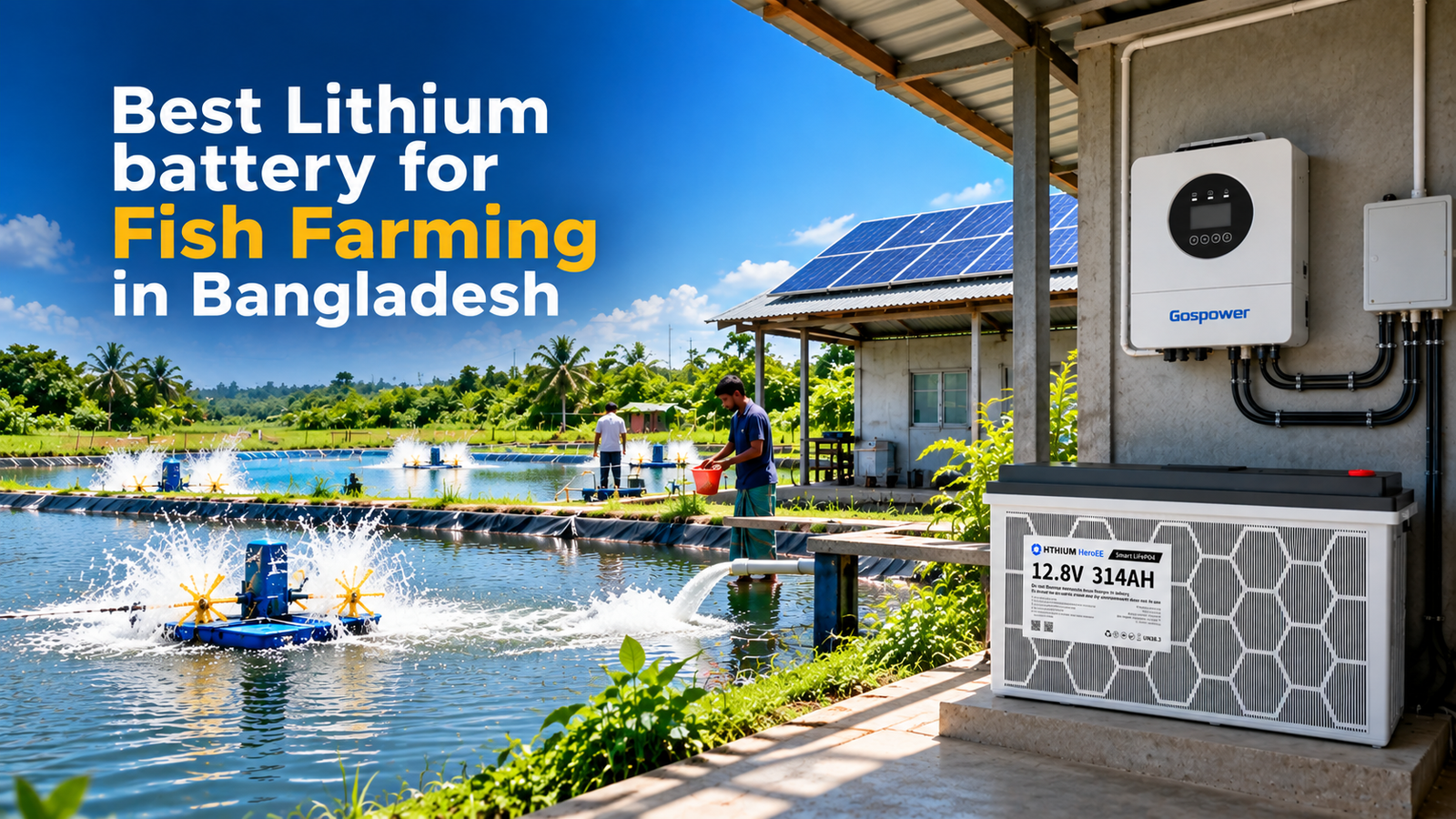
Fish farming is one of Bangladesh’s fastest-growing industries, contributing over 1.2% of the national GDP. With over 800,000 registered aquaculture farms across the country, reliable power supply has become a critical concern. Aeration systems, water pumps, and filtration equipment all need uninterrupted electricity to keep fish alive and healthy. When the grid goes down — and in many rural areas it goes down daily — a dependable IPS can mean the difference between a profitable harvest and a total loss.
In this guide, we cover everything Bangladeshi fish farmers need to know about choosing the right IPS for aquaculture operations, from load calculations to battery technology and specific product recommendations for 2026.
Why Fish Farms Need Dedicated IPS Systems
Unlike residential use, fish farming demands continuous, high-load power. A typical small-scale tilapia or pangas farm runs multiple critical systems simultaneously:
- Aeration paddles or blowers: 500W–2,000W per unit, running 24/7 during peak season
- Water circulation pumps: 200W–1,000W depending on pond size
- UV sterilizers and filters: 50W–300W continuous load
- Feed auto-dispensers: 50W–150W during feeding hours
- Lighting and monitoring cameras: 100W–500W total
A medium-scale farm (5–10 ponds) can easily require 3,000–5,000W of sustained power. Without backup, even a 30-minute outage during summer heat can cause oxygen depletion and mass fish mortality.
How to Calculate Power Requirements for Your Fish Farm
Before purchasing an IPS, calculate your total load. This is the single most important step to avoid buying an undersized system.
Step 1: List All Equipment
Write down every electrical device in your operation and its wattage. Check the nameplate on each motor or blower — it will list the rated wattage in watts (W) or horsepower (HP). Convert HP to watts: 1 HP = 746W.
Step 2: Determine Simultaneous Load
Add the wattage of all devices that run at the same time. Do not just add every device — some only run during feeding hours. Focus on the worst-case scenario (all systems on simultaneously).
Step 3: Add a Safety Margin
Motors draw 2–3x their rated wattage during startup (inrush current). Multiply your total load by 1.5 to get the minimum IPS capacity. For example:
| Equipment | Quantity | Wattage Each | Total (W) |
|---|---|---|---|
| Aeration blower | 2 | 750W | 1,500 |
| Water pump | 2 | 400W | 800 |
| UV sterilizer | 1 | 150W | 150 |
| Monitoring cameras | 4 | 25W | 100 |
| Total | 2,550W | ||
| With 1.5x margin | 3,825W → need 5,000VA IPS |
Lithium vs Tubular Battery IPS for Fish Farms
The battery technology you choose directly affects backup time, maintenance cost, and reliability. For aquaculture, this decision is especially critical because fish farms often operate in humid, dusty environments where battery life degrades faster.
| Feature | Lithium (LiFePO4) IPS | Tubular Lead-Acid IPS |
|---|---|---|
| Backup time (5,000W load) | 2–4 hours (with 200Ah battery) | 1–2 hours (with 200Ah battery) |
| Battery lifespan | 15 – 25 years / 11,000 cycles | 2–3 years / 500 cycles |
| Maintenance | Zero — no water topping | Monthly water refilling required |
| Charge time | 2 hours (fast charge) | 8–12 hours (slow charge) |
| Heat tolerance | Operates up to 55°C | Capacity drops 50% above 40°C |
| Humidity resistance | Sealed, moisture-proof | Corrosion risk on terminals |
| 5-year total cost | ৳ 0 | ৳60,000–120,000 (includes 2 battery replacements) |
For fish farms, lithium IPS is the clear winner. The faster charge time means the system recovers quickly between outages, and the sealed construction resists the humid, corrosive conditions near ponds. Lithium battery safety is also well-established for industrial use.
Best IPS Capacity for Different Farm Sizes
Small Scale (1–3 Ponds, Nursery Tanks)
Typical load: 1,000–2,000W. A 3,000VA lithium IPS with a 100Ah LiFePO4 battery provides 1–2 hours of backup — enough to bridge most load-shedding periods in rural Bangladesh. Expected cost: ৳ 35,000–50,000.
Medium Scale (5–10 Ponds)
Typical load: 3,000–5,000W. A 5,000VA lithium IPS with 200Ah battery bank gives 1.5–3 hours backup. For longer outages, consider adding a second battery to extend runtime. Expected cost: ৳ 65,000–90,000.
Large Scale (10+ Ponds, Commercial Hatchery)
Typical load: 8,000–15,000W. You need a 10,000VA+ system or multiple parallel IPS units. Consider a parallel IPS installation to combine two units for higher capacity. Expected cost: ৳120,000–250,000.
Top IPS Recommendations for Fish Farming in Bangladesh (2026)
HiTHIUM 4kWh Lithium IPS
The best all-around choice for medium-scale aquaculture. Supports up to 4,000W continuous load with automatic voltage regulation. Compatible with 12V/24V/48V battery configurations, making it flexible for different farm setups. The built-in overload protection prevents damage from motor inrush current — critical when blowers cycle on and off.
HiTHIUM 8kWh Parallel-Ready IPS
For larger operations, two of these units can be connected in parallel to deliver 16kWh capacity. Each unit accepts external LiFePO4 battery banks, so you can scale backup time independently of capacity. The LCD display shows real-time load percentage, battery health, and estimated runtime.
HiTHIUM 2kWh Compact IPS
Suitable for small nursery operations and hatcheries where the total load is under 1000W. Compact design fits in control rooms near ponds. The ultra-quiet operation an added benefit in areas where noise disturbs fish behavior.
Installation Tips for Aquaculture Environments
Fish farm environments are uniquely challenging for electrical equipment. Here are practical installation guidelines:
- Elevate the IPS unit: Mount at least 3 feet above ground level. Pond areas flood during monsoon — water damage is the #1 cause of IPS failure in aquaculture.
- Use IP65-rated enclosures: Standard IPS housings are not waterproof. House the unit in a sealed enclosure with proper ventilation slots.
- Install proper earthing and grounding: Wet soil near ponds conducts electricity differently. Use copper grounding rods, not galvanized steel, which corrodes faster in moist conditions.
- Separate battery storage: Keep batteries in a dry, ventilated room away from the pond. LiFePO4 batteries are sealed, but extreme humidity still affects terminal connections over time.
- Use the correct cable sizes: For 5,000W+ loads over 20m distance, use 10mm² or 16mm² copper cables to prevent voltage drop.
Maintenance Schedule for Aquaculture IPS
Regular maintenance prevents unexpected failures during critical farming periods. Follow this maintenance checklist adapted for aquaculture:
| Task | Frequency | Why It Matters |
|---|---|---|
| Check battery terminal connections | Weekly | Vibration from pumps loosens connections |
| Clean dust from ventilation slots | Weekly | Pond area dust and humidity clogs airflow |
| Test automatic switchover | Monthly | Verify IPS kicks in within 10ms of grid failure |
| Check cable insulation | Monthly | UV and moisture degrade insulation near ponds |
| Calibrate load threshold | Quarterly | Prevent nuisance tripping as you add equipment |
| Full system load test | Before monsoon season | Confirm capacity before the high-risk period |
How Much Does IPS for Fish Farming Cost in Bangladesh?
Here is a realistic cost breakdown for equipping a medium-scale fish farm with lithium IPS backup in 2026:
| Component | Specification | Estimated Cost (BDT) |
|---|---|---|
| IPS Unit | 5,000VA Lithium IPS | ৳40,000–55,000 |
| Battery Bank | 200Ah LiFePO4 (48V or 2x24V) | ৳35,000–50,000 |
| Installation Cables | 10mm² copper, 20m run | ৳3,000–5,000 |
| Earthing Kit | Copper rod + cable | ৳2,000–4,000 |
| Enclosure (IP65) | Weatherproof box | ৳5,000–8,000 |
| Total | ৳85,000–122,000 |
Compare this to the cost of losing an entire fish harvest. A 10-pond tilapia farm can lose ৳200,000–500,000 in a single mortality event caused by aeration failure. The IPS pays for itself within the first prevented incident.
Frequently Asked Questions
What size IPS do I need for a small fish farm?
For a small fish farm with 1–3 ponds running one aeration blower and a water pump (total load around 1,500W), a 3,000VA lithium IPS with a 100Ah battery provides sufficient backup. This gives 1–2 hours of runtime, which covers most rural load-shedding periods in Bangladesh. If your area experiences 4+ hour outages, upgrade to a 5,000VA unit with a 200Ah battery for extended runtime.
Can I use a regular home IPS for fish farming?
A standard 1,000–1,500VA home IPS is not suitable for fish farming. The total load of aeration blowers, water pumps, and monitoring equipment typically exceeds 3,000W, which overwhelms a residential IPS. Additionally, home IPS units are designed for short outages (30–60 minutes), while fish farms need sustained backup of 2–4 hours. Choose an IPS rated at least 1.5x your total load, and use lithium batteries for faster recharge between outages.
How long will a lithium IPS last powering aeration equipment?
Backup duration depends on your battery capacity and total load. A 5,000VA lithium IPS with a 200Ah 48V battery bank stores approximately 9,600Wh of energy. With a 3,000W aeration load, expect roughly 3 hours of continuous runtime. In practice, grid outages in rural Bangladesh average 2–3 hours during summer, so this configuration handles most scenarios. Adding a second 200Ah battery doubles your runtime to 6+ hours for critical operations.
Is lithium IPS safe to use near fish ponds?
Yes, LiFePO4 lithium batteries are sealed units with no exposed acid or liquid, making them safe for use near aquaculture operations. They do not emit hydrogen gas like lead-acid batteries, which eliminates explosion risk. However, mount the IPS and batteries at least 3 feet above ground to protect against monsoon flooding, and house them in a waterproof enclosure. Keep battery terminals dry and inspect connections weekly for corrosion in humid conditions.
What is the total cost of IPS for a commercial fish farm in Bangladesh?
A complete IPS setup for a medium-scale commercial fish farm (5–10 ponds) costs between ৳85,000 and ৳122,000 in 2026. This includes a 5,000VA lithium IPS unit (৳40,000–55,000), a 200Ah LiFePO4 battery bank (৳35,000–50,000), installation cables, earthing kit, and a weatherproof enclosure. For larger operations (10+ ponds), expect ৳120,000–250,000 for a parallel IPS system with expanded battery capacity. The investment pays for itself by preventing a single harvest loss event.
How do I protect my IPS during monsoon season?
During monsoon (June–September), flooding and humidity are the biggest threats to your IPS system. Install the unit in an IP65-rated waterproof enclosure mounted on a raised platform at least 3 feet above the highest historical flood level. Seal all cable entry points with silicone to prevent moisture ingress. Run a full system load test before monsoon starts to confirm the IPS handles peak demand. Check earthing connections monthly — wet soil changes ground resistance and can affect protection circuits. Keep the battery room ventilated but dry.
Take Action: Protect Your Fish Farm Today
Every hour without power during a Bangladesh summer is a risk to your fish. The right IPS system pays for itself the first time it prevents a mortality event. Browse our full range of lithium IPS systems or contact us for a free consultation — we will help you calculate the exact capacity your farm needs and recommend the right configuration for your budget.
Need help with calculating backup time for your specific setup? Use our backup time calculator guide, or reach out to our team for a customized recommendation.
Recommended HiTHIUM Products
Based on your needs, here are the best HiTHIUM lithium IPS and power station options for Bangladesh:
| Product | Capacity | Best For | Price |
|---|---|---|---|
| HiTHIUM MaxPower 8 AIO (8kWh) | 8kWh | Large spaces, heavy loads, commercial | ৳2,87,000 |
| HiTHIUM HeroEE 16 (16kWh) | 16kWh | Large homes, offices, factories | ৳3,36,000 |
Free delivery across Bangladesh. WhatsApp us for consultation: Contact HiTHIUM

One thought on “Best IPS for Fish Farming in Bangladesh — Capacity Guide”