




Blog
Solar Panel Price in Bangladesh 2026: Rate Guide

Solar panel price in Bangladesh in 2026 is one of the most searched questions for anyone planning a home solar setup or a solar-assisted IPS. This guide breaks down current per-panel market rates, how to calculate price per watt, what drives the price difference between panels, how many panels a typical Bangladeshi home actually needs, and how a HiTHIUM LiFePO4 battery fits into the system.
Panel prices in Bangladesh have dropped sharply over the past two years. Global module oversupply, stronger taka-denominated import pricing and a wave of N-type (TOPCon) capacity from Tier-1 manufacturers have pushed large-format 550W–625W panels into a range that was unthinkable in 2023. For buyers, that means a 3–5 kWp home system is now a realistic alternative to a diesel generator or a pure lead-acid IPS.
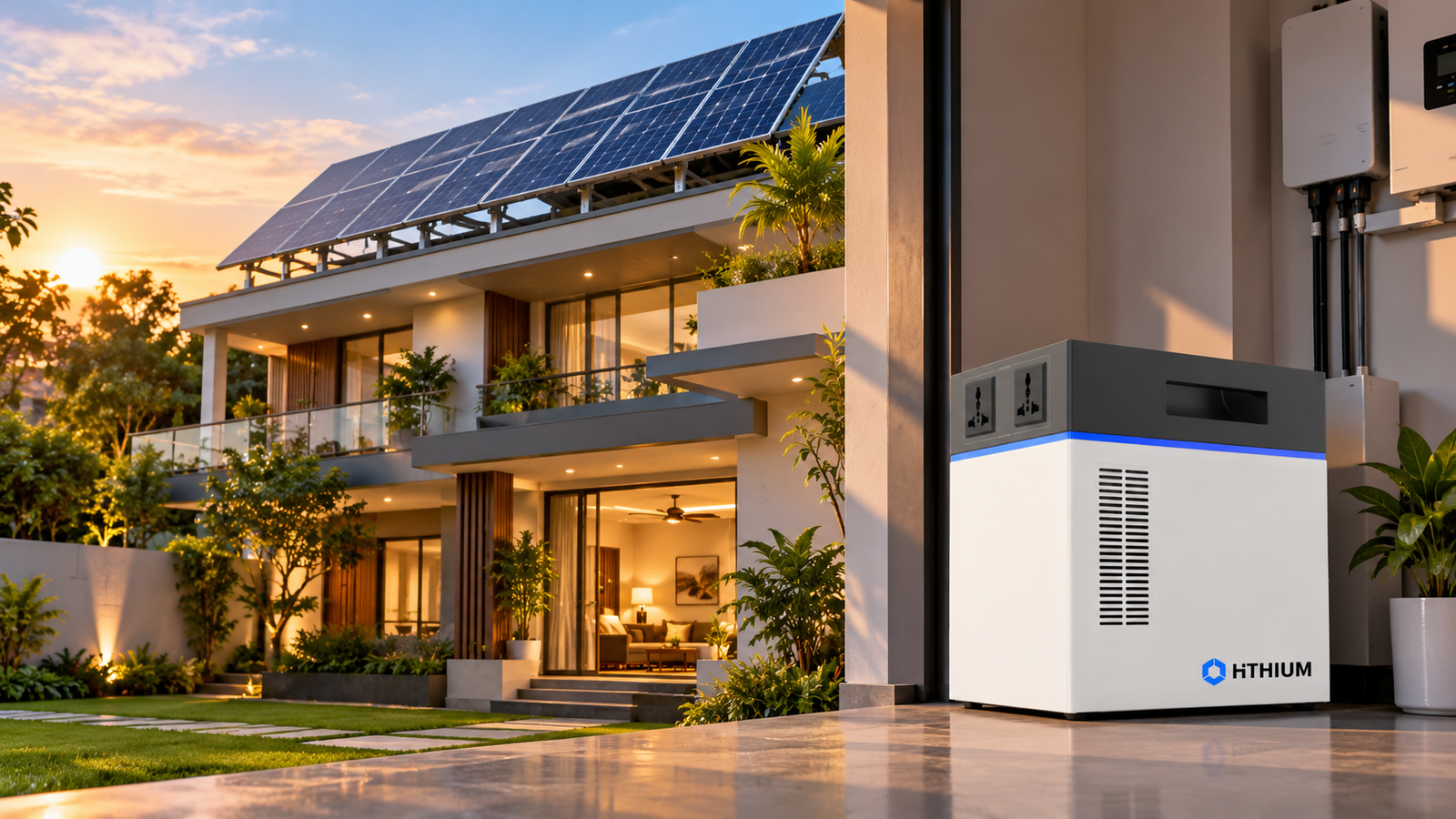
Solar Panel Price in Bangladesh 2026: Current Market Rates
Below are indicative retail prices compiled from Bangladeshi solar marketplaces (updated September 2026). Treat them as market benchmarks — final pricing varies by dealer, stock, warranty terms and whether you buy panel-only or a full installed system.
| Panel Model | Wattage | Indicative Price (BDT) | Price per Watt |
|---|---|---|---|
| Jinko Tiger Neo N-Type | 585W | ৳10,400 | ~৳17.8/W |
| Longi LR5-72HTH-580M (N-type) | 580W | ৳12,500 | ~৳21.6/W |
| Jinko Tiger Bifacial N-Type (dual glass) | 625W | ৳12,500 | ~৳20.0/W |
| Jinko Tiger Neo Bifacial (78HL4-BDV) | 620W | ৳13,000 | ~৳21.0/W |
| JA Solar Mono | 540W | ৳13,500 | ৳25.0/W |
| Trina Vertex N Bifacial Dual Glass | 600W | ৳18,000 | ৳30.0/W |
| Trina Solar | 575W | ৳20,125 | ৳35.0/W |
| REC TwinPeak 4 All-Black Mono | 375W | ৳22,500 | ৳60.0/W |
Small-format panels (for portable power stations, IPS charging and off-grid kits) cost more per watt because of fixed manufacturing and shipping overheads:
- 100W 12V monocrystalline: ৳4,200 – ৳4,500 (~৳42–45/W)
- 150W monocrystalline: ৳5,400 – ৳6,412
- 200W 12V monocrystalline: ৳6,400 – ৳6,500
- 220W half-cut mono: ~৳5,580
- 280W N-type mono: ~৳8,960
Rule of thumb for 2026: large Tier-1 N-type panels land between ৳17 and ৳22 per watt. Anything dramatically cheaper than ৳15/W for a branded panel should be verified carefully — counterfeit or rejected-grade modules are common in this price gap. Anything above ৳35/W usually means premium all-black aesthetics, bifacial dual-glass construction or a distributor with a longer warranty programme.
How to Calculate Solar Panel Price per Watt
Price per watt (৳/W) is the only honest way to compare panels of different sizes. The formula is simple:
Price per watt = panel price ÷ rated wattage (STC)
Examples using 2026 market rates:
- Jinko 585W at ৳10,400 → 10,400 ÷ 585 = ৳17.8 per watt
- Longi 580W at ৳12,500 → 12,500 ÷ 580 = ৳21.6 per watt
- JA Solar 540W at ৳13,500 → 13,500 ÷ 540 = ৳25.0 per watt
- 100W panel at ৳4,500 → 4,500 ÷ 100 = ৳45.0 per watt
Now scale it: a 3 kWp (3,000W) rooftop array built from ৳17.8/W panels costs roughly ৳53,400 in modules alone — before inverter, structure, wiring and labour. That comparison is exactly why large panels have taken over the residential market.
What Determines the Price of a Solar Panel
Six factors separate a ৳10,400 panel from a ৳22,500 panel in the Bangladeshi market:
- Cell technology: Monocrystalline (single-crystal) cells are now the baseline. N-type / TOPCon cells are the current mainstream — better low-light performance, lower degradation, higher efficiency (22%+). P-type monoPERC is older and cheaper. Polycrystalline is effectively obsolete for new systems.
- Cell count and format: 144 half-cut cells on a 182mm wafer (550–625W class) dominate 2026. Half-cut cells reduce resistive losses and improve shade tolerance, which is why they command a small premium.
- Bifacial gain: Dual-glass bifacial modules capture reflected light from the rear — typically 5–15% extra yield in Bangladesh’s bright, dusty conditions with light-coloured roofs. Expect to pay 10–20% more for bifacial.
- Brand and warranty programme: Tier-1 banks (Jinko, Longi, JA, Trina, Canadian Solar, REC) offer 12-year product and 25–30-year performance warranties with local service backing. No-name panels carry no enforceable warranty in Bangladesh.
- Import cost and FX: Panels are imported in USD. Taka depreciation and duty changes feed directly into retail pricing — a key reason prices moved between 2024 and 2026.
- Dealer margin and service: A dealer who provides installation, structure, DC protection, commissioning and after-sales cleaning support charges more than a trader selling loose modules.
How Many Solar Panels Does a Bangladeshi Home Need?
Start from your load, not from a catalogue. Typical Dhaka household loads:
| Load | Approx. Wattage | Suggested Array |
|---|---|---|
| 5 fans + 8 LED lights + router + TV | 450–650W | 2 × 370W or 1 × 600W+ panel |
| Above + refrigerator + freezer | 900–1,200W | 2–3 × 585W N-type panels (~1.5 kWp) |
| Full 3-bedroom home (fans, lights, fridge, TV, pump) | 2.5–3.5 kW | 5–6 × 585W panels (~3 kWp) |
| Large home + AC + water heater | 5 kWp+ | 8–10 × 585W panels |
For Dhaka’s irradiance (roughly 4.5–5 peak sun hours per day), one watt of installed capacity generates about 4–4.5 kWh per year. So a 3 kWp array produces roughly 270–330 kWh per month in a good season — enough to cover a typical household’s daytime load with surplus.
For the detailed math, use our existing guides: how to calculate IPS load for your home and how to calculate solar panel wattage for a LiFePO4 battery.
Complete Solar System Cost in Bangladesh 2026
Panels are only 30–40% of a complete installed system. Indicative installed system costs (BDT, 2026 estimates for Bangladesh):
| System Size | Type | Approx. Installed Cost (BDT) | Approx. Monthly Generation |
|---|---|---|---|
| 1 kWp | Grid-tied (no battery) | ৳70,000 – ৳95,000 | 90–110 kWh |
| 2 kWp | Grid-tied | ৳130,000 – ৳170,000 | 180–220 kWh |
| 3 kWp | Hybrid (without battery) | ৳200,000 – ৳260,000 | 270–330 kWh |
| 5 kWp | Hybrid (without battery) | ৳320,000 – ৳420,000 | 450–550 kWh |
| 10 kWp | Grid-tied (commercial) | ৳600,000 – ৳800,000 | 900–1,100 kWh |
Battery costs, if you want backup (the part most Bangladeshi buyers care about most):
- LiFePO4 battery, ~5 kWh capacity: ৳60,000 – ৳120,000 depending on local vs imported cells
- Lead-acid tubular battery, ~2.4 kWh usable: ৳18,000 – ৳25,000
The gap looks large upfront, but the cycle-life math reverses the verdict within three years — covered in our solar + LiFePO4 cost analysis.
Solar Panels + HiTHIUM LiFePO4: The Sensible Pairing
A solar array without storage only helps while the sun is up — and in Bangladesh the load-shedding hours are exactly when you need power. This is where HiTHIUM’s LiFePO4 (lithium iron phosphate) systems matter:
- 11,000+ cycle life: vs 300–500 cycles for a tubular lead-acid battery. In a daily charge/discharge load-shedding environment, that is the difference between a battery lasting 2 years and one lasting 20+.
- 95%+ charge efficiency: Almost all the solar energy captured reaches the battery. Lead-acid loses 20–30% as heat and gassing.
- 95% depth of discharge: A 4 kWh HiTHIUM pack delivers close to 3.8 kWh usable. A lead-acid bank delivers only ~50% of its rated capacity before damage.
- Zero maintenance: No distilled water top-ups, no ventilation for hydrogen gassing, no terminal corrosion cleaning.
- 5-year battery warranty: Among the longest in the Bangladesh market in 2026.
- Solar-ready: HiTHIUM IPS units support both solar and grid charging, with MPPT-compatible solar input and smart monitoring.
Current HiTHIUM lithium IPS pricing starts around ৳42,800 for the HeroEE 1 (200W, 1004.8Wh LiFePO4) and moves up through the HeroEE Light 1 (500W) and HeroEE 2 (1,000W / 2,009.6Wh) to whole-home systems. Full breakdowns: IPS price in Bangladesh 2026, lithium battery price in Bangladesh and best lithium IPS in Bangladesh.
Buying Checklist: Avoiding Costly Mistakes
- Buy Tier-1 modules only: Jinko, Longi, JA, Trina, Canadian Solar, REC. Check the serial number and manufacturer label against the invoice — counterfeit labels are the most common scam in this market.
- Confirm the warranty in writing: 12-year product warranty and 25–30-year performance warranty (typically 80% output at year 25) should be documented by the local supplier.
- Match the panel to the charge controller: N-type 585W panels run at higher voltage — confirm your MPPT charge controller or hybrid inverter accepts the panel’s Voc at Bangladesh’s maximum summer temperature. See our solar charge controller guide.
- Tilt and orientation: Fixed arrays in Dhaka should face true south at roughly 20–25° tilt. Rooftop shading from neighbouring buildings matters more than most buyers expect — a 20% shaded array loses far more than 20% output.
- Budget for balance-of-system: Structure, DC cable, MC4 connectors, earthing, surge protection and installation labour typically add 30–50% on top of module cost.
- Plan for cleaning: Dhaka’s dust cuts output 5–15% between washes. Monthly cleaning with clean water and a soft brush is the cheapest performance upgrade available.
- Start small if budget-constrained: A 1–2 kWp array with a HiTHIUM lithium IPS covering fans, lights, router and TV delivers visible savings immediately, and can be extended later panel by panel.
For setup-level detail, read solar panel for home IPS — complete setup guide, and for off-grid outdoor use, solar power station in Bangladesh 2026 and portable power station for camping.
FAQ: Solar Panel Price in Bangladesh 2026
What is the solar panel price in Bangladesh in 2026?
Large Tier-1 panels (540W–625W) currently range from about ৳10,400 for a Jinko 585W N-type to ৳20,000+ for premium bifacial or all-black modules — roughly ৳17 to ৳35 per watt. Small 100–200W panels cost ৳4,200 to ৳6,500 each.
How much does a full 3 kWp solar system cost installed?
Approximately ৳200,000 to ৳260,000 for a hybrid system without battery in 2026. Adding a LiFePO4 battery adds roughly ৳60,000–৳120,000 depending on capacity. See our full cost analysis.
Which solar panel brand is best in Bangladesh?
Jinko, Longi, JA Solar, Trina and Canadian Solar are the mainstream Tier-1 choices — all available in N-type/TOPCon formats with 25-year performance warranties. Compare on price per watt, warranty terms and local service, not brand marketing.
Can solar panels charge a HiTHIUM lithium IPS?
Yes. HiTHIUM IPS systems support both solar and grid charging, and pair naturally with LiFePO4 storage because of the high charge efficiency and deep discharge tolerance. Details: solar panel for home IPS setup guide.
How many panels do I need for a Bangladesh home with fans, lights and a fridge?
For a typical 3-bedroom home with 5–8 fans, 8–12 lights, fridge, TV and router, plan for 3 kWp — about 5 to 6 × 585W N-type panels. Use our IPS load calculation guide to size it precisely.
Do solar panels work during load shedding?
Panels generate only in daylight — but with a hybrid IPS and battery, stored energy covers outages. Battery capacity, not panel count, determines your load-shedding backup. See IPS for home buying guide 2026.
Prices move with import costs and stock. Get a current written quote before committing, and size the system from your actual load — not from a neighbour’s array.
