




Blog
Solar Power Station in Bangladesh 2026 | HiTHIUM Guide

Solar Power Station in Bangladesh 2026: Complete Buyer’s Guide
Quick Answer: A solar power station in Bangladesh combines a portable power station (a LiFePO4 lithium battery with a built-in inverter) with solar panels to deliver silent, fuel-free backup power for homes and businesses. In 2026, entry-level solar power stations start around BDT 60,000–80,000 (roughly 1 kWh capacity), while whole-home solar ESS units like the HiTHIUM MaxPower 8 (8 kWh, 9,000W MPPT) handle ACs, fridges and heavy loads through 2–3 hours of daily load shedding. Compared with a diesel generator, a solar-charged power station runs at BDT 6–9 per kWh, needs zero maintenance, and pays back its upfront cost in 2–3 years.
Load shedding is back on Bangladesh’s summer schedule, and every outage exposes the same choice: a noisy, fuel-hungry generator, or a battery system that quietly carries the house through the cut. A solar power station is the modern answer — a lithium battery unit you charge from the sun or the grid, and run your lights, fans, TV, router, fridge and even AC from. This guide explains what a solar power station is, which one fits your budget and load, real prices in Bangladesh for 2026, and how to size a system correctly the first time.
What Is a Solar Power Station?
A solar power station is an all-in-one energy box: a LiFePO4 lithium battery + a pure sine wave inverter + charge controllers (AC and solar MPPT) in a single unit. You charge it from the grid like an IPS, or from solar panels — and when the power cuts, it takes over in milliseconds, with no fuel, no noise and no exhaust.
Think of it as the modern evolution of the IPS Bangladesh has used for decades. Traditional IPS systems pair lead-acid or tubular batteries that need monthly water top-ups and lose 30–40% capacity within a few years. A solar power station replaces that with a sealed LiFePO4 battery rated for 11,000+ cycles, adds solar charging for free daytime energy, and moves the whole system into a portable or wall-mountable box you can install without a dedicated battery room.
Solar Power Station vs Solar Home System vs IPS
| Feature | Solar Power Station | Solar Home System | Traditional IPS |
|---|---|---|---|
| Battery type | LiFePO4 (11,000+ cycles) | Lead-acid / tubular | Lead-acid / tubular |
| Solar charging | Built-in MPPT | Yes (separate controller) | No (grid only) |
| Maintenance | Zero | Monthly water top-up | Monthly water top-up |
| Portability | Portable / wall-mount | Fixed installation | Fixed installation |
| Lifespan | 10–15 years | 3–5 years (battery) | 3–5 years (battery) |
| Noise | Silent | Silent | Fan / relay noise |
| Cost per kWh (lifetime) | BDT 6–9 | BDT 12–18 | BDT 18–25 (grid) |
The core difference: a solar power station is the only option that combines lithium chemistry, solar charging and portability in one box — no battery room, no wiring mess, no monthly maintenance rounds.
Why Bangladesh Is the Perfect Market for Solar Power Stations
Four local realities make solar power stations the best backup choice for Bangladeshi homes in 2026:
- Daily load shedding — Dhaka, Chittagong and divisional cities face 2–3 hour scheduled cuts through the May–September peak, with rural areas seeing 4–6 hours. A power station sized to your actual load carries the entire window silently.
- Excellent solar irradiance — Bangladesh averages 4.5–5 kWh/m² of solar energy per day, among the best in the region. A 200W panel feeds roughly 1 kWh back into a power station daily — effectively free recharging during long outages.
- Rising electricity tariffs — grid power keeps getting costlier, which shortens the payback of every solar kWh you generate.
- Fuel and maintenance pain — diesel costs BDT 30+ per kWh delivered, requires weekly maintenance and fuel runs during outage seasons. Solar charging removes both headaches permanently.
HiTHIUM Solar Power Station Lineup (Bangladesh, 2026)
HiTHIUM’s 2026 Bangladesh lineup covers every use case from a single-room rental to a whole-house system. All units are LiFePO4 with built-in BMS protection:
HiTHIUM HeroEE Light 1 — Portable Backup (1004.8Wh)
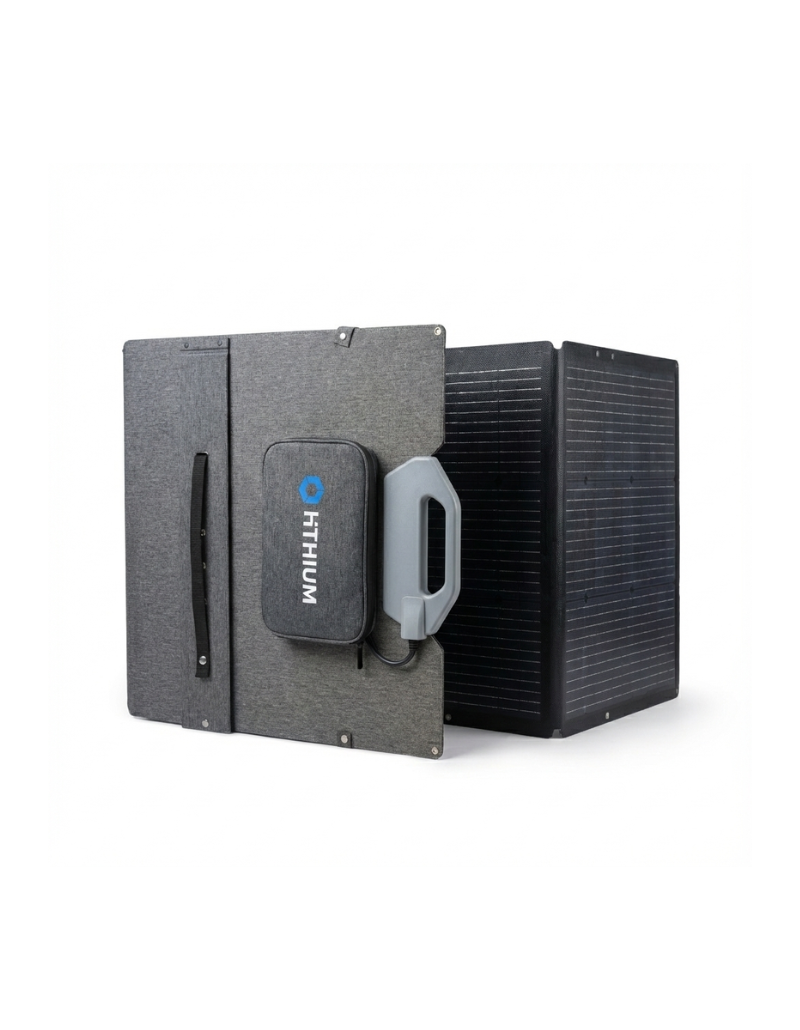
A 1004.8Wh portable power station for lights, fans, routers, laptops and TVs. The HC200 solar panel pairs with it for true off-grid use — popular with renters in Dhaka apartments who cannot install rooftop arrays. Ideal as a first solar power station under BDT 1,00,000.
HiTHIUM HeroEE 2 — Apartment Workhorse (2kWh)
2kWh of LiFePO4 storage in a compact wall-mountable unit. Runs 3–4 fans, 8–10 LED lights, a router, a TV and laptops through a typical evening cut, with room for a small fridge if the outage stretches. Charges from grid or solar (MPPT built in).
HiTHIUM MaxPower 8 — Whole-Home Solar ESS (8kWh)
The flagship. 8kWh lithium storage with a 9,000W MPPT solar charge controller and a built-in pure sine wave inverter — enough to run ACs, refrigerators, water pumps and heavy household loads simultaneously. This is the unit for families who want the house to simply stay on, and for small businesses that cannot afford downtime. Our MaxPower 8 AIO review covers it in detail.
Not sure which capacity you actually need? The IPS backup time calculation guide walks through the load math step by step, including every common appliance wattage.
Solar Power Station Prices in Bangladesh 2026
Realistic 2026 price bands for solar power station setups (unit + solar + basic installation):
| Setup | Capacity | Solar | Typical Load | Price Range (BDT) |
|---|---|---|---|---|
| Portable starter | 1 kWh (HeroEE Light 1) | 200W (HC200) | Lights, fans, router, TV | 1,00,000 – 1,30,000 |
| Apartment system | 2 kWh (HeroEE 2) | 400–600W | 4 fans, 10 lights, TV, fridge* | 1,40,000 – 1,80,000 |
| Whole-home ESS | 8 kWh (MaxPower 8) | 1,500–3,000W | Everything incl. 1–2 ACs | 4,50,000 – 6,50,000 |
*Short-cycle fridge backup during evening cuts. Prices vary with panel wattage, wiring distance and rack vs portable configuration; confirm current pricing with HiTHIUM Bangladesh before ordering.
For component-level pricing, the IPS price list tracks updated BDT figures, and the solar + LiFePO4 cost analysis breaks down full-system costs line by line.
How to Size Your Solar Power Station (3 Steps)
Sizing mistakes are the #1 reason buyers end up disappointed. Follow this sequence:
- List your essential loads — write down every appliance you must keep running: fans (75W each), LED lights (10W), router (15W), TV (100W), fridge (150–200W running), laptop (65W), AC (1,200–1,500W). Our backup-time guide shows measured runtimes per appliance.
- Convert to battery capacity — total watts × hours of backup needed ÷ 0.85 (inverter efficiency) = Wh required. Example: 300W of essentials × 4 hours ÷ 0.85 ≈ 1,400Wh → a 2kWh unit is the safe pick.
- Match solar wattage to daily recovery — to refill 2kWh from solar in one Bangladesh sun-day (4.5 effective hours): 2,000 ÷ 4.5 ≈ 450W of panels. Our solar panel wattage calculator guide covers this math for every capacity.
Solar Charging in Bangladesh Conditions
Solar charging works in Bangladesh longer than most buyers expect: effectively year-round for the 4.5-hour effective sun window, and the monsoon caveat is smaller than people fear — overcast skies still deliver 20–40% of peak output, which tops up a power station across a cut-heavy day. Two practical notes:
- Portable panels for renters — the HC200 200W foldable panel sets up on a balcony or rooftop without installation; ideal for Dhaka apartments where rooftop access is limited.
- Rooftop arrays for owners — homeowners can run 1–3kW fixed arrays through the MaxPower 8’s MPPT controller. The solar panel home setup guide covers wiring, tilt angles and array sizing.
Price-check before you buy: the complete power station guide covers capacity and cost bands, the best portable power station picks compare runtime per taka, and the lithium battery price list shows current LiFePO4 rates in Bangladesh.
Who Should Buy a Solar Power Station in 2026?
Buy one if: you face daily 2–3 hour cuts, you rent and cannot install a fixed IPS, you want silent backup for a study/office setup, or you are replacing a dying tubular-battery IPS and never want monthly maintenance again.
Consider alternatives if: your total backup need is under 300Wh for short cuts only (a small UPS may suffice — see our UPS vs IPS comparison guide), or you need multi-kW industrial-scale power for production lines.
Frequently Asked Questions
What is a solar power station?
A solar power station is an all-in-one unit combining a LiFePO4 lithium battery, a pure sine wave inverter and MPPT solar charging. You charge it from the grid or solar panels, and it silently powers your appliances during load shedding — no fuel, no noise, no maintenance. It is the modern, maintenance-free evolution of the traditional IPS.
How much does a solar power station cost in Bangladesh?
In 2026, a portable 1kWh setup with a 200W panel costs roughly BDT 1,00,000–1,30,000; a 2kWh apartment system with 400–600W of solar runs BDT 1,40,000–1,80,000; and a whole-home 8kWh ESS like the HiTHIUM MaxPower 8 costs BDT 4,50,000–6,50,000 depending on solar array size. Detailed component pricing is in our IPS and lithium battery price guides.
Can a solar power station run an AC in Bangladesh?
An 8kWh unit like the HiTHIUM MaxPower 8 can run 1–2 air conditioners along with a fridge and household loads through a typical 2–3 hour cut. A 1–2kWh portable station cannot run an AC — size it for fans, lights, TV, router and a fridge instead. Match capacity to your measured load before buying.
How long do solar power stations last?
The LiFePO4 batteries inside HiTHIUM power stations are rated for 11,000+ charge cycles — roughly 10–15 years of daily cycling at 80%+ depth of discharge before capacity drops meaningfully. Compare that to 3–5 years for lead-acid/tubular batteries, and the lifetime cost per kWh falls to BDT 6–9.
Is a solar power station better than a generator?
For homes and small businesses in Bangladesh, yes. A solar-charged power station delivers energy at BDT 6–9 per kWh versus BDT 30+ for diesel, runs completely silent with zero maintenance, produces no exhaust, and switches over in milliseconds. Generators only win when you need multi-kW industrial-scale power for hours daily.

One thought on “Solar Power Station in Bangladesh 2026 | HiTHIUM Guide”