



Blog
Solar IPS Bangladesh 2026 | Best Off-Grid Lithium IPS Guide

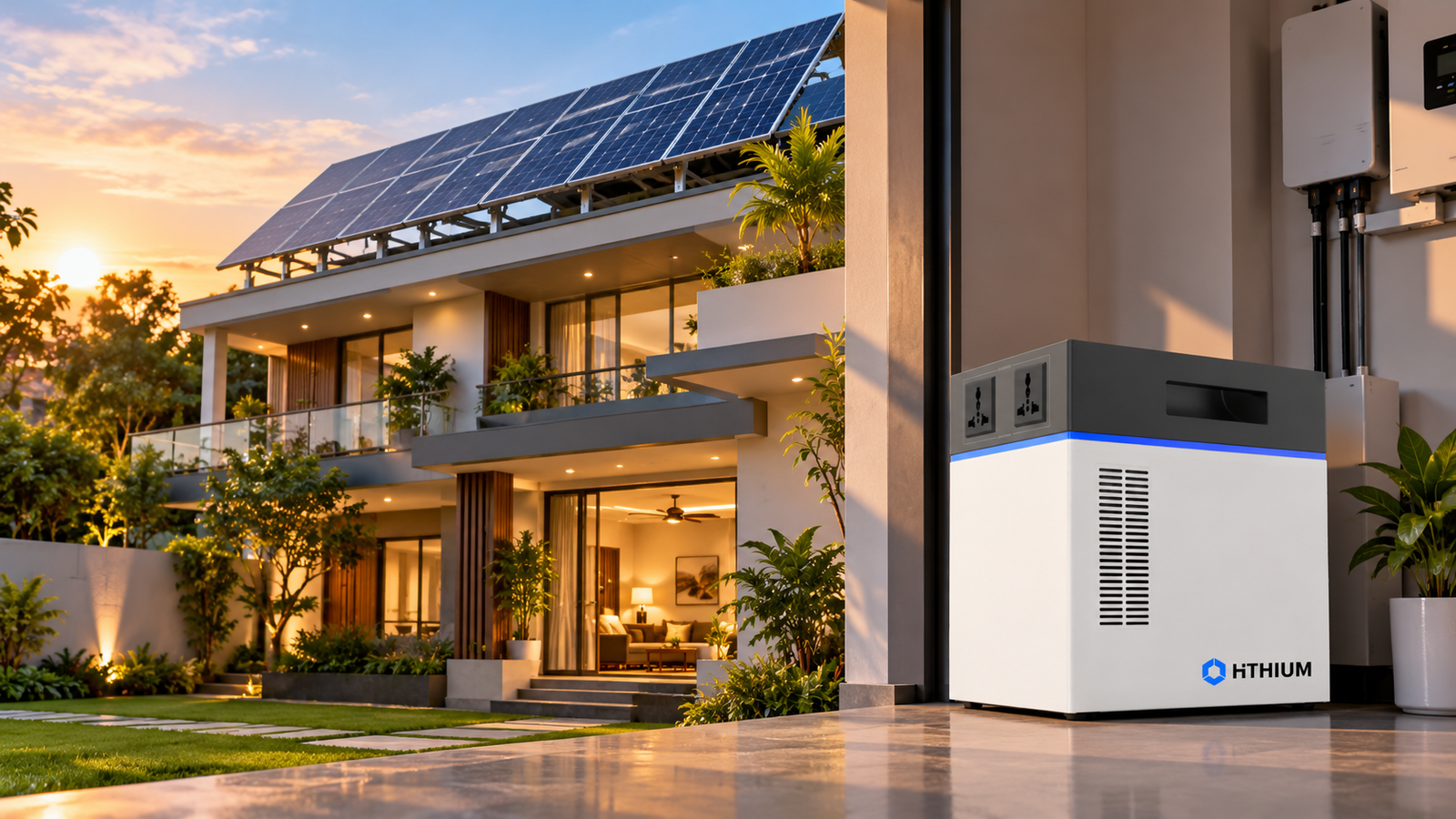
Quick Answer: A solar IPS system in Bangladesh pairs lithium LiFePO4 batteries with rooftop or portable solar panels to keep your home powered during the 2-3 hours of daily load shedding that plague Dhaka, Chittagong, and other major cities from May through September. The right setup combines a HiTHIUM lithium IPS unit (the HeroEE Light 1, HeroEE 2, or MaxPower 8) with the HiTHIUM HC200 portable solar panel for renters, or a 1-3 kW rooftop array for homeowners. Compared to a generator, solar+lithium IPS runs silent, needs zero maintenance, costs roughly BDT 6-9 per kWh, and pays back the upfront cost in 2-3 years versus diesel.
Bangladesh currently sits at the top of the global load-shedding charts during summer — Dhaka faces scheduled 2-hour power cuts even in urban WASA areas, and rural areas see 4-6 hours of daily outage between June and August. A solar IPS system solves this problem permanently, without the noise, fuel, and maintenance headaches of diesel generators or older tubular-battery IPS systems.
Why Solar + Lithium IPS Is the Right Solution for Bangladesh in 2026
Traditional IPS systems use lead-acid or tubular batteries that need monthly water top-ups, emit hydrogen gas, and lose 30-40% capacity in 3 years. Diesel generators solve outages but cost BDT 30+ per kWh of fuel and require weekly maintenance. The new generation of lithium LiFePO4 IPS units paired with solar panels changes the math entirely.
Here is what a properly designed solar IPS system delivers in Bangladesh conditions:
- Silent operation — fans, ACs, and lights stay on with no noise pollution
- Zero maintenance — LiFePO4 cells need no water, equalization charges, or terminal cleaning
- 11,000+ cycle life — daily deep discharge for 30 years before capacity drops below 80%
- 6-9 BDT per kWh — solar-charged, versus 25-35 BDT for diesel generator power
- Grid backup — when grid power is available, solar IPS charges automatically and switches to battery in under 20ms during outages
- No fuel dependency — solar panels produce power even during load shedding, extending backup time indefinitely
Solar IPS System Components Explained
A complete solar IPS setup has three core components: solar panels to harvest energy, a charge controller to manage input, and the lithium IPS unit itself to store and deliver power. Each plays a critical role.
1. Solar Panels — Monocrystalline vs Polycrystalline
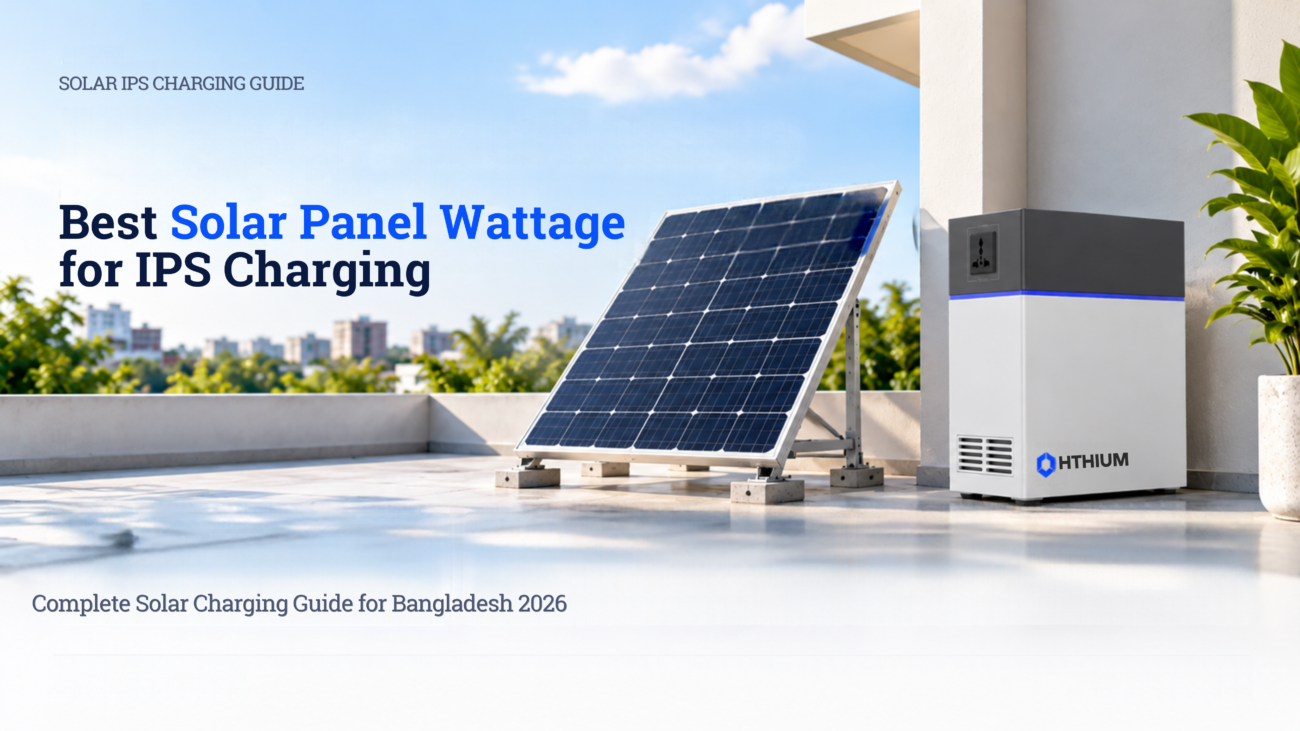
For Bangladesh rooftops and portable applications, monocrystalline panels like the HiTHIUM HC200 deliver up to 23.4% efficiency versus 15-17% for polycrystalline. In Dhaka’s typical 5 peak-sun-hours per day, a 1 kW monocrystalline array produces approximately 4.5-5 kWh daily. The HiTHIUM HC200 portable foldable solar panel is a 200W monocrystalline unit that renters and travelers can carry for off-grid camping or extended load-shedding backup.
2. Charge Controller — MPPT vs PWM
MPPT (Maximum Power Point Tracking) controllers extract 20-30% more energy than PWM controllers, especially in partial shade or low-light conditions. All HiTHIUM lithium IPS units include built-in MPPT charge controllers — no external hardware needed for grid-tied solar input.
3. Lithium IPS Battery Unit — Sizing for Your Home
HiTHIUM Bangladesh offers three main LiFePO4 IPS units that work with solar:
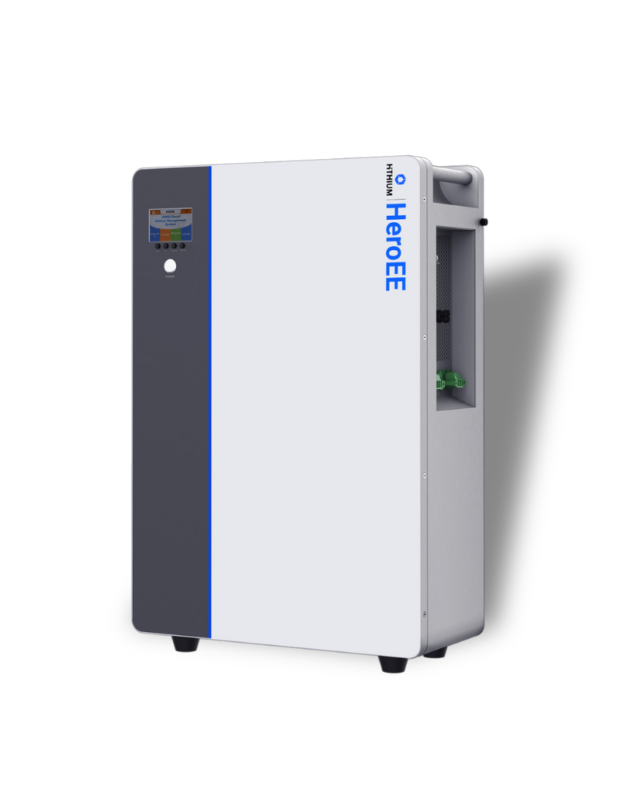
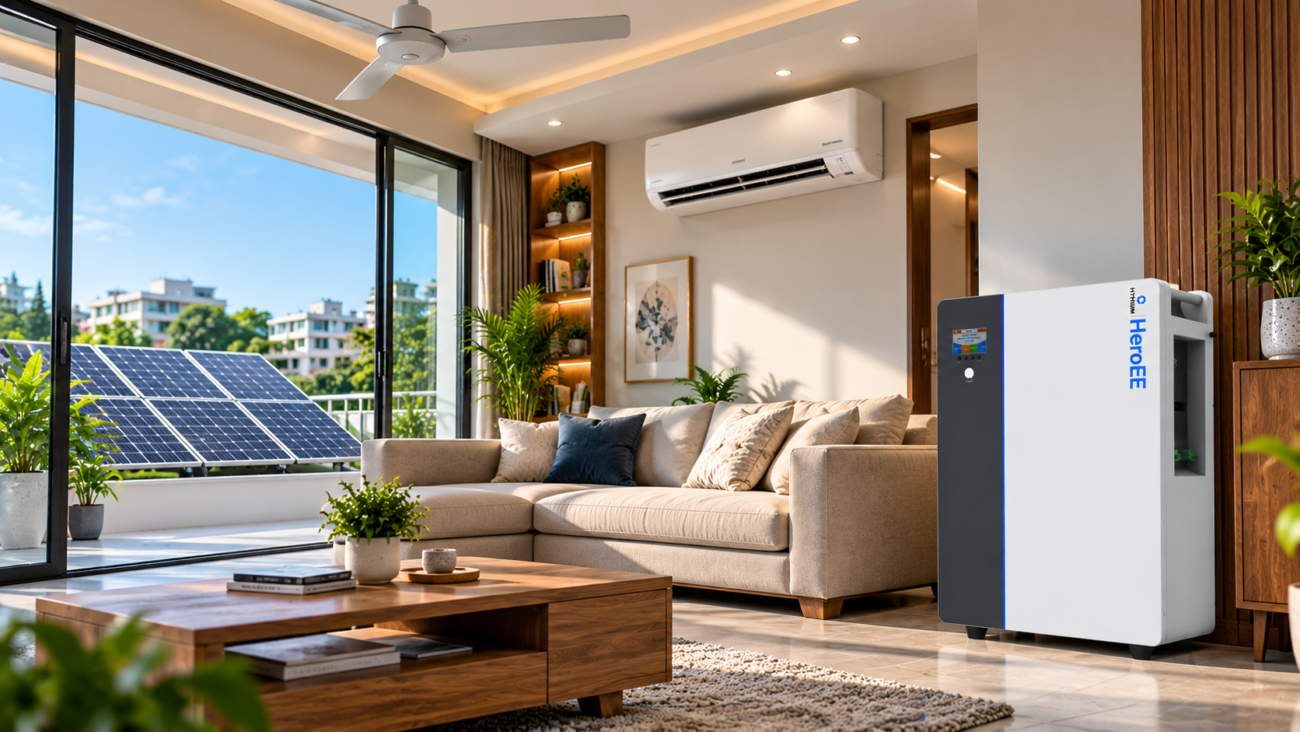
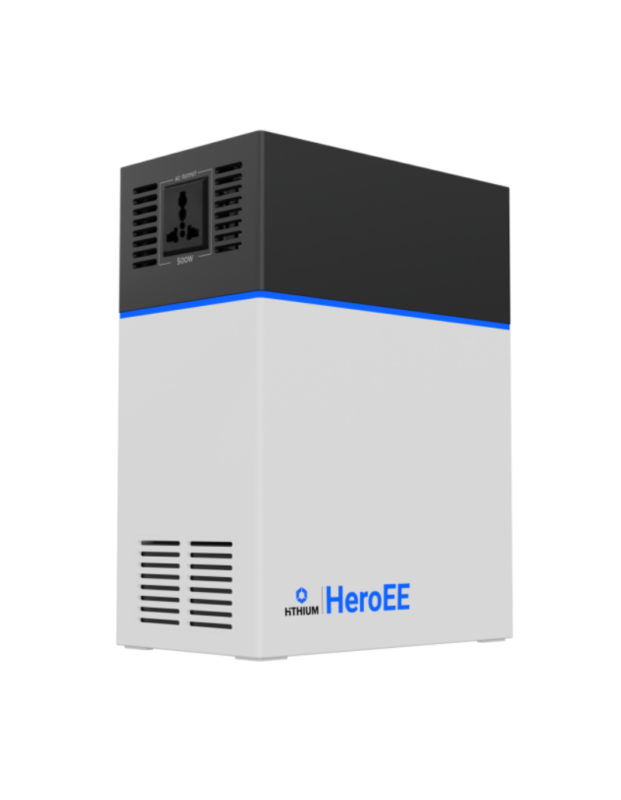
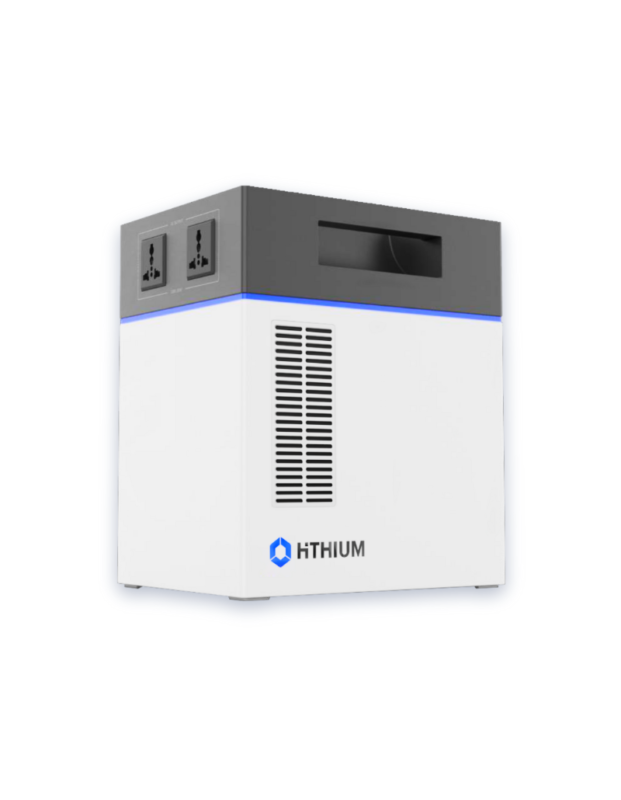
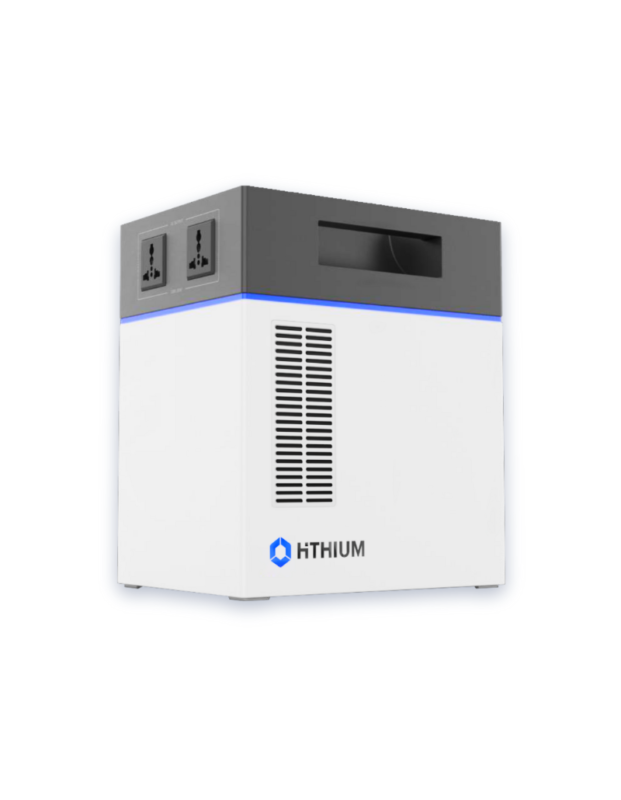
- HiTHIUM HeroEE Light 1 (1 kWh) — runs 5 fans + 4 lights + WiFi router for 2 hours; ideal for 1-2 bedroom flats
- HiTHIUM HeroEE 2 (2 kWh) — adds fridge support; the most common upgrade pick for Dhaka flats
- HiTHIUM MaxPower 8 AIO (8 kWh) — full home backup including 1.5-ton AC for 1.5 -2 hours; whole-house solution
Sizing Your Solar IPS System: Real Bangladesh Load Calculations
Most Bangladeshi homes can be backed up with a 2-5 kWh lithium IPS unit paired with 1-3 kW of solar panels. Here is how to size for common Dhaka household loads:
| Home Size | Daily Load | IPS Size | Solar Array | Est. System Cost |
|---|---|---|---|---|
| 1-bed flat | 2-3 kWh | 1-2 kWh (HeroEE Light 1 or HeroEE 2) | 400-800W (2x HC200) | BDT 65,000 – 1,15,000 |
| 2-3 bed flat | 4-6 kWh | 2-4 kWh (HeroEE 2 + expansion) | 1-1.5 kW rooftop | BDT 1,15,000 – 2,50,000 |
| 3-4 bed house | 8-12 kWh | 8 kWh (MaxPower 8) | 2-3 kW rooftop | BDT 3,50,000 – 6,00,000 |
| Duplex / commercial | 15-25 kWh | 2x MaxPower 8 in parallel | 5-8 kW rooftop | BDT 8,00,000 – 15,00,000 |
For full lithium IPS pricing in Bangladesh, see our 2026 IPS battery price guide with BDT ranges for every capacity.
Solar IPS Installation in Bangladesh: What to Expect
A typical HiTHIUM lithium IPS install takes 2-4 hours for portable units (just plug-and-play) or 1-2 days for whole-home rooftop solar systems. Most Dhaka-area installations include:
- Site survey — measure rooftop area, check shadow patterns, verify electrical panel capacity
- Panel mounting — aluminum rails attached to roof structure (no roof penetration for portable setups)
- DC wiring — solar panels wired in series/parallel to match IPS MPPT input voltage
- IPS placement — indoor dry location, ventilated, within 5 meters of main electrical panel
- AC integration — electrician connects IPS output to selected home circuits (lights, fans, fridge, AC) via a transfer switch or sub-panel
- App setup — HiTHIUM units ship with Bluetooth monitoring for iOS and Android
Bangladesh government subsidies through the Sustainable and Renewable Energy Development Authority (SREDA) currently cover 10-15% of rooftop solar installation cost for residential systems under 3 kW. Check the SREDA portal for current 2026 subsidy eligibility before committing.
Maintenance: Why LiFePO4 Solar IPS Beats Tubular Battery Systems
The biggest advantage of a lithium solar IPS over traditional lead-acid or tubular IPS is the zero-maintenance operation. See our detailed lithium IPS maintenance guide for the full comparison, but here is the quick summary:
| Maintenance Task | Tubular IPS | Lithium LiFePO4 IPS |
|---|---|---|
| Water top-up (distilled) | Every 30 days | Never |
| Terminal cleaning | Every 3 months | Never |
| Equalization charge | Every 90 days | Automatic BMS |
| Capacity replacement | Every 3-5 years | Every 15-30 years |
| Annual maintenance cost | BDT 5,000-8,000 | BDT 0 |
How Long Will Solar Keep a Lithium IPS Charged During Load Shedding?
In Bangladesh’s monsoon season (June-September), solar panels still produce 3-4 peak-sun-hours daily despite cloud cover. This means a 1 kW array produces 3-4 kWh per day — enough to fully recharge a HeroEE Light 1 (1 kWh) or top up half a MaxPower 8. For real-world runtime data, see our lithium IPS runtime in Dhaka test results.
Frequently Asked Questions About Solar IPS in Bangladesh
Can solar IPS work during monsoon season in Bangladesh?
Yes. Monsoon clouds reduce solar output by 30-40% but do not eliminate it. A 1 kW system in Dhaka monsoon still produces 3 kWh daily — enough for essential loads. Pairing solar with a properly sized lithium IPS means your backup time extends indefinitely during sunny breaks.
What size solar panel do I need for a 2 kWh HiTHIUM HeroEE 2?
For full daytime recharge of a 2 kWh HeroEE 2, you need up to 450W of solar panels (its maximum solar input). The HC200 200W portable panel is sufficient for partial charging (50%) during a typical Bangladesh day.
Is solar IPS cheaper than running a generator in Bangladesh?
Yes, dramatically. A 5 kVA diesel generator costs BDT 25-35 per kWh to run. Solar+lithium IPS costs BDT 6-9 per kWh over its 15-year lifespan, with the lithium battery paying back the upfront cost in 2-3 years.
Do I need permission from DESCO/DPDC for solar IPS installation?
For systems under 3 kW residential, no formal permission is required in 2026 — only net-metering registration if you want to export excess solar to the grid (which gives you a credit on your electricity bill). Above 3 kW, SREDA registration is required.
What is the warranty on HiTHIUM lithium IPS units in Bangladesh?
HiTHIUM lithium IPS units come with a 5-year full replacement warranty on the battery cells and 2-year warranty on the inverter. The HC200 solar panel has a 10-year power output warranty (80% capacity retained).
Conclusion: Solar + Lithium IPS Is the Standard for Bangladesh in 2026
If you are tired of load shedding, diesel generator noise, or monthly tubular-battery maintenance, a HiTHIUM lithium IPS system with solar panels is the long-term solution. The upfront cost is higher than a basic IPS but the lifetime savings are 3-5x better, and you get silent, automatic backup power that runs indefinitely during sunny load-shedding periods.
For a tailored recommendation based on your home size and load profile, contact HiTHIUM Bangladesh for a free site survey. Our team covers Dhaka, Chittagong, and Sylhet with same-week installation.
Related reading: What Can a Lithium IPS Run During Load Shedding | Best Lithium IPS in Bangladesh | HiTHIUM Shop
Recommended Guides:
Best Portable Power Station in Bangladesh ·
Complete Power Station Guide ·
Best Lithium Battery Brand ·
Mini Power Station Price For off-grid rural requirements, see best IPS for village homes in Bangladesh.
Related Posts
Solar + LiFePO4 Battery System Cost Analysis Bangladesh 2026: Complete Price Guide

How to Calculate Solar Panel Wattage for LiFePO4 Battery in Bangladesh (2026 Guide)
Best LiFePO4 Battery for Solar Home System in Bangladesh 2026 — Complete Buying Guide
Discover the best LiFePO4 batteries for solar home systems in Bangladesh. Compare HiTHIUM HeroEE L12314ES (4019Wh), MaxPower 8 AIO, and HeroEE 2 — with prices, specs, and buying tips for 2026.

2 thoughts on “Solar IPS Bangladesh 2026 | Best Off-Grid Lithium IPS Guide”