




Blog
How to Extend IPS Battery Life in Bangladesh — 10 Expert Tips

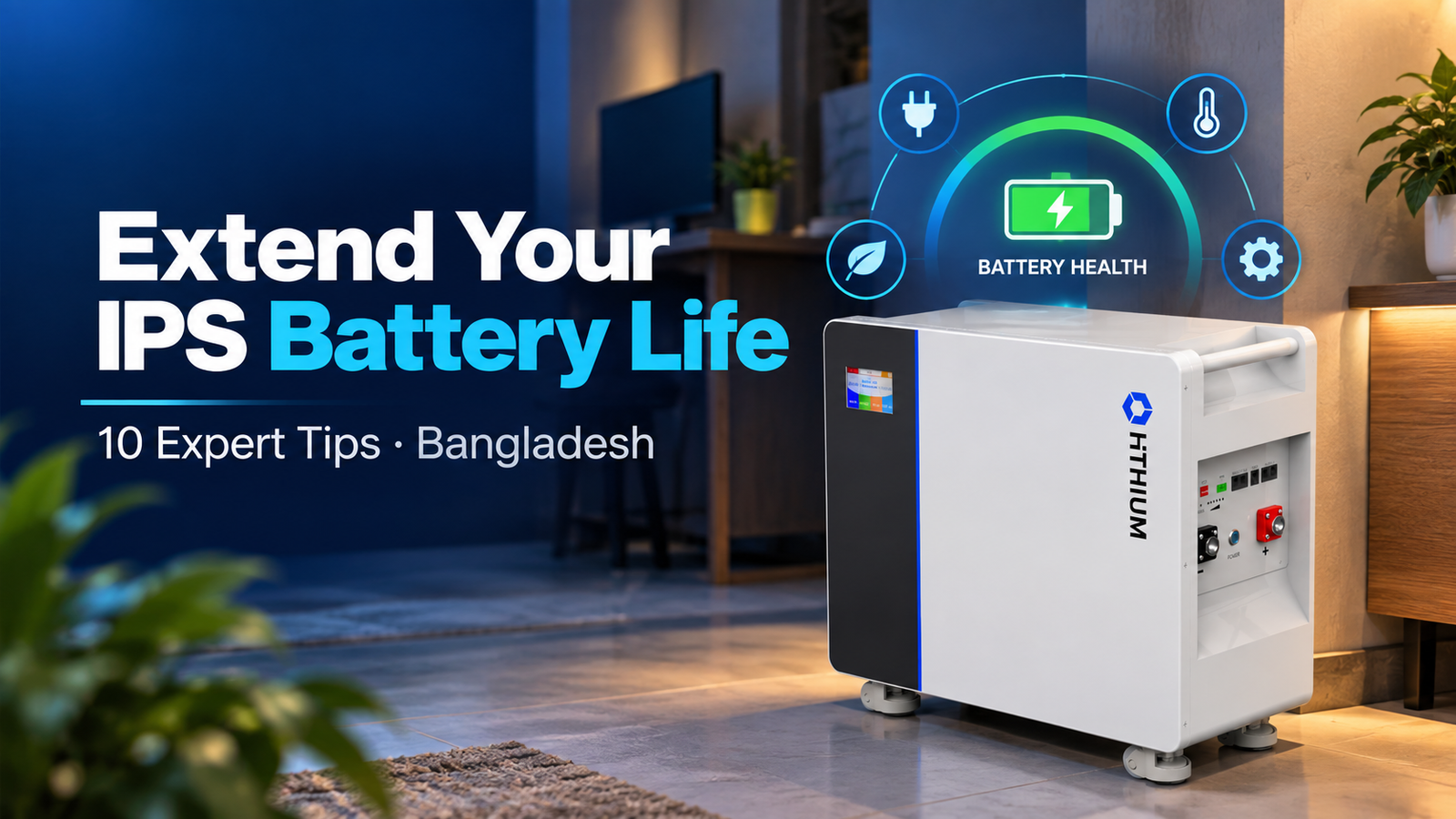
In Bangladesh, load-shedding can last 4–8 hours a day in some areas — making your IPS battery one of the most critical investments in your home. Yet most Bangladeshi households replace their IPS battery every 2–3 years, paying ৳8,000–৳20,000 each time. The good news? With the right habits, you can extend IPS battery life in Bangladesh to 5–10 years and cut your replacement cost dramatically. This guide covers 10 expert-proven tips — from charging habits to heat management — backed by real battery science.
Why IPS Batteries Die Early in Bangladesh
Before diving into tips, it helps to understand why batteries fail prematurely in Bangladesh specifically:
- Deep discharge abuse: Frequent, complete discharges during long load-shedding strips battery capacity over time
- Extreme heat: Bangladesh summers regularly push 38–42°C, accelerating chemical degradation inside cells
- Overcharging: Faulty or cheap chargers continue pushing current into a full battery, causing plate corrosion
- Low water levels (tubular): Many users never check electrolyte water, causing plates to dry out and warp
- Wrong battery size: Undersized batteries are discharged 80–100% daily, which is catastrophic for longevity
The right IPS battery — especially a LiFePO4 lithium battery — combined with proper maintenance can sidestep all of these failure modes. Let’s get into the 10 tips.
Tip 1: Never Discharge Below the Recommended Limit
This is the single most damaging habit for IPS batteries in Bangladesh. Every battery chemistry has a Depth of Discharge (DoD) limit — the maximum percentage you should drain it before recharging:
| Battery Type | Safe DoD Limit | Discharge to Avoid | Cycle Life at Safe DoD |
|---|---|---|---|
| Tubular (flooded) | 50% | Below 50% capacity | 700–900 cycles |
| AGM (sealed) | 50–60% | Below 50% capacity | 500–700 cycles |
| LiFePO4 (lithium) | 80% | Below 20% capacity | 11,000 cycles |
What this means in practice: If you have a 150Ah tubular battery, never let your IPS run until it shuts off. Set a low-battery cutoff alarm and switch to minimal loads (fans and lights only) when the battery reaches 50%. Modern IPS units like the HiTHIUM HeroEE allow you to configure the low-voltage cutoff — use it.
Tip 2: Right-Size Your Battery for Your Load
An undersized battery is discharged deeply every single day, which rapidly shortens its life. Use this simple formula to calculate the right battery capacity for your home:
Required Capacity (Ah) = (Total Load in Watts × Backup Hours) ÷ (Battery Voltage × DoD)
Example: 3 ceiling fans (60W each) + 4 LED lights (10W each) + 1 router (15W) = 220W total load. For 4 hours backup on a 24V system at 50% DoD:
220 × 4 ÷ (24 × 0.5) = 73Ah minimum. Choose 100Ah to have headroom.
Most Bangladeshi homes run 150–200W during load-shedding. A 100Ah LiFePO4 battery at 80% DoD gives 6+ hours of this load — without stressing the battery. See our full IPS backup time calculator guide for detailed formulas.
Tip 3: Protect the Battery from Bangladesh’s Heat
Heat is the silent battery killer. For every 10°C rise above 25°C, a lead-acid battery loses approximately 50% of its expected lifespan. In Bangladesh’s summer (April–June), temperatures regularly exceed 38°C indoors.
Heat protection checklist:
- Place the IPS battery in a ventilated room — never in a sealed cabinet, under stairs, or on a rooftop
- Keep at least 15cm clearance on all sides of the battery for air circulation
- If possible, install a small exhaust fan in the IPS room during summer
- Avoid placing batteries next to inverters or generators that produce radiant heat
- Check the battery surface temperature monthly — it should never feel hot to the touch (above 45°C = danger)
LiFePO4 batteries handle heat significantly better than lead-acid. The HiTHIUM HeroEE series uses cells rated for stable operation from -20°C to 60°C, making them far more resilient in Bangladesh’s climate.
Tip 4: Use a Quality Charger with Auto-Cutoff
A cheap charger without automatic cutoff will continue pushing current into a full battery, causing overcharging. In lead-acid batteries, overcharging boils the electrolyte, warps the plates, and permanently reduces capacity. In lithium batteries, overcharging can trigger thermal runaway — a serious safety hazard.
What to look for in a charger:
- Multi-stage charging (bulk → absorption → float) — not simple constant-voltage
- Automatic float mode when battery reaches 100%
- Temperature compensation (adjusts voltage based on ambient temperature)
- Short-circuit and reverse-polarity protection
HiTHIUM HeroEE units include built-in smart BMS (Battery Management System) that handles all of this automatically. If you are using an older IPS unit, consider upgrading the charger to a modern 3-stage model — it’s far cheaper than replacing a damaged battery.
Tip 5: Check and Top Up Electrolyte Water Monthly (Tubular Only)
This is the most neglected maintenance task for tubular IPS batteries in Bangladesh. Tubular (flooded) batteries use a liquid electrolyte that slowly evaporates during charging and discharging. When the water level drops below the plates:
- The exposed plates sulfate (form lead sulfate crystals) and lose capacity permanently
- Charging becomes inefficient, generating more heat
- In severe cases, the plates warp and the battery becomes unusable within weeks
Monthly water top-up process:
- Remove the battery vent caps
- Check the electrolyte level — should be 10–15mm above the plates
- If low, add distilled water only (never tap water or acid)
- Fill to the marked MAX line, not above it
- Replace the vent caps firmly
- Wipe the battery top dry to prevent corrosion from spilled electrolyte
Note: LiFePO4 and sealed AGM batteries are completely maintenance-free — no water topping needed. This is one reason HiTHIUM’s lithium IPS systems save time and reduce maintenance costs.
Tip 6: Clean Battery Terminals Every 3 Months
Corroded terminals increase resistance in the charging circuit, meaning your battery charges more slowly and delivers power less efficiently. White or greenish powder on the terminals is a sign of corrosion — common in Bangladesh’s humid climate.
Terminal cleaning process:
- Disconnect the battery (negative terminal first, then positive)
- Mix 1 tablespoon of baking soda in 200ml of warm water
- Apply with an old toothbrush to corroded terminals and cable clamps
- Let it fizz for 30 seconds (the baking soda neutralizes the acid)
- Rinse with clean water and dry thoroughly
- Reconnect (positive first, then negative)
- Apply a thin coat of petroleum jelly (Vaseline) to the terminals to prevent future corrosion
Tip 7: Avoid Leaving the Battery in a Discharged State
If load-shedding is long and your battery fully discharges, recharge it as soon as grid power returns. Leaving a discharged lead-acid battery unattended for hours causes sulfation — the permanent formation of lead sulfate crystals on the plates. Even 6–8 hours in a deeply discharged state can permanently reduce capacity by 20–30%.
For LiFePO4 batteries, deep discharge is less damaging but still undesirable. The BMS will cut off power before the cells are damaged, but try to recharge promptly after a cutoff event.
Tip 8: Run a Full Conditioning Cycle Every 6 Months (Tubular)
Every 6 months, give your tubular battery a conditioning cycle: discharge it to 50% capacity, then charge it slowly and fully. This helps break up minor sulfation and “refreshes” the battery’s active material. Do NOT do this more than twice a year — excessive cycling reduces life, not extends it.
HiTHIUM LiFePO4 batteries do not need conditioning cycles — their BMS handles cell balancing automatically during every charge cycle.
Tip 9: Upgrade to LiFePO4 When Your Current Battery Dies
This is the single most impactful long-term decision you can make. Here is a real 10-year cost comparison for a typical Dhaka apartment running 200W during 6-hour daily load-shedding:
| Battery Type | Initial Cost (100Ah) | Lifespan | Replacements (10 yr) | 10-Year Total Cost |
|---|---|---|---|---|
| Tubular (flooded) | ৳ 12,000–15,000 | 3–4 years | 2–3 times | ৳36,000–45,000 |
| AGM (sealed) | ৳ 14,000–18,000 | 3–5 years | 2 times | ৳42,000–54,000 |
| LiFePO4 (HiTHIUM) | ৳ 33,725–50,800 | 25+ years | 0 times | ৳33,725–115,600 |
The numbers reveal the truth: a LiFePO4 battery’s higher upfront cost is offset by its longevity. Families who upgrade to HiTHIUM lithium IPS typically break even within 4–5 years and save ৳15,000–20,000 over a decade, while enjoying better performance and zero maintenance.
Tip 10: Follow a Seasonal Maintenance Schedule
Bangladesh’s climate has distinct seasons that each stress IPS batteries differently. Here is an annual maintenance calendar:
| Month / Season | Key Risk | Action Required |
|---|---|---|
| March–June (Summer / Grishma) | Extreme heat, high load-shedding | Improve ventilation, check water weekly, verify charger cutoff |
| June–September (Monsoon / Borsha) | Humidity, moisture ingress, flooding risk | Elevate battery off floor, check for moisture on terminals, clean monthly |
| October–November (Post-monsoon) | Sulfation from heavy summer cycling | Run conditioning cycle (tubular), full charge before winter |
| December–February (Winter / Sheet) | Reduced battery capacity in cold | Keep indoors if possible, do not leave discharged in cold overnight |
IPS Battery Life Summary — Quick Reference
| Tip | Battery Type | Impact on Lifespan |
|---|---|---|
| Avoid deep discharge | All types | ⬆ High |
| Right-size battery capacity | All types | ⬆ High |
| Heat protection | All types (critical for tubular) | ⬆ Very High |
| Quality charger with auto-cutoff | All types | ⬆ High |
| Monthly water top-up | Tubular only | ⬆ Very High |
| Terminal cleaning every 3 months | All types | ⬆ Medium |
| Recharge promptly after discharge | All types (critical for tubular) | ⬆ High |
| Conditioning cycle every 6 months | Tubular only | ⬆ Medium |
| Upgrade to LiFePO4 | Replaces tubular/AGM | ⬆ Very High (3–4× longer life) |
| Seasonal maintenance schedule | All types | ⬆ Medium |
Frequently Asked Questions
How long does an IPS battery last in Bangladesh?
A standard tubular battery lasts 3–5 years in Bangladesh’s climate. LiFePO4 (lithium iron phosphate) batteries, like those used in HiTHIUM HeroEE IPS units, last 25+ years or 11,000+ charge cycles under proper care.
Does frequent load-shedding damage IPS batteries?
Yes — frequent deep discharges below 50% (tubular) or 20% (LiFePO4) significantly reduce battery life. During heavy load-shedding seasons, ensure your battery is appropriately sized to avoid daily deep discharges.
What is the ideal temperature to store an IPS battery in Bangladesh?
Keep IPS batteries below 35°C. Bangladesh summer temperatures regularly exceed 40°C, so install batteries in a ventilated, shaded space — never in direct sunlight or enclosed metal cabinets.
Should I keep my IPS always plugged in?
Yes. IPS/UPS batteries are designed for float charging when grid power is available. Keeping the unit plugged in maintains a full charge and does not overcharge modern batteries — the charger automatically switches to trickle mode.
How often should I service my IPS battery in Bangladesh?
For tubular batteries, check water levels monthly and clean terminals every 3 months. For sealed LiFePO4 batteries, a basic terminal inspection every 6 months is sufficient — no water topping needed.
Which IPS battery lasts longest in Bangladesh — lithium or tubular?
LiFePO4 lithium batteries last 3–4× longer than tubular batteries. A 314Ah LiFePO4 battery provides 11,000 cycles vs 700–900 cycles for a tubular battery of similar capacity, making lithium far more cost-effective over 10 years.
Ready to Stop Replacing Batteries Every 3 Years?
The best way to extend your IPS battery life is to start with the right battery. HiTHIUM’s HeroEE series uses Grade-A LiFePO4 cells with a 25+ year design life and a built-in BMS that protects against overcharge, over-discharge, over-temperature, and short circuits automatically. Browse our full range at the HiTHIUM Bangladesh shop, or read our complete guide on the best lithium battery for IPS in Bangladesh. Have questions about which model fits your home? Contact our team — we’re happy to help.
Recommended HiTHIUM Products
Based on your needs, here are the best HiTHIUM lithium IPS and power station options for Bangladesh:
| Product | Capacity | Best For | Price |
|---|---|---|---|
| HiTHIUM HeroEE 2 (1000W, 2kWh) | 1000W, 2kWh | Medium homes, fridge + fans + lights | ৳78,100 |
| HiTHIUM HeroEE 16 (16kWh) | 16kWh | Large homes, offices, factories | ৳3,36,000 |
Free delivery across Bangladesh. WhatsApp us for consultation: Contact HiTHIUM

2 thoughts on “How to Extend IPS Battery Life in Bangladesh — 10 Expert Tips”