



Blog
How to Choose IPS for Small Shop and Retail Store in Bangladesh — Cash Register and Lights Backup

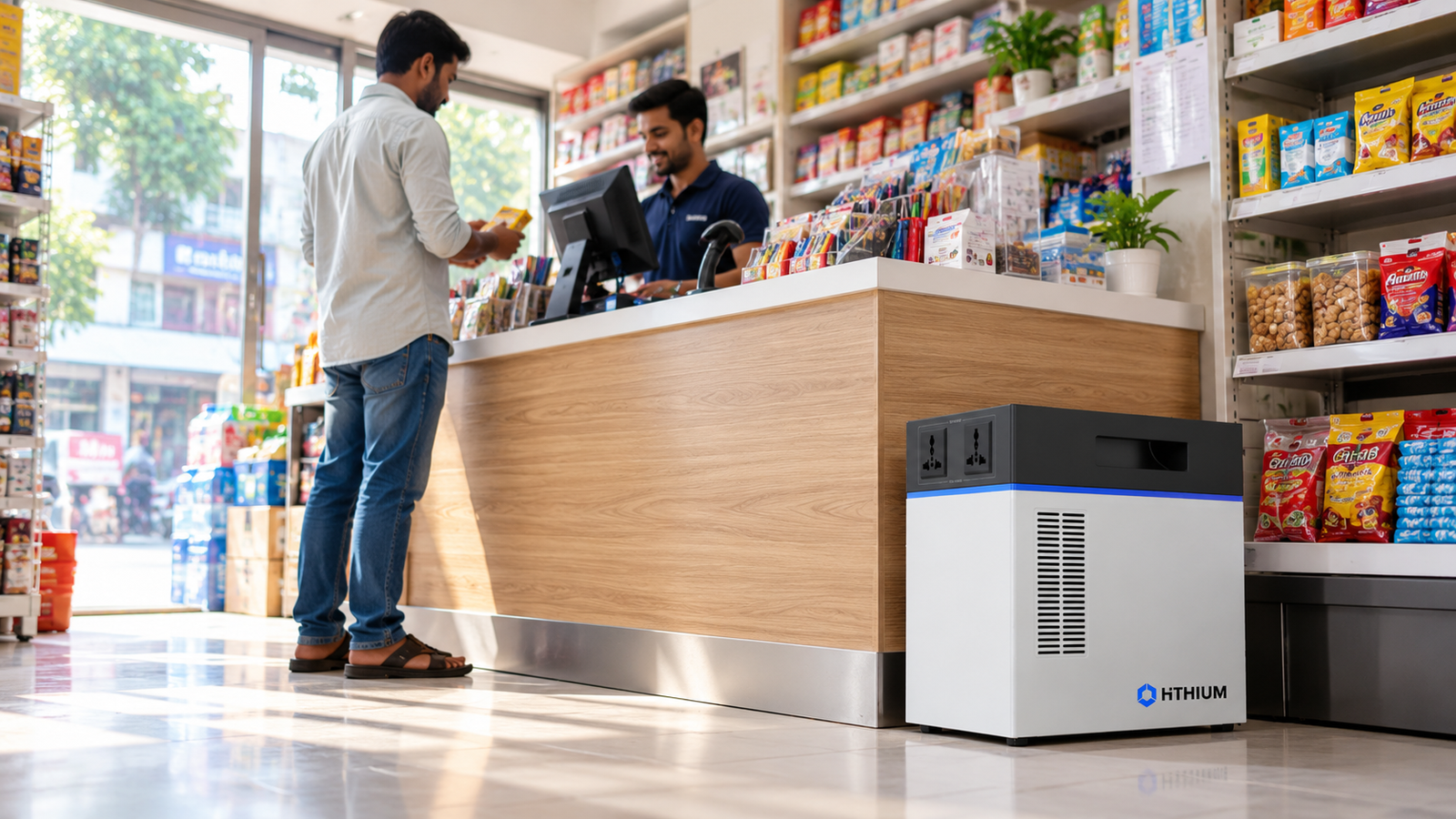
Running a small shop in Bangladesh means dealing with frequent load shedding, voltage fluctuations, and the constant threat of lost sales when your lights go dark or your cash register shuts off mid-transaction. Whether you run a grocery store, a pharmacy, a mobile phone shop, or a tailoring business, having the right IPS (Instant Power Supply) system is not a luxury — it is a necessity for survival in Bangladesh’s competitive retail market.
This guide walks you through exactly how to choose the best IPS for your small shop, covering everything from calculating your actual power needs to selecting the right lithium battery capacity. We will reference real HiTHIUM HeroEE product models with verified specifications so you can make an informed purchase decision.
Why Every Small Shop in Bangladesh Needs an IPS
Small retail businesses in Bangladesh face a unique set of power challenges that larger commercial operations do not:
- Frequent load shedding: Despite improvements, Bangladesh still experiences 2-6 hours of scheduled load shedding daily in many areas, especially outside Dhaka. Each power cut directly translates to lost revenue.
- Voltage fluctuations: Even when the grid is “on,” voltage can swing between 170V-260V, damaging sensitive electronics like POS systems, CCTV cameras, and LED display boards.
- Customer expectations: Customers expect well-lit shops, working AC or fans, and functional payment systems. A dark shop signals closure and drives customers to competitors.
- Security risks: Power cuts disable CCTV systems, electronic locks, and alarm systems, making your shop vulnerable to theft during blackout hours.
- Product spoilage: Pharmacies, grocery stores, and shops selling perishable goods face direct financial losses when refrigeration fails during outages.
Common Power Requirements for Small Shops in Bangladesh
Before choosing an IPS, you need to understand what equipment typically runs in a Bangladeshi small shop and how much power each item consumes. Here is a realistic breakdown:
Essential Loads (Must-Run During Outage)
| Equipment | Typical Wattage | Notes |
|---|---|---|
| Cash register / POS system | 50-150W | Includes receipt printer |
| LED lights (4-6 bulbs) | 40-80W | 9W-15W each, essential for visibility |
| Wi-Fi router / ONU | 12-20W | Keeps internet and online payments active |
| CCTV camera (2-4 units) | 20-60W | Security during power cuts |
| Mobile phone chargers | 20-40W | For shop owner and staff |
| Ceiling or pedestal fan (1-2) | 60-120W | Critical in Bangladesh heat |
Small shop total (minimal): 200-400W
Medium shop total (with fan + CCTV): 400-800W
Larger shop (with display fridge): 800-1500W
Optional but Recommended Loads
| Equipment | Typical Wattage | When Needed |
|---|---|---|
| LED TV / display screen | 60-120W | Product display, entertainment |
| Small display fridge | 80-150W | Pharmacies, beverage shops |
| Air conditioner (1-ton split) | 800-1200W | Premium shops, pharmacies |
| Barcode scanner + computer | 100-200W | Larger retail outlets |
How to Calculate Your Shop’s IPS Capacity
The golden rule is simple: add up the wattage of everything you need running during a power cut, then add a 20-30% safety margin.
Example 1 — Small grocery shop:
- 6 LED lights × 12W = 72W
- Cash register + printer = 100W
- Wi-Fi router = 15W
- 2 CCTV cameras = 30W
- 1 ceiling fan = 75W
- Total: 292W → Round up to 350-400W IPS capacity
Example 2 — Mobile phone shop with display:
- 4 LED lights × 15W = 60W
- POS system + receipt printer = 120W
- LED TV display = 80W
- Wi-Fi router = 15W
- 4 CCTV cameras = 40W
- 2 pedestal fans × 75W = 150W
- Total: 465W → Round up to 500-600W IPS capacity
Example 3 — Pharmacy with small fridge:
- 6 LED lights × 12W = 72W
- POS + printer = 100W
- Display fridge = 120W
- Wi-Fi = 15W
- CCTV = 30W
- Fan = 75W
- Total: 412W → Round up to 500W IPS capacity (or 1000W if fridge runs continuously)
Best IPS Models for Small Shops in Bangladesh 2026
Based on the power calculations above, here are the recommended HiTHIUM HeroEE models for different shop sizes, with real specifications from the product pages:
For Tiny Shops (Under 300W Load)
If your shop only needs to run a cash register, a few lights, and a router during outages, the HiTHIUM HeroEE 1 is the most cost-effective choice.
| Specification | HiTHIUM HeroEE 1 |
|---|---|
| Battery Capacity | 1004.8 Wh (LiFePO4) |
| AC Output | 200W Pure Sine Wave |
| Battery Cycles | 11,000 |
| Expected Lifespan | 25+ years |
| Weight | 8.5 kg (portable) |
| Charging Time (AC) | ~4-5 hours |
| Solar Input | 12-36V, up to 200W |
| UPS Function | Yes (automatic switchover) |
| Warranty | 5 years |
| Product Link | View on HiTHIUM Shop |
Best for: Small tea stalls, single-counter shops, minimal-load retail kiosks. The 200W output handles lights, router, and POS but cannot run fans simultaneously.
For Small-to-Medium Shops (300-500W Load)
The HiTHIUM HeroEE Light 1 is the sweet spot for most Bangladeshi small shops — enough power for lights, fans, CCTV, and POS systems.
| Specification | HiTHIUM HeroEE Light 1 |
|---|---|
| Battery Capacity | 1004.8 Wh (LiFePO4) |
| AC Output | 500W (230V Intelligent) |
| Battery Cycles | 11,000 |
| Expected Lifespan | 25+ years |
| Solar Input | 12-55V DC, max 300W |
| Charging Time (Solar 300W) | ~4 hours |
| UPS Switchover | ~10 milliseconds |
| Weight | Portable |
| Warranty | 5 years |
| Product Link | View on HiTHIUM Shop |
Best for: Grocery stores, mobile phone shops, pharmacies (without fridge), stationery shops, tailoring shops. Can comfortably run 6 LED lights, 2 fans, CCTV, POS, and router simultaneously.
For Medium Shops (500-1000W Load)
If your shop has a display fridge, more fans, or a larger LED display, step up to the HiTHIUM HeroEE 2.
| Specification | HiTHIUM HeroEE 2 |
|---|---|
| Battery Capacity | 2000 Wh (LiFePO4, 314Ah cells) |
| AC Output | 1000W Pure Sine Wave |
| Battery Cycles | 11,000 |
| Expected Lifespan | 25+ years |
| Solar Input | 12-60V, up to 450W |
| Safety Features | Over-voltage, over-current, short circuit protection |
| UPS Function | Yes (automatic seamless switchover) |
| Product Link | View on HiTHIUM Shop |
Best for: Grocery stores with display fridge, pharmacies, larger retail shops with multiple fans and displays, shops that run a computer + barcode scanner setup.
Quick Comparison: Which HiTHIUM Model Fits Your Shop?
| Feature | HeroEE 1 | HeroEE Light 1 | HeroEE 2 |
|---|---|---|---|
| Battery Capacity | 1004.8 Wh | 1004.8 Wh | 2000 Wh |
| Max Output | 200W | 500W | 1000W |
| Can run fans? | No (2 fan only) | Yes (5 fans) | Yes (10 fans) |
| Can run CCTV? | Yes | Yes | Yes |
| Can run display fridge? | No | Maybe (small) | Yes |
| Solar charging? | Up to 200W | Up to 300W | Up to 450W |
| Best for shop size | Tiny kiosk | Small-medium shop | Medium-large shop |
| Battery lifespan | 25+ years | 25+ years | 25+ years |
| Product link | View | View | View |
How Long Will the IPS Last During Load Shedding?
Backup time depends on two factors: your battery capacity (Wh) and your actual load (W). Here is a quick reference table using HiTHIUM HeroEE models:
| Shop Load | Example Setup | HeroEE Light 1 (1004Wh) | HeroEE 2 (2000Wh) |
|---|---|---|---|
| 200W | Lights + POS + router | ~5 hours | ~10 hours |
| 350W | Lights + fan + POS + CCTV | ~2.9 hours | ~5.7 hours |
| 500W | Full small shop load | ~2 hours | ~2-2.5 hours |
| 800W | Medium shop + fridge | Not recommended | ~2 hours |
Pro tip: During a typical 4-hour load shedding window in Bangladesh, a HeroEE Light 1 running a 350W shop load will last about 2.9 hours. To cover the full 4 hours, either reduce your load (turn off one fan) or choose the HeroEE 2 with its 2000Wh capacity.
Solar Charging for Your Shop IPS — Cut Electricity Bills
One of the biggest advantages of HiTHIUM lithium IPS systems is solar compatibility. By adding solar panels, you can:
- Charge during the day for free: Solar panels charge the IPS battery while your shop runs on grid power, giving you a full battery ready for evening load shedding.
- Reduce electricity bills: A 300W solar panel can offset 1-2 units of electricity daily, saving BDT 300-600/month.
- Extend battery life: Solar charging reduces grid cycling, which means less wear on the battery.
The HeroEE Light 1 supports up to 300W solar input and charges in approximately 4 hours with a 300W panel. The HeroEE 2 supports up to 450W solar input for faster charging.
The HiTHIUM HC200 — 200W Portable Solar Panel is a plug-and-play option designed specifically for HeroEE models.
Installation Tips for Shop IPS Setup
Setting up an IPS in your shop is straightforward, but following these tips ensures maximum performance and safety:
- Location: Place the IPS in a well-ventilated area away from direct sunlight and moisture. Avoid storing it under the counter where heat builds up.
- Cable sizing: Use appropriate cable gauge for your load. For loads under 500W, standard 1.5 sq mm cable is sufficient. For higher loads, use 2.5 sq mm or thicker.
- Earthing: Proper earthing is essential for safety. Connect the IPS chassis to a proper earth ground rod.
- Load priority: During outages, connect only essential loads to the IPS. Leave non-critical equipment (extra lights, decorative displays) off the backup circuit.
- Solar panel placement: If using solar, mount panels on the shop roof facing south (in Bangladesh) for maximum sun exposure. Keep cables short to minimize power loss.
- Regular checks: Check battery status monthly. The HeroEE models have built-in LED indicators showing charge level.
Cost Analysis — Is IPS Worth It for Your Shop?
Let us look at the real financial equation for a typical Bangladeshi small shop:
Without IPS (losing 3 hours of business daily):
- Average daily revenue per hour: BDT 500-2,000 (varies by shop type)
- Daily loss from 3-hour power cut: BDT 1,500-6,000
- Monthly loss: BDT 45,000-1,80,000
With HiTHIUM HeroEE Light 1 (one-time investment):
- Product cost: Check current price on HiTHIUM shop
- Monthly savings from avoiding lost sales: BDT 45,000-1,80,000
- Battery lifespan: 20-25+ years (no replacement cost)
- ROI period: Less than 1 month
Compare this with lead-acid IPS batteries that need replacement every 2-3 years at BDT 8,000-15,000 each — the lithium advantage compounds significantly over time.
Pre-Purchase Checklist for Shop Owners
Before buying an IPS for your shop, answer these questions:
- What is my total wattage? Add up ALL equipment that must run during a power cut. Use the tables above.
- How long is typical load shedding? Check your area’s schedule — 2 hours vs 6 hours changes the capacity you need.
- Do I need solar charging? If your shop gets good sunlight, solar can cut your electricity costs by 30-50%.
- What is my budget? LiFePO4 IPS costs more upfront but saves money over 10+ years vs lead-acid.
- Do I need portability? HeroEE models are portable — useful if you move the shop or use it at home too.
- Is warranty important? HiTHIUM offers 5-year warranty on all HeroEE models — essential for peace of mind.
Frequently Asked Questions
How many hours can a HiTHIUM HeroEE Light 1 run my small shop?
At a 350W load (6 LED lights + fan + POS + router + CCTV), the HeroEE Light 1 with its 1004.8Wh LiFePO4 battery provides approximately 2 hours of backup (full load). For full 2 hour(full load) coverage, consider the HeroEE 2 with 2000Wh capacity.
Can I run a cash register and LED lights on a 200W IPS?
Yes, a 200W IPS like the HiTHIUM HeroEE 1 can run a cash register (50-100W) and 4 LED lights (40-60W) simultaneously. However, you cannot add fans or CCTV to this setup without exceeding the 200W limit.
Is lithium IPS better than lead-acid for shop use?
Yes, lithium (LiFePO4) IPS is significantly better for shops. It lasts 25+ years vs 2-3 years for lead-acid, charges 3-5x faster, weighs 60% less, and has deeper discharge capability. The upfront cost is higher but the 10-year total cost is lower. See our lithium vs tubular battery comparison for detailed analysis.
How much does a shop IPS cost in Bangladesh?
HiTHIUM HeroEE models range from budget-friendly portable options to high-capacity systems. Check the current prices on the HiTHIUM shop for the latest pricing. Lithium IPS typically costs BDT 15,000-60,000 depending on capacity.
Can I connect solar panels to charge my shop IPS?
All HiTHIUM HeroEE models support solar charging. The HeroEE Light 1 accepts up to 300W solar input, and the HeroEE 2 accepts up to 550W. A 200W solar panel can fully charge the HeroEE Light 1 in about 5 hours of good sunlight. See our solar panel guide for IPS for recommendations.
What happens if the IPS runs out of battery during load shedding?
The HiTHIUM HeroEE models have built-in low-battery protection. When the battery reaches a critical level, the IPS automatically shuts down to protect the battery from deep discharge damage. When grid power returns, it resumes normal operation and begins recharging. The HeroEE Light 1 recharges fully in about 4-5 hours via AC mains.
Do I need an electrician to install the IPS in my shop?
HiTHIUM HeroEE models are plug-and-play — no installation required. Simply plug your equipment into the IPS, and it works as both a UPS (automatic switchover) and a portable power station. For solar panel setup, a basic electrician can help with wiring and roof mounting. See our step-by-step IPS installation guide for details.
Final Recommendation
For most small shops in Bangladesh, the HiTHIUM HeroEE Light 1 (500W, 1004.8Wh) hits the perfect balance of power, portability, and value. It handles the typical small shop load of lights, fans, CCTV, and POS systems with 2 hours of backup — enough for most load shedding windows.
If your shop has a display fridge or higher total load, the HiTHIUM HeroEE 2 (1000W, 2000Wh) provides the extra capacity and longer runtime you need.
Visit the HiTHIUM shop to see current prices, or contact the HiTHIUM team for a free consultation on the right IPS model for your specific shop requirements.

One thought on “How to Choose IPS for Small Shop and Retail Store in Bangladesh — Cash Register and Lights Backup”