




Blog
Best IPS for Heavy Load (Fridge, AC, Motor) in Bangladesh 2026

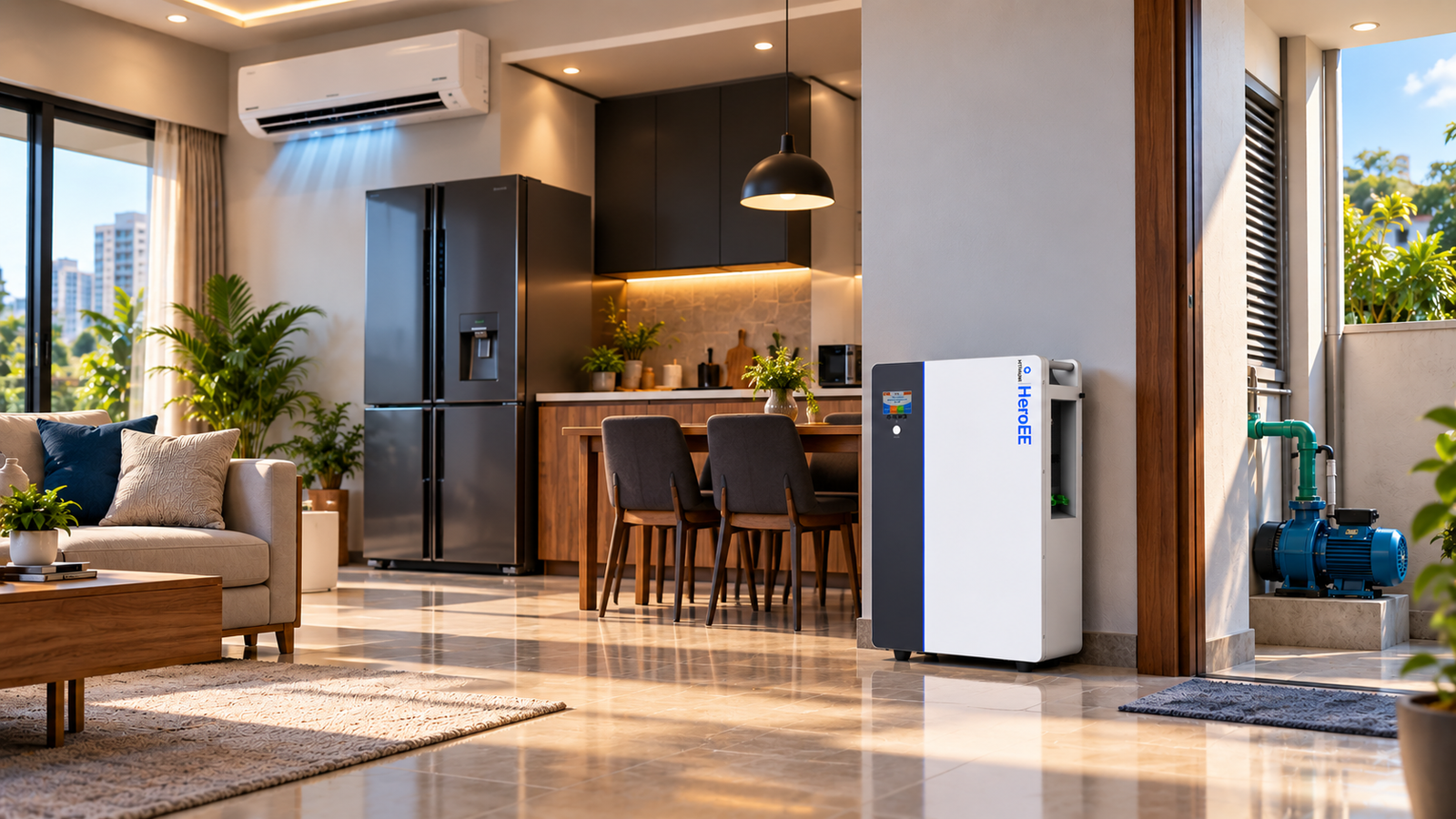
If you live in Bangladesh and own a refrigerator, air conditioner, or water pump, you already know the problem: when the power goes out, those heavy appliances are the first to struggle with a standard IPS. A typical 600VA or 1000VA IPS simply cannot handle the startup surge of a fridge compressor or an AC unit. The lights stay on, but the fridge goes quiet — and within hours, your food starts to thaw.
This guide is for Bangladeshi homeowners, business owners, and apartment dwellers who need an IPS that can actually handle heavy loads — refrigerators, air conditioners, deep-tube water pumps, washing machines, and even small industrial motors. We break down exactly what power each appliance needs, which HiTHIUM lithium IPS models can run them, and how to choose the right system for your home.
Heavy Load Power Requirements — What Your Appliances Actually Need
Before choosing an IPS, you need to understand the power draw of your heavy appliances. The key numbers to look at are running wattage (what the appliance uses during normal operation) and surge wattage (the spike when it starts up — motors and compressors can draw 3–7× their running power for a split second).
| Appliance | Running Power | Surge Power (Startup) | Important Notes |
|---|---|---|---|
| Refrigerator (standard) | 100–200 W | 600–1,200 W | Compressor cycles on/off; surge only at startup |
| Refrigerator (double-door) | 150–250 W | 800–1,500 W | Larger compressor = higher surge |
| Air Conditioner (1 ton) | 900–1,200 W | 2,500–3,500 W | AC has the highest startup surge in most homes |
| Air Conditioner (1.5 ton) | 1,400–1,800 W | 3,500–5,000 W | Requires a high-capacity inverter/IPS |
| Water Pump (0.5 HP) | 370–400 W | 1,000–1,500 W | Induction motor startup current is high |
| Water Pump (1 HP) | 750–800 W | 2,000–3,000 W | Common in Dhaka apartments with rooftop tanks |
| Washing Machine (automatic) | 300–500 W | 1,200–2,000 W | Motor start + heating element |
| Microwave Oven | 800–1,200 W | 800–1,200 W | No motor surge, but high continuous draw |
| Deep Freezer | 200–350 W | 1,000–1,800 W | Compressor surge similar to fridge, larger |
For a typical Bangladeshi home wanting to run a fridge + a few fans/lights + a TV during load shedding, the total running load is around 400–600 W, but the surge load from the refrigerator compressor alone can exceed 1,000 W. If you add a 1-ton AC or a water pump, you need an IPS with a pure sine wave inverter rated at 2,500–5,000 W continuous output.
What Makes an IPS Suitable for Heavy Loads?
Not all IPS units are built the same. Here are the critical factors for running heavy appliances:
1. Pure Sine Wave Output
Compressor-based appliances (fridges, ACs, freezers) and induction motors (pumps, washing machines) require pure sine wave power to operate correctly. Modified sine wave inverters cause motors to run hot, hum loudly, and fail prematurely. Every HiTHIUM lithium IPS delivers pure sine wave output as standard — no compromises.
2. High Surge Capacity
The IPS must handle the startup surge of motors and compressors, which can be 3–7× the running wattage for 50–200 milliseconds. HiTHIUM’s LiFePO₄-based systems, particularly the MaxPower 8 AIO with its 5 kW inverter, are designed to handle these surges without tripping.
3. Sufficient Battery Capacity (kWh)
A fridge runs 24 hours a day (cycling on/off). A 1.5-ton AC running for 4 hours during load shedding can consume 5–7 kWh on its own. You need an IPS battery with at least 2–8 kWh of usable capacity depending on how many appliances you want to keep running. HiTHIUM’s LiFePO₄ batteries deliver up to 95% depth of discharge, meaning you get nearly the full rated capacity.
4. High Inverter Rating (VA/W)
Add up the total running wattage of everything you plan to run at the same time, then add 20–30% headroom. For a home running a fridge + AC + lights + fans, you need at least a 3,000–5,000 W inverter. The MaxPower 8 AIO delivers 5,000 W continuous — enough for a full home setup.
Top HiTHIUM Heavy-Load IPS Solutions for Bangladesh
HiTHIUM Bangladesh offers three tiers of heavy-load-capable systems. Which one is right for you depends on your appliances and budget.
1. HiTHIUM MaxPower 8 AIO — Best All-in-One for Heavy Home Loads
The HiTHIUM MaxPower 8 AIO is the flagship all-in-one home energy storage system designed for Bangladeshi homes with heavy appliances. It combines a 314 Ah LiFePO₄ battery (≈8 kWh), a 5,000 W pure sine wave inverter, and a 9,000 W MPPT solar charger in a single, compact unit.
What it can run simultaneously:
- 1.5-ton air conditioner
- Refrigerator (standard or double-door)
- 4–6 ceiling fans
- 8–10 LED lights
- Wi-Fi router + CCTV cameras
- 1–2 LED TVs (32–55 inch)
- Water pump (0.5 HP)
- Laptops and desktop computers
Key specs:
- Battery: 314 Ah LiFePO₄ (≈8 kWh usable at 95% DoD)
- Inverter: 5,000 W continuous, pure sine wave
- Solar input: Up to 9,000 W PV (180% oversizing allowed)
- Cycle life: 11,000+ cycles — lasts 20–25 years
- Weight: Wall-mountable, space-saving design
- Installation: All-in-one — battery + inverter + MPPT in one box
Best for: Homes with 1–2 ACs, fridge, water pump, and full home backup needs during load shedding. Also ideal for small offices and businesses that need uninterrupted power for computers, security systems, and lighting.
2. HiTHIUM HeroEE 16 — Maximum Capacity for Heavy Industrial Loads
The HiTHIUM HeroEE 16 is a 16 kWh portable power station that delivers the highest energy capacity in HiTHIUM’s lineup. With up to 11 kW output (depending on the inverter), it can power an entire home including air conditioners, electric ovens, washing machines, water pumps, and even power tools and medical equipment.
Key specs:
- Battery: 16 kWh LiFePO₄ (11,000+ cycles)
- Output: Up to 11,000 W pure sine wave (inverter dependent)
- Charging: Dual AC + solar input for fast recharging
- UPS functionality: Instant switchover, zero downtime
- Portable design with heavy-duty wheels for mobility
- Lifespan: 15+ years of daily use
Best for: Large homes with multiple ACs, industrial sheds with motor loads, medical facilities needing reliable backup, and off-grid setups requiring maximum autonomy.
3. HiTHIUM L12314ES + External Inverter — Customisable Heavy-Duty Solution
For customers who already have a high-capacity inverter or want a modular setup, the HiTHIUM HeroEE 4 (4,019 Wh / 314 Ah) is a standalone LiFePO₄ battery that can be paired with a compatible inverter of your choice. You can expand up to 4 units in series for a 48 V, 16 kWh system.
Key specs:
- Capacity: 4,019 Wh (314 Ah at 12.8 V)
- Expandable: Up to 4 units in series (48 V system)
- DoD: 95% depth of discharge
- Cycle life: 11,000 cycles @ 70% SOH
- IP67 waterproof rating — suitable for outdoor/semi-outdoor installation
- Weight: 30 kg per unit
- Safety: Over-temperature, over-current, short-circuit protection
Best for: Homes and businesses that already own a quality inverter and need a long-lasting LiFePO₄ battery, or those who want to build a custom multi-battery bank for extreme heavy-load demands.
IPS for Heavy Load — Quick Comparison
| Model | Battery Capacity | Inverter Output | Can Run 1.5-Ton AC? | Can Run Fridge + AC + Pump? | Best For |
|---|---|---|---|---|---|
| HeroEE 1 (1 kWh) | 1,004.8 Wh | 200 W | ❌ No | ❌ No | Lights, fans, router, TV only |
| HeroEE 2 (2 kWh) | 2,000 Wh | 1,000 W | ❌ No | ❌ No | Fridge + lights + fan (no AC) |
| HeroEE 4 + 3kW Inverter | 4,019 Wh | 3,000 W | ✅ Yes | ✅ Yes (if inverter supports) | Customisable setups, existing inverters |
| MaxPower 8 AIO | ~8 kWh | 5,000 W | ✅ Yes | ✅ Yes | Best overall for heavy home loads |
| HeroEE 16 (16 kWh) | 16 kWh | Up to 11,000 W | ✅ Yes (multiple) | ✅ Yes | Maximum capacity, industrial, large homes |
How to Calculate Your Heavy Load Requirements
Follow these steps to determine which HiTHIUM system is right for your home:
- List all heavy appliances you want to run during load shedding (fridge, AC, pump, etc.)
- Note down running wattage from the appliance label or user manual
- Identify the single highest surge — typically the AC or water pump — and make sure your IPS inverter can handle it
- Add up running wattage of everything that could be on at the same time
- Choose an inverter rated 20–30% above that total running wattage
- Estimate your backup hours: Battery kWh × 0.95 (DoD) × 0.85 (inverter efficiency) ÷ total load in kW
Example calculation: A home running a 1.5-ton AC (1,800 W), a fridge (150 W), 4 fans (240 W), 6 LED lights (60 W), and a router (20 W) has a total running load of about 2,270 W. With a MaxPower 8 AIO’s 8 kWh usable battery, you get roughly 8 × 0.95 × 0.85 ÷ 2.27 ≈ 2.8 hours of backup. If you run only the fridge + fans + lights (no AC), that jumps to over 15 hours.
For a precise calculation, use HiTHIUM’s free Watt Calculator with pre-loaded Bangladeshi appliance data.
Why LiFePO₄ Is the Right Battery for Heavy Loads
Traditional tubular lead-acid batteries struggle with heavy loads for several reasons:
- Low usable capacity: Only 50% DoD — a 200 Ah tubular battery gives you only 100 Ah of usable power
- Voltage sag under heavy load: When a fridge compressor kicks in, the battery voltage drops, causing the inverter to trip or the appliance to run poorly
- Short cycle life: 500–800 cycles vs 11,000+ cycles for HiTHIUM LiFePO₄
- Watering and maintenance: Regular distilled water top-ups needed — inconvenient and often neglected
- Large and heavy: A 200 Ah tubular battery weighs 50–60 kg; an equivalent LiFePO₄ weighs 8.5–30 kg
HiTHIUM’s LiFePO₄ batteries deliver consistent voltage even under high surge loads, 95% usable capacity, zero maintenance, and a lifespan measured in decades rather than years. Over 10 years, a HiTHIUM LiFePO₄ system costs significantly less than replacing tubular batteries 3–4 times.
Frequently Asked Questions
Can a standard 1000VA IPS run a refrigerator?
Most 1000VA IPS units can run a refrigerator’s running load (100–200 W), but they often fail at the compressor startup surge (600–1,200 W). If the IPS has a pure sine wave inverter and sufficient surge rating (1,500 W+), it can work — but you won’t be able to run much else. For a fridge + other essentials, go with at least a 2,000 W system like those paired with a L12314ES or higher.
How big of an IPS do I need to run a 1.5-ton AC in Bangladesh?
A 1.5-ton AC draws 1,400–1,800 W running and up to 5,000 W at startup. You need an IPS with a pure sine wave inverter rated at minimum 3,500 W continuous, ideally 5,000 W. The HiTHIUM MaxPower 8 AIO with its 5,000 W inverter is the most practical ready-made solution for running a 1.5-ton AC alongside other home appliances.
Can I run both a fridge and an AC on the same IPS?
Yes — but only with a system that has sufficient inverter capacity and battery storage. The MaxPower 8 AIO (5,000 W inverter, ≈8 kWh battery) can comfortably run a 1.5-ton AC and a fridge simultaneously, along with lights, fans, and a TV. The key is ensuring the inverter handles the combined startup surge (AC + fridge compressors starting at different times).
How long will a HiTHIUM MaxPower 8 AIO run my home during load shedding?
Running only essentials (fridge, fans, lights, router): 10–15 hours. Running a 1.5-ton AC + fridge + essentials: 2.5–3.5 hours. Running fridge + lights + fans only (no AC): 15–20 hours. Actual runtime depends on your specific appliances and usage patterns. Use the HiTHIUM Watt Calculator for a precise estimate.
What is the lifespan of a HiTHIUM LiFePO₄ battery used for heavy loads?
HiTHIUM LiFePO₄ batteries are rated for 11,000+ charge cycles at 70% SOH. For a typical Bangladeshi home with daily load shedding (1–2 cycles per day), that translates to 25+ years of reliable service. Tubular batteries, by comparison, need replacement every 2–3 years.
Does the MaxPower 8 AIO support solar panels for charging?
Yes — the MaxPower 8 AIO includes a built-in 9,000 W MPPT solar charge controller. You can connect up to 9 kW of solar panels, which is enough to run the home during the day and fully recharge the battery simultaneously. This makes it an excellent hybrid solar + grid backup solution for Bangladeshi homes looking to reduce electricity bills.
Conclusion — Which Heavy-Load IPS Should You Buy?
For most Bangladeshi homes with a refrigerator, one air conditioner, and a water pump, the HiTHIUM MaxPower 8 AIO is the clear best choice. It combines a large 8 kWh LiFePO₄ battery with a powerful 5,000 W pure sine wave inverter in one easy-to-install package. No separate inverter needed, no complex wiring — it’s the all-in-one answer to Dhaka’s load shedding for heavy appliance users.
If you need even more capacity — multiple ACs, industrial equipment, or off-grid living — the HeroEE 16 with 16 kWh capacity and up to 11 kW output is the ultimate solution. For those with an existing inverter who just need a battery upgrade, the HeroEE 4 offers a cost-effective LiFePO₄ drop-in replacement.
👉 Visit HiTHIUM Bangladesh to explore the full range or contact their team for a free load assessment. Get the heavy-load IPS your home deserves — and never worry about load shedding again.
