




Blog
IPS for Mosque and Religious Center in Bangladesh

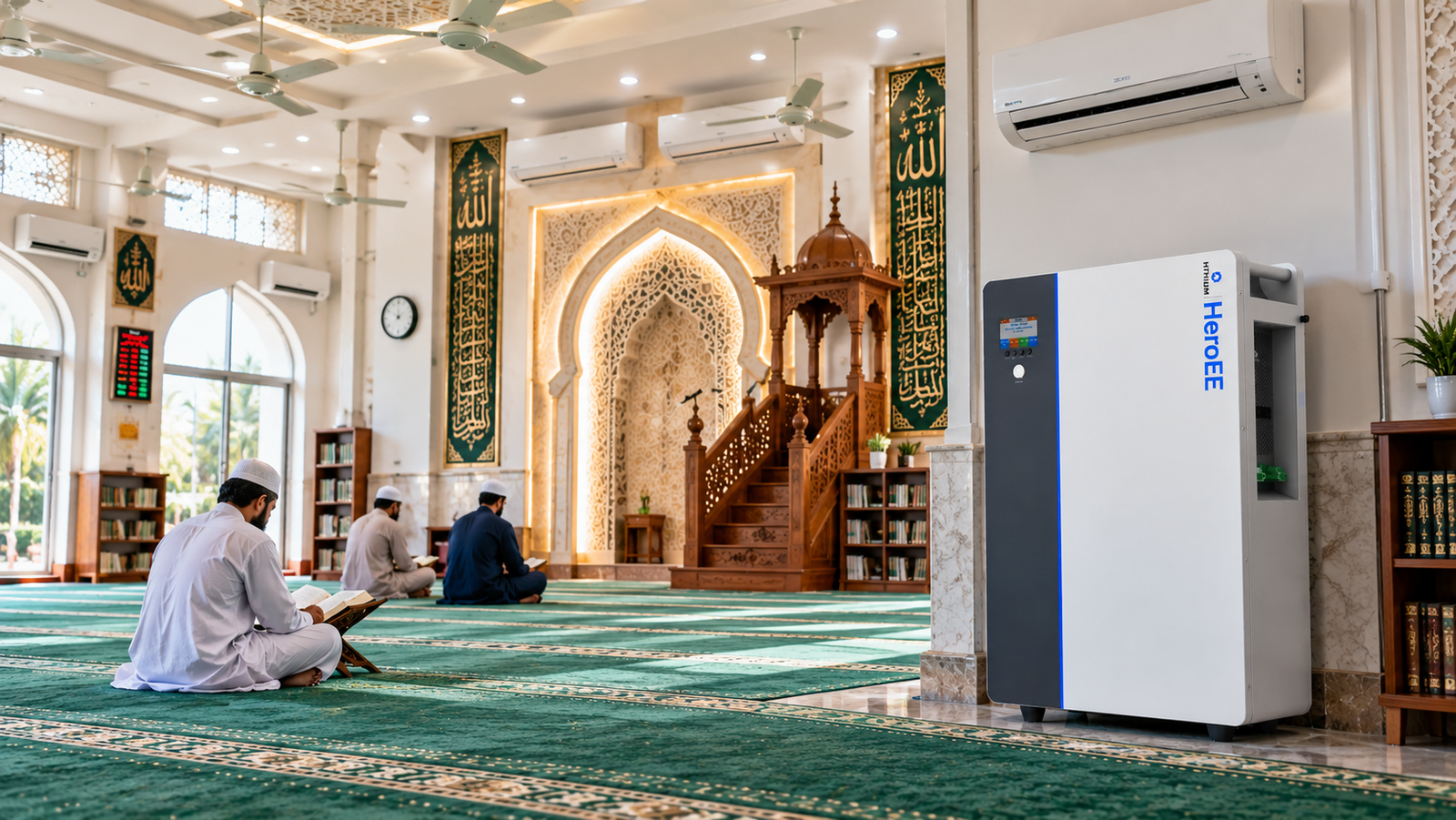
Mosques are the spiritual centers of Bangladeshi communities. From early morning Fajr prayers to evening Taraweeh during Ramadan, consistent power supply is essential for lighting, fans, sound systems, and modern amenities. Power outages during prayer times can disrupt worship and inconvenience hundreds or thousands of devotees.
In Bangladesh, where load-shedding remains a reality in many areas, mosques need reliable lithium IPS backup power solutions. Traditional diesel generators are noisy, polluting, and expensive to maintain. Lead-acid batteries require regular water topping and replacement. The modern solution is lithium iron phosphate (LiFePO4) IPS systems — quiet, maintenance-free, and designed for the unique demands of religious institutions.
Power Requirements for Mosque Operations
A typical mosque in Bangladesh has varying power needs throughout the day:
- Lighting: LED lights throughout the prayer hall (200-500W depending on size)
- Fans: Ceiling fans for ventilation (50-100W each, typically 6-12 units)
- Sound System: Microphone, amplifier, and speakers for sermons and azan (100-300W)
- Water Pump: For wudu area and cleaning (200-500W)
- Modern Amenities: Charging stations, security cameras, digital displays
A medium-sized mosque serving 100-200 devotees typically needs 1-2 kW continuous power with 2-3 kW peak capacity for startup surges. For larger congregational mosques during Ramadan, 3-5 kW systems may be necessary. Use our IPS load calculator guide to determine your mosque’s exact requirements.
Benefits of Lithium IPS for Mosques
Lithium IPS systems offer several advantages for religious institutions:
- Silent Operation: No generator noise to disturb prayers or the peaceful atmosphere
- Maintenance-Free: Unlike lead-acid batteries, LiFePO4 requires no water topping or frequent replacement
- Long Lifespan: 11,000+ charge cycles (8-10 years) versus 300-500 cycles for tubular batteries
- Space-Saving: Compact wall-mountable design fits in tight mosque spaces
- Solar Compatible: Can integrate with solar panels for sustainable operation
- Smart Monitoring: WiFi-enabled models allow remote monitoring via smartphone apps
Recommended IPS Systems for Mosque Backup
Based on mosque size and power requirements, here are our recommended HiTHIUM solutions:
Small Mosque (50-100 Devotees)
For smaller neighborhood mosques with basic lighting and fan requirements: HiTHIUM HeroEE Light 1 — 1004Wh capacity, 500W output, portable design. Provides 4-6 hours backup for lights and fans. Price: BDT 50,800. Perfect for mosques with limited space and modest power needs.
Medium Mosque (100-300 Devotees)
For standard community mosques with sound systems and multiple fans: HiTHIUM HeroEE 2 — 2kWh capacity, wall-mountable, smart monitoring. Supports lighting, fans, sound system, and water pump. Price: BDT 78,100. Ideal for mosques requiring 1-2 kW continuous power.
Large Mosque / Congregational Center
For large mosques hosting 500+ devotees, especially during Ramadan: HiTHIUM MaxPower 8 AIO — 8kWh all-in-one system with built-in inverter. Handles full mosque operations including AC units if needed. Price: BDT 287,000. Solar-ready with extensive backup capacity.
Installation Considerations for Mosques
When installing an IPS system for your mosque, consider these factors:
- Location: Install in a dry, ventilated area away from direct prayer space
- Venting: LiFePO4 batteries produce minimal gas but need some airflow
- Access: Ensure easy access for maintenance and monitoring
- Solar Integration: Plan for future solar panel installation if budget allows
- Professional Installation: Always hire certified technicians for mosque electrical work
Cost Savings: IPS vs Generator vs Tubular Battery
| System Type | Initial Cost (BDT) | Annual Maintenance | Lifespan |
|---|---|---|---|
| Diesel Generator | 40,000-150,000 | 5,000-15,000 | 5-8 years |
| Lead-Acid UPS | 25,000-60,000 | 3,000-8,000 | 2-3 years |
| Tubular Battery IPS | 40,000-80,000 | 2,000-5,000 | 3-5 years |
| LiFePO4 IPS | 50,800-287,000 | 0-1,000 | 8-10 years |
While lithium IPS systems have higher upfront costs, the total cost of ownership over 10 years is significantly lower due to zero maintenance and long lifespan.
Frequently Asked Questions
How long does a lithium IPS backup last during power cuts?
A 1kWh lithium IPS can power a small mosque (lights + 4 fans + sound system) for 4-6 hours. A 2kWh system extends this to 8-12 hours. During Ramadan when mosques run 24/7, larger systems or solar integration are recommended for continuous operation.
Can I connect solar panels to my mosque IPS system?
Yes! All HiTHIUM IPS systems are solar-compatible. Adding 200-400W of solar panels can significantly extend backup time and reduce electricity costs. The HC200 portable solar panel (200W, BDT 24,500) is an excellent starting point for mosque solar integration.
What maintenance do mosque IPS systems require?
Lithium IPS systems are virtually maintenance-free. Unlike tubular batteries, there’s no water topping, no acid handling, and no frequent replacements. Annual inspection by a technician is sufficient. WiFi-enabled models can be monitored remotely via smartphone apps.
Is a lithium IPS safe for indoor mosque installation?
Absolutely. LiFePO4 batteries are inherently safer than other lithium chemistries — they don’t catch fire easily and produce no toxic gases. They’re safe for indoor installation in well-ventilated spaces. HiTHIUM systems include built-in protection against overcharge, over-discharge, and short circuits.
How much does a complete mosque IPS installation cost?
For a small mosque, a HeroEE Light 1 system starts at BDT 50,800. Medium mosques typically need a HeroEE 2 (BDT 78,100) or similar 2kWh system. Large congregational mosques may require the MaxPower 8 AIO (BDT 287,000). Installation costs vary but typically add BDT 3,000-8,000 for professional setup.
Conclusion
Mosques serve as community anchors in Bangladesh, and ensuring uninterrupted power for prayers and activities is both a practical necessity and an act of service to the congregation. Lithium IPS systems from HiTHIUM offer the perfect balance of reliability, longevity, and low maintenance for religious institutions.
Whether you’re managing a small neighborhood mosque or a large congregational center, HiTHIUM’s range of lithium IPS solutions can meet your power backup needs. Contact us today for a free consultation and site assessment.
📖 Related Guides: IPS for Wedding Halls | IPS for Small Shops | IPS Buying Guide for Small Business | IPS for Hotels | IPS for Schools
Why Mosques Need Reliable Power Backup in Bangladesh
Bangladesh experiences frequent load shedding, especially during summer months when electricity demand peaks. For mosques, power outages during prayer times — particularly Jummah (Friday) prayers, Taraweeh during Ramadan, and Isha prayers — disrupt congregation and create discomfort for worshippers. A reliable IPS system ensures that ceiling fans, sound systems, lighting, and air conditioning continue operating without interruption, providing a comfortable environment for prayer.
HiTHIUM LiFePO4 IPS Systems for Mosques
HiTHIUM offers three lithium IPS models suitable for mosque installations, each designed to handle different power requirements:
HeroEE Light 1 — For Small Mosques
The HeroEE Light 1 is ideal for small neighborhood mosques (Masjids) that need to power basic essentials: 5 ceiling fans, LED lighting, and a small sound system. With 1kWh capacity and LiFePO4 battery technology, it provides 2-3 hours of backup during load shedding. Priced competitively for small mosque committees with limited budgets.
HeroEE 2 — For Medium Mosques
The HeroEE 2 handles the power needs of medium-sized mosques with 10 ceiling fans, full LED lighting, sound system with microphone setup, and basic air circulation. Its 2kWh capacity and extended battery life make it suitable for mosques that host larger congregations, especially during Friday prayers and Ramadan Taraweeh.
MaxPower 8 AIO — For Large Mosques and Madrasas
The MaxPower 8 AIO is the most powerful option, designed for large mosques and madrasas that require heavy-duty backup. It can simultaneously power 15-20 ceiling fans, full PA/sound system, LED display boards, air conditioning units, and lighting. With 8kWh capacity, it ensures uninterrupted worship even during extended outages.
Installation Considerations for Mosques
Proper IPS installation in mosques requires careful planning:
- Ventilation: LiFePO4 batteries require proper airflow. Install the IPS in a well-ventilated area, away from direct sunlight. Avoid enclosed cabinets without ventilation holes.
- Load calculation: List all electrical devices (fans, lights, sound system, AC units) and calculate total wattage to choose the right IPS capacity. A typical medium mosque needs 1,500-2,500 watts of continuous power.
- Wiring: Ensure the mosque’s electrical wiring can handle the IPS load. Old mosques may need wiring upgrades before IPS installation.
- Solar integration: Consider adding solar panels to the IPS system to reduce electricity costs. HiTHIUM IPS systems are solar-compatible, allowing mosques to charge batteries during the day using free solar energy.
Cost Savings for Mosque Committees
Investing in a lithium IPS system saves mosque committees money in three ways:
- Reduced generator costs: Eliminates the need for diesel generators, which are expensive to run and maintain.
- Lower electricity bills: Solar-compatible IPS systems reduce grid electricity consumption.
- Minimal maintenance: LiFePO4 batteries last 15-25+ years with no maintenance, unlike lead-acid batteries that need replacement every 2-3 years.
