




Blog
HiTHIUM vs Luminous vs Microtek: IPS Brand Comparison 2026

Choosing an IPS brand in Bangladesh in 2026 is no longer a simple price comparison. The market now splits into two very different technologies: traditional lead-acid tubular systems from brands such as Luminous, Microtek and Exide, and lithium LiFePO4 systems from manufacturers such as HiTHIUM. This guide compares the two approaches across the factors that actually determine long-term cost and reliability.
Quick Verdict
| Factor | HiTHIUM | Luminous | Microtek |
|---|---|---|---|
| Battery chemistry | LiFePO4 (lithium) | Lead-acid tubular | Lead-acid tall tubular |
| Cycle life | 11,000+ cycles | Roughly 1,000-1,500 cycles | Roughly 1,000-1,500 cycles |
| Expected lifespan | 10+ years | 4-6 years with maintenance | 4-6 years with maintenance |
| Maintenance | Maintenance-free | Distilled water top-up every 3-4 months | Distilled water top-up required |
| Weight for equivalent backup | Far lighter | Very heavy (a 200Ah tubular battery weighs around 50-60 kg) | Very heavy |
| Solar readiness | Designed for solar + grid dual charging | Possible with a separate solar charge controller | Possible with a separate controller |
| Upfront cost | Higher | Lower | Lower |
| 10-year running cost | Lower (no battery replacement) | Higher (2-3 battery replacements) | Higher (2-3 battery replacements) |
| Best suited to | Homes planning long-term backup, solar pairing, shops and commercial sites | Budget-first buyers with light daily load | Buyers wanting a known inverter brand with a bundled combo |
Who These Three Brands Actually Are
HiTHIUM
HiTHIUM is an energy storage manufacturer established in 2019, focused specifically on battery cells and integrated energy storage systems. The company operates four research and development centres with more than 1,100 engineers working on material science, cell design, system integration and intelligent control. In Bangladesh, HiTHIUM products are supplied as official lithium IPS and energy storage systems, sold through authorised dealers including Star Tech and through the official HiTHIUM Bangladesh shop.
The core specification that matters for a Bangladeshi buyer is the chemistry: HiTHIUM systems use LiFePO4 cells rated for more than 11,000 cycles with an expected service life of 10+ years. For a full company overview, see our about page.
Luminous
Luminous is one of the most recognised inverter and battery brands in Bangladesh. Its home IPS range is built around lead-acid tubular batteries — models such as the ILTB series. A 100Ah 12V Luminous tubular battery currently retails around ৳13,499, and a 200Ah model around ৳29,500-31,000. Warranty on batteries is typically 24 months, and inverters carry 24-36 months.
The practical lifespan of a Luminous tubular battery in Bangladesh, with correct maintenance, is roughly 4 to 6 years. That maintenance is not optional: the water level must be checked every 3-4 months and topped up with distilled water, terminals need cleaning every 4-6 months, and the battery should not be discharged below 20% repeatedly.
Microtek
Microtek sells complete inverter-and-battery combos. A typical home unit pairs a pure sine wave inverter with a tall tubular battery — for example the LUXE NEW 1400 with a 200Ah 12V M2003624TT battery. Microtek publishes a 36-month inverter warranty and 60 months on the battery (36 months full cover plus 24 months pro-rata). Switchover time in UPS mode is under 15 milliseconds, and input range is wide at 100-300V AC, which suits unstable grid conditions.
Microtek’s strength is that the inverter and battery ship as a matched, warrantied package. Its weakness is identical to Luminous: the battery is still lead-acid, so it needs water topping, it is heavy, and it will need replacing within roughly 5-6 years.
Where the Real Difference Sits: Battery Chemistry
Everything else in this comparison follows from one fact. Lead-acid tubular batteries store energy in plates submerged in sulphuric acid. Each full discharge slowly degrades those plates, and the battery holds less capacity every year. A new 200Ah tubular battery will not deliver 200Ah after three years of daily load-shedding cycles.
LiFePO4 cells degrade far more slowly. HiTHIUM’s 11,000-cycle rating is not a marketing figure — it reflects the chemistry’s behaviour under repeated deep discharge. In practice, a HiTHIUM system in a Bangladeshi home experiencing one to two full discharge cycles per day will still hold useful capacity well past the point where a tubular battery has been replaced twice.
For a detailed side-by-side of the two chemistries, read our lithium versus lead-acid comparison guide.
Cost Analysis: Upfront Price vs 10-Year Cost
This is where budget-first comparisons usually go wrong. A Luminous tubular system costs meaningfully less on day one. Over ten years, the arithmetic reverses.
| Cost element | Lead-acid tubular | HiTHIUM LiFePO4 |
|---|---|---|
| Initial purchase | Lower | Higher |
| Battery replacements over 10 years | 2-3 replacements at current prices | None expected within the design life |
| Water and maintenance labour | Regular, ongoing | None |
| Energy efficiency | Lower round-trip efficiency | Higher, so less electricity wasted per cycle |
| Resale / reuse value | Low, scrap lead value | Meaningful, cells retain capacity |
| Floor space needed | Large, ventilated battery room | Compact, wall or floor placement |
A worked example makes this concrete. If a tubular battery lasts 4 years, a 10-year plan requires roughly two additional battery purchases plus installation each time. Add the distilled water, terminal cleaning and the space you must dedicate to a ventilated battery area, and the “cheaper” option stops being cheaper around year five.
Installation cost varies by home and load. Our installation cost breakdown covers what a proper install involves, including the ventilation and cabling differences between the two chemistries.
Performance in Real Bangladeshi Conditions
Load-shedding patterns
Bangladesh’s load-shedding pattern is not a single nightly outage. It is repeated short interruptions through the day and evening, which is the worst possible case for a lead-acid battery because partial cycling still degrades plates. Lithium handles partial cycling with minimal penalty — this is the single biggest practical advantage for a home user.
Heat
Bangladesh’s April to September heat shortens lead-acid battery life considerably, and a battery placed in direct sunlight or an unventilated room degrades faster still. LiFePO4 cells tolerate heat better, and HiTHIUM’s larger systems use liquid cooling for thermal management.
Switchover time
For routers, computers, NAS drives and medical equipment, switchover time matters. Microtek publishes under 15ms in UPS mode. Lithium IPS systems with a built-in inverter, such as the HiTHIUM HeroEE range, deliver similarly fast switchover because the inverter and battery management are designed as one unit. Confirm the specific model’s switchover figure before buying — our pure sine wave IPS guide explains why waveform matters for sensitive electronics.
Weight and placement
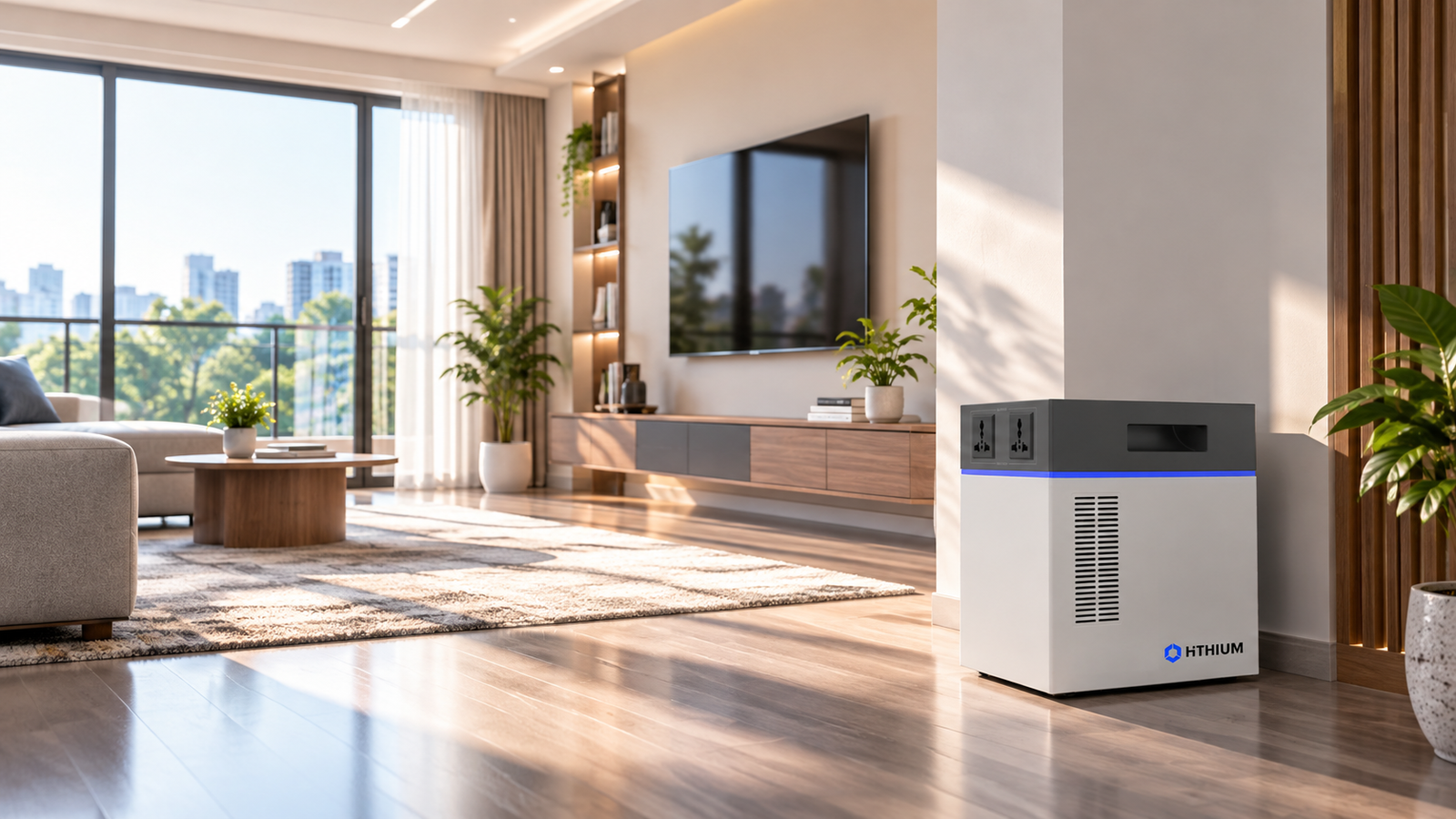
A 200Ah tubular battery weighs around 50-60 kg and needs a floor that can take it plus airflow around it. A lithium system delivering equivalent usable energy weighs a fraction of that and can be placed against a wall in a living room or shop without a dedicated battery room. For apartments and retail shops this is often the deciding factor.
Which HiTHIUM Model Fits Which Buyer
| HiTHIUM product | Capacity | Current price | Best for |
|---|---|---|---|
| HeroEE 1 | 1kWh, 200W solar-ready | ৳33,725 | Single room, router and fan backup, small shop |
| HeroEE 2 | 2kWh | ৳78,100 | Two-bedroom home, fan and light backup |
| HeroEE 16 | 16kWh | ৳336,000 | Full home, office or commercial site |
| HC200 solar panel | 200W portable | ৳24,500 | Solar charging for HeroEE units |
Prices above are as published on the official shop at the time of writing and change with stock and model updates — always confirm on the product page before ordering.
If you are unsure how much capacity you actually need, start with our IPS capacity sizing guide, then cross-check against your actual load list. For the full home solution including an integrated inverter, the HeroEE MaxPower 8 AIO review covers an all-in-one unit in detail.
Where Lead-Acid Still Makes Sense
Honest comparison means saying where the older technology wins. Lead-acid tubular is the right call when:
- Budget is genuinely the binding constraint and you need backup today, not in five years.
- Daily load is light — a couple of fans, a few lights and a router — and outages are short.
- Local service access matters more than lifespan — lead-acid batteries can be serviced by almost any electrician in any district.
- The system is temporary and will be relocated or sold within 2-3 years.
In those cases a Luminous or Microtek combo is a sensible, well-supported purchase. The mistake to avoid is buying lead-acid for a heavy daily cycling application — such as a shop, clinic, office or a home with long evening outages — and discovering the true cost in year three.
Buying Checklist
- List your actual load. Fans, lights, router, refrigerator, computer, medical equipment — with wattage for each. Our home IPS buying guide includes a load worksheet.
- Decide chemistry first, brand second. Lithium or lead-acid is a bigger decision than which brand of lead-acid.
- Check warranty terms in writing. Pro-rata versus full-replacement warranty terms differ significantly between brands.
- Confirm switchover time and waveform if you are protecting computers, routers or medical devices.
- Buy from an authorised source. Counterfeit batteries are a real problem in this market — buy from the official shop or an authorised dealer.
- Plan for solar now, even if you install panels later. Choosing a solar-ready unit costs little extra today and avoids replacement later.
Frequently Asked Questions
Is a HiTHIUM lithium IPS worth the higher price in Bangladesh?
For homes and businesses with daily load-shedding, yes. The 10+ year lifespan with no battery replacement and no water maintenance typically costs less over a decade than a tubular system that needs replacing two or three times. For very light, occasional use, lead-acid may still be more economical.
How long does a Luminous tubular battery last in Bangladesh?
With correct maintenance — distilled water top-up every 3-4 months and terminal cleaning — roughly 4 to 6 years. Without maintenance, expect considerably less.
Do lithium IPS batteries need maintenance?
No. LiFePO4 systems are sealed and maintenance-free. There is no water top-up, no terminal cleaning and no gassing, so they can safely be placed inside a living room or shop.
Can I add solar panels to any IPS brand?
Technically yes, with a separate solar charge controller, but it is less efficient and more complex. Lithium systems such as HiTHIUM’s HeroEE range are designed for direct solar and grid dual charging, which is simpler and wastes less energy.
Where can I buy genuine HiTHIUM products in Bangladesh?
Through the official HiTHIUM Bangladesh shop and authorised dealers including Star Tech. Always verify you are buying from an authorised source before paying.
