




Blog
Pure Sine Wave IPS in Bangladesh 2026: Complete Guide

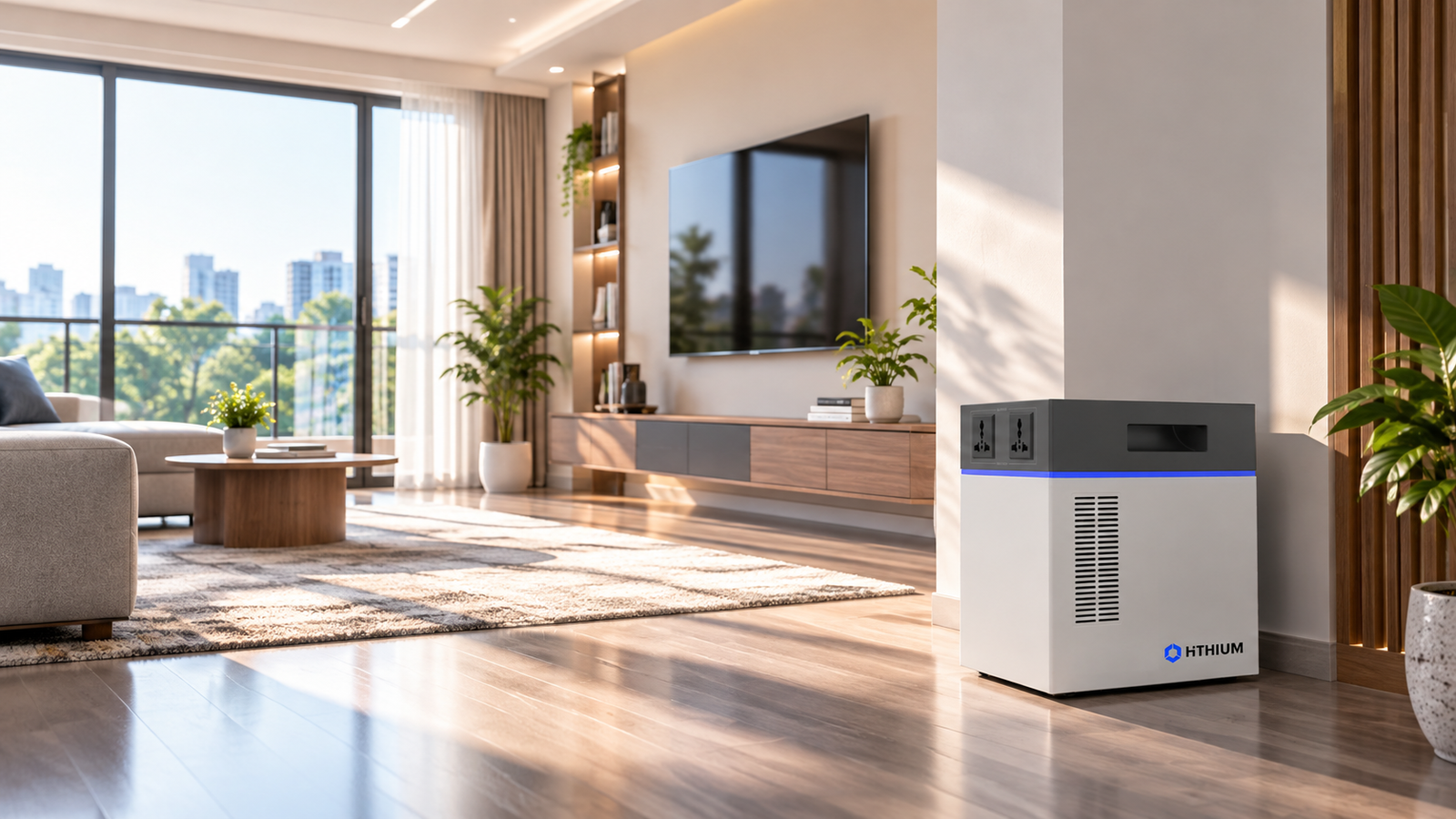
If you are buying a pure sine wave IPS in Bangladesh in 2026, the waveform is the specification that decides whether your fridge hums, your laptop charger runs hot, and your ceiling fan spins silently — or not. Yet it is the specification most shops do not mention unless you ask for it.
This guide explains what a sine wave actually is, how pure sine wave output differs from the cheaper modified sine wave output, which household appliances genuinely need it, what pure sine wave IPS units cost in Bangladesh right now, and how to verify the claim before you pay. Short version: for anything with a motor, a compressor or a sensitive circuit board, buy pure sine wave — everything else is a false economy.
What Is a Sine Wave?
Mains electricity in Bangladesh arrives as alternating current (AC) that rises smoothly to a positive peak, falls back through zero, drops to a negative peak, and repeats 50 times per second. Plotted on a graph, that smooth rise and fall traces a sine curve — hence “sine wave”. This is the waveform your appliances were designed around at the factory.
When an inverter converts DC battery power back into AC for your home, it has two choices: reproduce that smooth curve precisely, or approximate it. The precise version is pure sine wave. The cheap approximation is modified sine wave (also sold as “modified square wave” or “quasi-sine wave”), which steps up and down in blocky increments instead of curving.
Pure Sine Wave vs Modified Sine Wave IPS
| Factor | Pure Sine Wave | Modified Sine Wave |
|---|---|---|
| Waveform | Smooth, identical to grid power | Blocky stepped square wave |
| Refrigerator / AC compressor | Runs cool and quiet, full rated power | Runs hotter, louder, reduced efficiency |
| Ceiling and exhaust fans | Silent, normal speed | Audible buzz, slight speed variation |
| Laptops, routers, NAS, TVs | Charges normally, no extra heat | Adapter runs hot, possible charger failure |
| Medical and lab equipment | Approved usage | Not recommended |
| Battery run-time | Higher — less energy wasted as heat | Lower — roughly 10–20% more draw |
| Typical price position | Premium | Budget |
The efficiency gap is the number people forget. A modified sine wave unit wastes more energy as heat in both the inverter and the appliance, so the same battery gives you visibly less backup time. Over the life of a system, that difference costs more than the initial saving.
Which Appliances Need a Pure Sine Wave IPS?
Group your home loads into three categories before you shop:
- Must have pure sine wave: refrigerator and freezer compressors, air conditioners, water pumps and motor-driven appliances, medical devices such as oxygen concentrators and nebulisers, and any equipment with a laboratory or clinical certification.
- Strongly recommended: ceiling and exhaust fans, induction and microwave ovens, laser printers, desktop computers with standard power supplies, and coffee or kitchen machines with heating elements.
- Usually tolerant: LED bulbs, phone chargers, routers and basic Wi-Fi equipment. These will run on modified output, but adapters still run warmer and lifespan shortens.
In practice, a Bangladeshi household almost always has a fridge and at least one fan on the backup circuit — which pushes nearly every buyer into pure sine wave territory anyway. Load estimation is covered step by step in how to calculate IPS load for your home, and run-time expectations in how to calculate IPS backup time.
How to Verify a Pure Sine Wave Claim
Marketing language in the Bangladesh IPS market is loose — “full sine”, “digital sine”, “sine-like” and “pure sine” are not interchangeable. Four checks that work:
- Read the spec sheet, not the sticker. Look for the printed line “Output waveform: Pure sine wave” in the manual or datasheet, not a badge on the box.
- Check for certifications. Reputable units reference IEC or ISO standards for their inverter stage and list total harmonic distortion (THD). Low THD (under 3%) is the mark of a genuinely clean output.
- Ask about a fan test. Run a table or ceiling fan on the unit in the showroom. A modified sine wave fan buzzes audibly and wavers in speed; a pure sine wave fan runs as quietly as it does on grid power.
- Inspect the service network. A waveform claim is worthless if the unit cannot be serviced in Bangladesh. Confirm warranty length and service coverage in writing — see our IPS fault and error code guide for what post-purchase support should look like.
Pure Sine Wave IPS Price in Bangladesh 2026
Prices below are drawn from our published market data for 2026; the full rate list lives in IPS price in Bangladesh 2026 — complete price list.
| Segment | Representative Unit | Entry Price (BDT) | Notes |
|---|---|---|---|
| Budget line-up | Hamko 1000VA class | ~8,500 | Basic waveform, battery usually separate |
| Mid range | Luminous Zelio+ 1100 class | ~13,500 | Widely available service network |
| Lithium, all-inclusive | HiTHIUM HeroEE 1 (1004.8Wh, 200W) | 33,725 (from 42,800) | Pure sine wave, LiFePO4 battery included, built-in UPS function |
| Higher capacity lithium | HiTHIUM HeroEE 2 (2kWh) | 78,100 | Runs fridge, fans, lights and router together |
| Whole-home storage | HiTHIUM MaxPower 8 (8kWh ESS) | 236,000 | Residential energy storage, solar-ready |
Two things matter more than the headline number. First, warranty and replacement cost: a lead-acid unit that needs replacing two or three times inside a decade often costs more than a lithium unit bought once — the ten-year comparison is set out in IPS price comparison: Luminous vs HiTHIUM vs Hamko. Second, battery chemistry: LiFePO4 survives 11,000+ cycles and more than a decade of service, while tubular lead-acid falls below usable capacity after a few hundred deep cycles, as explained in the best IPS under BDT 30,000 guide.
Why Waveform Matters More with Lithium IPS
Lithium LiFePO4 systems charge fast, discharge deep and cycle thousands of times — the economics only work if the inverter stage is efficient. A pure sine wave inverter wastes less energy converting DC to AC, so more of each charge reaches your appliances instead of leaving as heat. That is why every HiTHIUM HeroEE unit ships with pure sine wave output as standard rather than as a paid upgrade: the HeroEE 1 delivers 200W of pure sine wave from a 1004.8Wh LiFePO4 pack, switches to grid power through its built-in UPS function, and accepts 12–36V solar input up to 200W for off-grid charging.
Solar pairing is where this gets interesting — a pure sine wave lithium IPS with solar input keeps working through extended outages without draining the battery. Setup details are in how to choose an IPS for your home and our guide to IPS installation, step by step.
Buying Checklist
- Waveform confirmed in writing — “Pure sine wave” on the datasheet, not implied.
- Sized for your real load — total running watts plus 20% headroom for motor start-up surge.
- Battery type declared — LiFePO4 with a cycle-life figure, or tubular lead-acid with a replacement schedule.
- Transfer time for UPS function — under 20ms if routers, PCs or medical equipment are on the circuit.
- Solar input if you want it — confirm voltage window (for example 12–36V) and maximum panel wattage.
- Warranty and local service — in writing, with an address in Bangladesh you can actually reach.
FAQ: Pure Sine Wave IPS in Bangladesh
Is a pure sine wave IPS worth it in Bangladesh?
Yes, in almost every household. Fridges, fans, pumps and air conditioners run cooler, quieter and at full efficiency on pure sine wave output, and the inverter wastes less energy — which translates into longer backup time from the same battery. Only loads limited to LED bulbs and phone chargers can safely skip it.
How do I know if my current IPS is pure sine wave?
Check the manual or datasheet for the line “Output waveform: Pure sine wave”, or run a ceiling fan on the unit — a modified sine wave fan buzzes and wavers, a pure sine wave fan runs as quietly as it does on grid power.
What is the price of a pure sine wave IPS in Bangladesh in 2026?
Budget units start around BDT 8,500, mid-range models around BDT 13,500, and lithium all-inclusive pure sine wave units such as the HiTHIUM HeroEE 1 at BDT 33,725 (down from BDT 42,800). Higher-capacity lithium units run BDT 78,100 for 2kWh and BDT 236,000 for an 8kWh residential storage system.
Can a pure sine wave IPS run a refrigerator?
Yes — provided the unit’s continuous rating and start-up surge exceed the fridge’s requirements. Compressor start-up draws several times the running wattage, so size the inverter with at least 20% headroom and verify the surge rating before buying.
Do I need a pure sine wave IPS if I already have solar panels?
Especially then. Solar charging stores DC energy that must be inverted to AC for your appliances, so every conversion step is where waveform quality and efficiency decide how much usable power you actually get. Pair solar panels with a pure sine wave lithium IPS for the best return on the panels.
