




Blog
Best IPS for Apartment Buildings in Bangladesh — Central System Guide

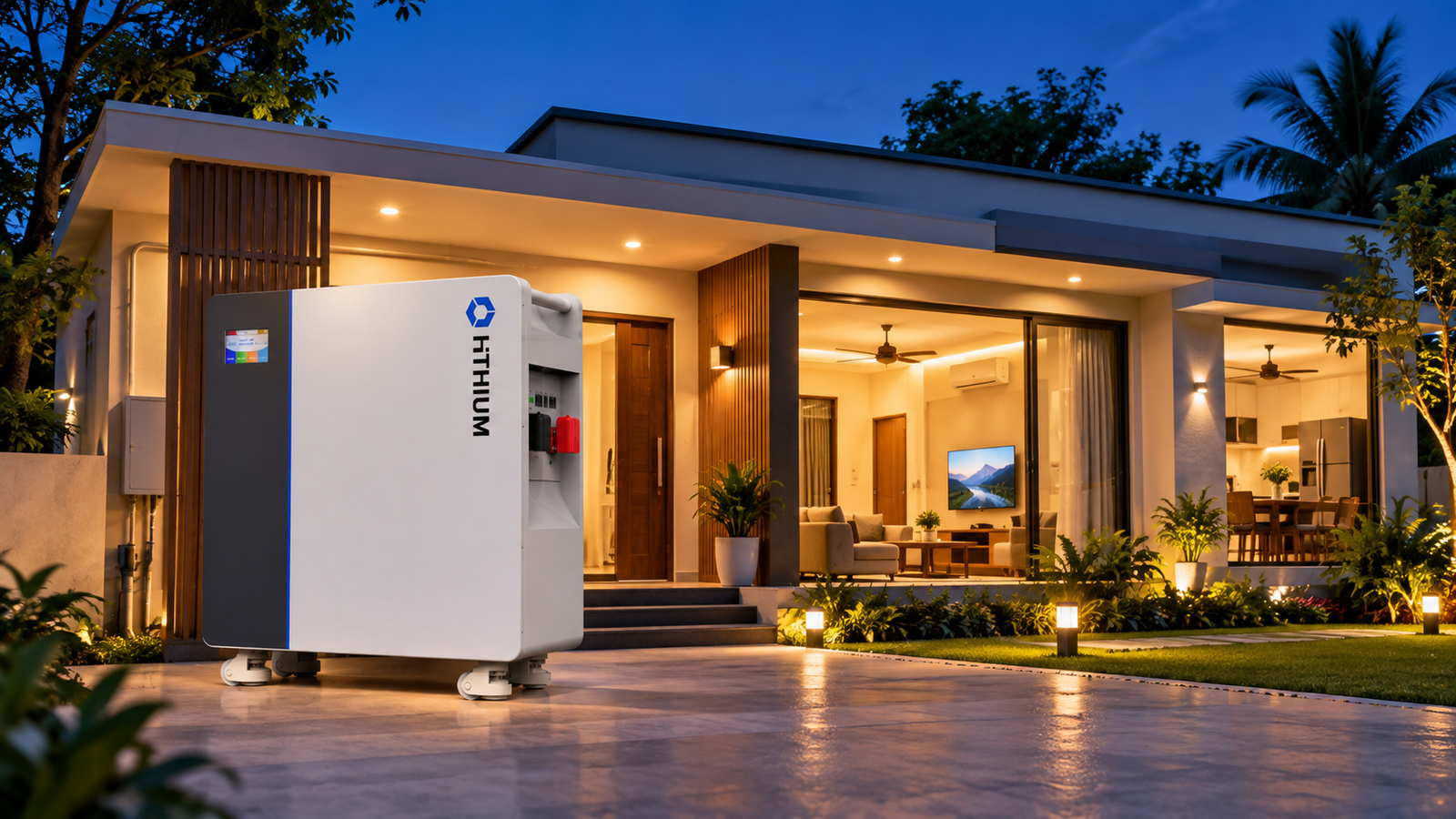
The central IPS system is the most practical and cost-effective solution for apartment buildings in Bangladesh facing regular load shedding. Rather than installing individual IPS units in every flat — which multiplies costs, maintenance, and failure points — a single high-capacity system can power essential loads across all apartments from one shared battery bank.
This guide covers everything apartment building owners, managing committees, and electrical contractors in Bangladesh need to know about choosing, sizing, installing, and maintaining a central IPS system in 2026.
Why Central IPS Beats Individual Units for Apartment Buildings
For apartment buildings with 10 or more flats, a central IPS system delivers significant advantages over flat-by-flat installations.
Cost Savings
Consider a 20-flat building where each flat needs a 1,000VA IPS with a single LiFePO4 battery. Individual units cost approximately BDT 12,000-18,000 per flat, totaling BDT 2,40,000-3,60,000. A single central system serving the same 20 flats costs BDT 2,50,000-4,50,000 — but it includes a higher-capacity inverter, professional-grade battery management, and shared maintenance costs that reduce the per-flat expense to BDT 12,500-22,500.
The real savings emerge over 10 years. Individual units require separate battery replacements every 3-5 years, separate servicing, and the aggregate electricity loss from 20 independent inverters running at partial load. A central inverter operating at 60-80% capacity is far more efficient than 20 inverters each running at 10-15% load.
Centralized Maintenance
Managing committees in Bangladeshi apartment buildings face a common headache: coordinating IPS maintenance for 20-40 individual units scattered across flats. With a central system, one maintenance contract covers everything. Battery checks, firmware updates, and cleaning happen in one location — typically the basement or rooftop electrical room.
Shared Backup Capacity
Not every flat uses the same amount of backup power at the same time. A family watching TV uses more than a family sleeping. A central system automatically balances load across all connected flats, delivering power where it is needed most during outages. Individual units cannot share capacity — if one flat’s battery drains, that flat goes dark while other flats’ batteries may still have charge.
How to Calculate IPS Capacity for Your Apartment Building
Proper sizing prevents both undersizing (insufficient backup) and oversizing (wasted investment). Follow this step-by-step calculation:
Step 1: Count Essential Loads Per Flat
Essential loads during a power outage typically include:
- 2 LED fans (40W each = 80W)
- 4 LED lights (12W each = 48W)
- 1 Wi-Fi router (15W)
- 1 refrigerator on standby (80-120W average cycle)
- 1 mobile charger (15W)
- Total per flat: approximately 238-278W
Step 2: Multiply by Number of Flats
For a 20-flat building: 20 x 278W = 5,560W or 5.56kW. Apply a 1.25 safety factor: 5.56 x 1.25 = 6.95kW. This means you need at least a 7kVA inverter for essential loads only.
Step 3: Add Common Area Loads
Apartment buildings also need backup for common areas:
- Staircase lighting (4 floors x 3 lights x 15W = 180W)
- Lift (if applicable): 3-5kVA for a standard residential lift
- Water pump: 0.5-1kVA
- Security camera and intercom: 50-100W
Adding common areas to our 20-flat example: 6.95kW + 0.18kW + 0.75kW = 7.88kW. Round up to 8-10kVA for comfortable operation with headroom.
Step 4: Size the Battery Bank
Battery capacity determines how long the backup lasts. The formula:
Battery capacity (kWh) = Total load (kW) x Desired backup hours x 1.2 (inverter efficiency loss)
For 3 hours of backup at 7.88kW load: 7.88 x 3 x 1.2 = 28.4 kWh. For a LiFePO4 battery bank, you would need approximately 30kWh capacity.
| Building Size | Essential Load | Inverter Capacity | Battery (3hr backup) | Approximate Cost (LiFePO4) |
|---|---|---|---|---|
| 10 flats (5-story) | 2.8 kW | 4-5 kVA | 10-12 kWh | BDT 1,50,000-2,00,000 |
| 20 flats (10-story) | 5.6 kW | 8-10 kVA | 20-30 kWh | BDT 3,00,000-4,50,000 |
| 30 flats (15-story) | 8.4 kW | 12-15 kVA | 30-40 kWh | BDT 4,50,000-6,50,000 |
| 50 flats (20-story) | 14 kW | 20-25 kVA | 50-60 kWh | BDT 7,50,000-10,00,000 |
LiFePO4 vs Tubular Batteries for Central IPS
The choice between lithium iron phosphate (LiFePO4) and tubular lead-acid batteries is the most impactful decision for apartment building IPS systems. This comparison table summarizes the key differences:
| Feature | LiFePO4 | Tubular Lead-Acid |
|---|---|---|
| Lifespan (cycles) | 11,000 | 1,200-1,500 |
| Lifespan (years) | 25 years | 4-5 years |
| Weight (10kWh bank) | 8.5-75 kg | 300-350 kg |
| Maintenance | None | Water topping every 3-4 months |
| Efficiency | 95-98% | 80-85% |
| Depth of Discharge | 90-100% | 50-60% |
| 10-Year Total Cost (10kWh) | only purchasing cost | BDT 2,80,000-3,50,000 |
| Floor Space Required | 15-20 sq ft | 40-60 sq ft |
| Ventilation Needed | Minimal | Dedicated ventilated room |
| Fire Risk | Very Low (no thermal runaway) | Low (hydrogen gas during charging) |
For rooftop installations — common in Dhaka apartment buildings where basement space is limited — the weight advantage of LiFePO4 is critical. A 30kWh tubular bank weighs over 900kg, requiring structural reinforcement. The same capacity in LiFePO4 weighs approximately 250kg, well within standard rooftop load limits.
Top Central IPS Brands for Bangladeshi Apartment Buildings
HiTHIUM — Best Overall Value
HiTHIUM lithium IPS systems offer the best balance of price, performance, and after-sales service for apartment buildings in Bangladesh. Their centralized solutions range from 5kW to 56kW with built-in BMS monitoring, WiFi connectivity for remote status checks, and a nationwide service network. A 10kW HiTHIUM system with 16kWh LiFePO4 battery bank costs approximately BDT 336,000 installed.
Luminous — Wide Range
Luminous offers both tubular and lithium central IPS solutions. Their Red Charge series is popular for apartment buildings, with proven reliability in Bangladesh’s climate. A comparable 10kVA Luminous system costs BDT 2,80,000-3,50,000 with tubular batteries or BDT 3,50,000-4,20,000 with lithium.
APC by Schneider — Premium Option
APC Smart-UPS systems offer enterprise-grade reliability but at a premium price point (BDT 4,50,000-6,00,000 for a 10kVA system). Best suited for high-rise buildings where downtime is unacceptable and the managing committee has a larger budget.
Installation Requirements for Apartment Building Central IPS
Location and Room Specifications
The central IPS requires a dedicated room with the following specifications:
- Floor area: Minimum 100-200 sq ft depending on battery bank size
- Ventilation: Cross-ventilation with exhaust fan (critical for tubular batteries; recommended for lithium)
- Flooring: Acid-resistant tiles or epoxy coating (mandatory for lead-acid; recommended for all battery rooms)
- Fire safety: CO2 fire extinguisher, smoke detector, and fire-rated door
- Access: Ground floor or basement preferred; rooftop acceptable with proper weather protection
Electrical Installation
- Changeover switch: Automatic or manual transfer switch to isolate the building from grid during IPS operation
- Cable sizing: Use 25mm² or 35mm² copper cables from battery bank to main distribution board depending on distance and current rating
- Earthing: Separate earthing rod for the IPS system (see our IPS earthing guide)
- Metering: Install separate energy meter for IPS consumption to track per-flat usage for billing purposes
Cost of Professional Installation
Professional installation for a central IPS in a Bangladeshi apartment building typically costs BDT 15,000-35,000 on top of equipment costs, depending on:
- Complexity of electrical modifications
- Distance between battery room and distribution board
- Whether lift integration is required
- Local electrician rates (Dhaka vs other cities)
Managing Committee Decision Framework
Apartment building managing committees in Bangladesh should follow this decision framework when investing in a central IPS:
Step 1: Survey Resident Needs
Ask each flat owner which loads they consider essential during outages. Most residents prioritize fans, lights, refrigerator, and Wi-Fi. Lift operation is typically the second priority after basic loads.
Step 2: Set a Budget
Calculate cost per flat. For a 20-flat building with a BDT 3,50,000 LiFePO4 system, the cost per flat is BDT 17,500 — roughly the price of a single residential IPS unit. Most committees collect this as a one-time maintenance fund contribution.
Step 3: Get Multiple Quotes
Contact at least 3 suppliers. Request itemized quotes separating inverter cost, battery cost, installation, and warranty terms. Check our shop page for current pricing on lithium IPS systems suitable for apartment buildings.
Step 4: Plan for Future Expansion
Choose an inverter that can accommodate 20-30% more load than current needs. As the building ages, residents tend to add loads (air purifiers, additional fans, more lighting). An oversized inverter costs marginally more upfront but avoids expensive replacements later.
Maintenance Schedule for Central IPS
| Task | Frequency | LiFePO4 | Tubular |
|---|---|---|---|
| Visual inspection | Monthly | Check indicators | Check indicators + water level |
| Terminal cleaning | 6 months | Check connections | Baking soda + water clean |
| Water topping | 3-4 months | Not needed | Distilled water only |
| BMS/firmware check | 6 months | WiFi app review | N/A |
| Professional service | 12 months | Connections + load test | Full inspection + gravity test |
| Battery replacement | N/A | 10-15 years | 4-5 years |
Annual maintenance cost difference is significant: BDT 2,000-4,000 for LiFePO4 vs BDT 8,000-15,000 for tubular systems (including water and replacement battery costs amortized annually).
Frequently Asked Questions
What is a central IPS system for apartment buildings?
A central IPS (Instant Power Supply) for apartment buildings is a single large-capacity inverter and battery bank installed in a common area — typically the rooftop, basement, or electrical room — that provides backup power to multiple flats simultaneously. Unlike individual flat-by-flat IPS units, a central system shares one battery bank across all connected apartments, reducing per-unit cost and simplifying maintenance. For a 10-story apartment building in Bangladesh with 20-40 flats, a central system typically ranges from 10kVA to 30kVA capacity.
How much does a central IPS cost for a 20-flat apartment building in Bangladesh?
A central IPS system for a 20-flat apartment building in Bangladesh costs between BDT 2,50,000 and BDT 6,00,000 in 2026, depending on the battery technology chosen. LiFePO4 battery systems cost 30-40% more upfront but save BDT 80,000-1,20,000 over 10 years due to zero maintenance and 5,000+ cycle lifespan. Tubular battery systems are cheaper initially (BDT 1,80,000-3,50,000) but require water topping every 3-4 months and battery replacement every 4-5 years.
What size IPS do I need for a 10-story apartment building?
For a 10-story apartment building in Bangladesh, calculate total connected load by adding essential loads per flat (2 LED fans, 4 LED lights, 1 router, 1 refrigerator on alternate basis) across all flats. A typical 10-story building with 20 flats needs 8-15kVA capacity if backing up essential loads only. If including lifts and water pumps, increase to 20-30kVA. Use the formula: Total VA = (Number of flats) x (Essential load per flat) x 1.25 safety factor.
Should apartment buildings use lithium or tubular batteries for central IPS?
For apartment buildings, LiFePO4 batteries are strongly recommended despite the higher upfront cost. Reasons include: 5,000+ cycle lifespan vs 1,200-1,500 for tubular, zero water topping maintenance, consistent voltage throughout discharge, lighter weight (critical for rooftop installations), and no toxic fumes. A 10kWh LiFePO4 bank weighing 80kg can replace a 10kWh tubular bank weighing 300kg+ — important when installing on upper floors.
How long does a central IPS provide backup in an apartment building?
Backup time depends on battery capacity and total load. A 10kWh LiFePO4 central system powering 5kW essential load provides approximately 2 hours of backup. For longer backup (4-6 hours), scale the battery bank to 20-30kWh. Many apartment buildings in Bangladesh opt for 3-4 hours of essential-load backup to cover typical load shedding periods, which requires approximately 15-20kWh of LiFePO4 storage.
Can solar panels be added to a central IPS system?
Yes, solar panels can be integrated with a central IPS system in apartment buildings. A rooftop solar array of 5-10kW can partially offset the battery charging cost and provide daytime power. The solar panels charge the central battery bank during the day, extending backup time into evening hours. In Bangladesh, where buildings typically have 2,000-3,000 sq ft of usable rooftop space, a 5kW solar array can generate 20-25 kWh daily — enough to cover essential-load charging for a 20-flat building.
What maintenance does a central IPS system require?
LiFePO4 central IPS systems require minimal maintenance: check connections every 6 months, clean dust from the inverter, and monitor the BMS (Battery Management System) via its LCD or WiFi app. No water topping needed. Tubular battery systems require water topping every 3-4 months, terminal cleaning with baking soda solution every 6 months, specific gravity checks monthly, and professional inspection annually. The maintenance cost difference is significant: BDT 2,000-3,000/year for LiFePO4 vs BDT 8,000-12,000/year for tubular systems.
Do apartment buildings need BIDA approval for central IPS installation?
Private apartment buildings do not typically require BIDA (Bangladesh Investment Development Authority) approval for IPS installation. However, the building must comply with electrical safety standards from the Bangladesh Energy and Power Resources Ministry. The central IPS should be installed by a licensed electrician, with proper earthing, ventilation for the battery room, and fire safety equipment. For cooperative housing or government-subsidized buildings, additional approvals from the housing authority may be required.
Conclusion
For apartment buildings in Bangladesh, a central IPS system with LiFePO4 batteries is the most economical and reliable backup power solution in 2026. The higher upfront cost pays for itself within 3-4 years through lower maintenance, longer battery life, and reduced electricity waste.
Building owners and managing committees should start by calculating their specific load requirements, then contact HiTHIUM for a customized quote. With proper sizing and professional installation, a central IPS system will serve the building reliably for 10-15 years — longer than any individual IPS unit could last.
For more information on IPS sizing, load calculations, and battery technology, explore our complete lithium IPS guide or visit the HiTHIUM shop for current pricing on central IPS systems.
📖 Related Guides — HiTHIUM Bangladesh
Recommended HiTHIUM Products
Based on your needs, here are the best HiTHIUM lithium IPS and power station options for Bangladesh:
| Product | Capacity | Best For | Price |
|---|---|---|---|
| HiTHIUM HeroEE Light 1 (500W, 1kWh) | 500W, 1kWh | Small homes, 5 fans + 4 lights + router | ৳50,800 |
| HiTHIUM HeroEE 2 (1000W, 2kWh) | 1000W, 2kWh | Medium homes, fridge + fans + TV + lights | ৳78,100 |
Free delivery across Bangladesh. WhatsApp us for consultation: Contact HiTHIUM
