




Blog
Best IPS for Refrigerator in Bangladesh — Which Capacity Do You Need?

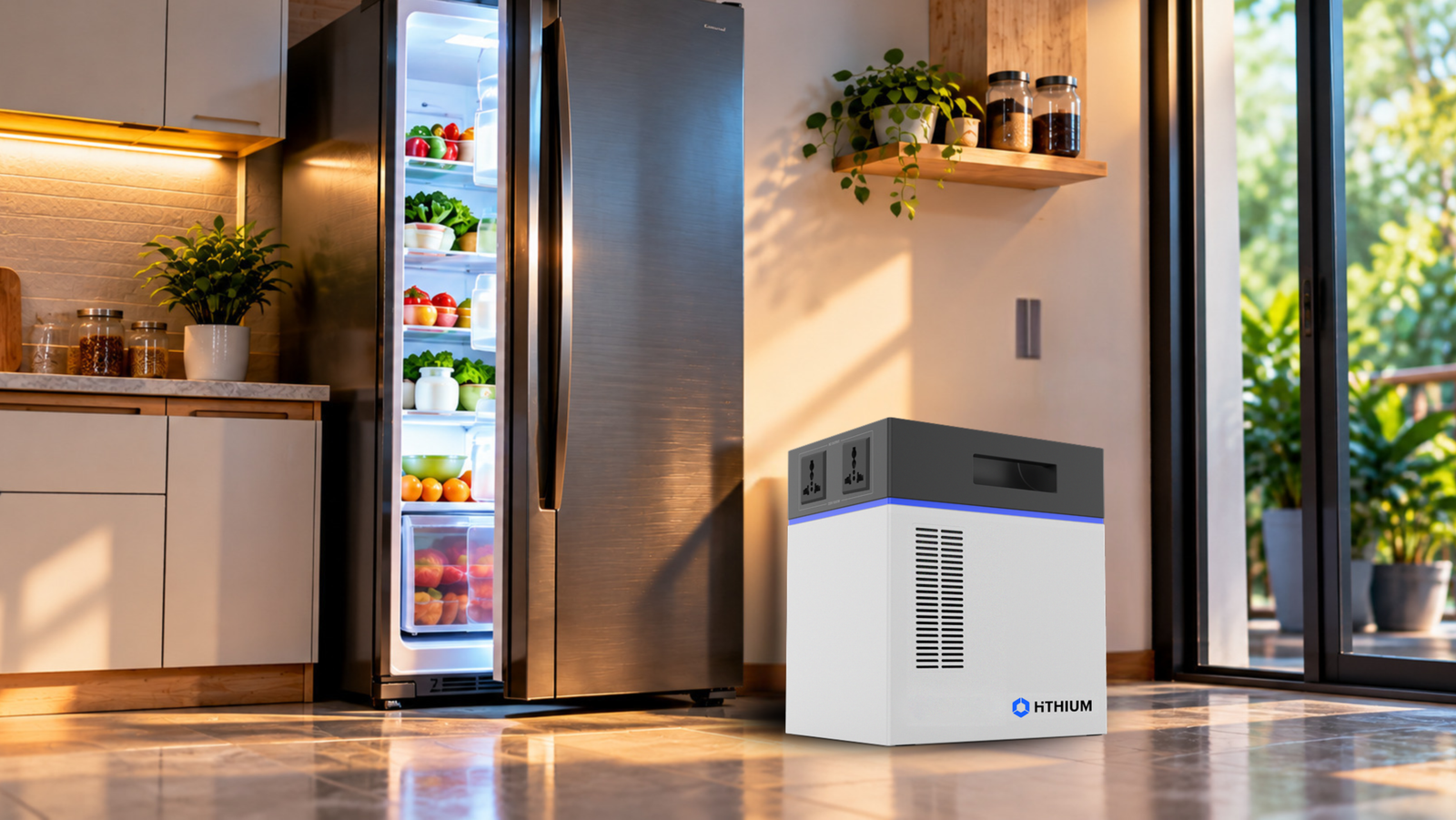
Best IPS for Refrigerator in Bangladesh — Which Capacity Do You Need?
Running a refrigerator on an IPS during load shedding in Bangladesh is not as simple as plugging in a fan or a few lights. Refrigerators — especially those with conventional compressors — draw a massive power surge the moment the compressor kicks on. Choose the wrong IPS capacity and you will either trip the overload protection repeatedly or burn out your fridge motor within months.
This guide explains exactly how to pick the right IPS capacity for your refrigerator in Bangladesh, covering fridge wattage, compressor type, startup surge calculations, and specific IPS recommendations. Whether you have a small 150-litre single-door or a large 350-litre double-door, you will find the right answer here.
Why Running a Refrigerator on IPS Is Tricky
A refrigerator is not a simple resistive load like a light bulb or a fan. It has a compressor motor — and motors are notorious for their high startup power draw. When your fridge compressor kicks on from a cold start, it can draw 3 to 7 times its rated running wattage for the first 1–3 seconds. This is called the startup surge or inrush current.
For example, a fridge rated at 150 watts running power can pull 600–900 watts at startup. If your IPS inverter cannot deliver that peak surge instantly, it shuts down with an overload alarm. Most 650VA and 800VA IPS units sold in Bangladesh simply cannot handle this — even if the math on running watts looks correct.
The good news: inverter compressor refrigerators (now standard in most mid-range Walton, Samsung, and LG fridges in Bangladesh) have a much lower startup surge. These are far easier for an IPS to handle.
Conventional vs Inverter Compressor — Critical Difference for IPS
| Feature | Conventional Compressor Fridge | Inverter Compressor Fridge |
|---|---|---|
| Startup surge | 3–7× rated wattage | 1.2–2× rated wattage |
| IPS stress | High — trips overload often | Low — smooth startup |
| Minimum IPS for 200L fridge | 1500VA | 1000VA |
| Energy efficiency | Lower (5-star = 300–400 kWh/year) | Higher (4-star = 200–280 kWh/year) |
| Common brands in BD (2026) | Older Walton models, local brands | Walton WNE, Samsung Digital Inverter, LG Inverter |
| Price range (BD) | ৳18,000–৳35,000 | ৳30,000–৳80,000+ |
If you are unsure which type your fridge has, check the energy label on the door. Inverter compressor fridges usually display “Digital Inverter”, “Smart Inverter”, or “Variable Frequency Drive” on the nameplate or product manual.
How to Calculate the IPS Capacity You Need for Your Refrigerator
Follow these three steps to pick the correct IPS capacity for your refrigerator in Bangladesh:
Step 1 — Find Your Fridge’s Rated Wattage
Check the back of your refrigerator for a sticker showing voltage, frequency, and wattage (or amperage). Most Bangladeshi fridges run on 220V/50Hz. Common rated wattages:
- 100–150 litre single-door fridge: 80–120 watts
- 200–250 litre double-door fridge: 130–180 watts
- 300–350 litre double-door fridge: 160–250 watts
- Side-by-side (450L+): 250–400 watts
Step 2 — Apply the Startup Surge Multiplier
Multiply the rated wattage by the startup surge factor for your compressor type:
- Conventional compressor: Rated watts × 5 (conservative) = minimum inverter peak capacity
- Inverter compressor: Rated watts × 2 = minimum inverter peak capacity
Example: 160W conventional fridge → 160 × 5 = 800 watts peak. You need an IPS inverter rated for at least 800 watts (≈ 1000VA at 0.8 power factor). Add 20–30% safety margin → use a 1500VA IPS.
Step 3 — Add Other Loads
If you plan to run fans, lights, or a TV alongside the fridge on the same IPS, add those wattages before applying the safety margin.
IPS Capacity Recommendations by Fridge Size — Bangladesh 2026
| Fridge Size | Compressor Type | Avg. Running Watts | Minimum IPS VA | Recommended IPS VA |
|---|---|---|---|---|
| 100–150L single-door | Conventional | 80–100W | 1000VA | 1500VA |
| 100–150L single-door | Inverter | 70–90W | 650VA | 1000VA |
| 200–250L double-door | Conventional | 140–180W | 1500VA | 2000VA |
| 200–250L double-door | Inverter | 120–160W | 1000VA | 1500VA |
| 300–350L double-door | Conventional | 200–250W | 2000VA | 2500VA |
| 300–350L double-door | Inverter | 160–210W | 1500VA | 2000VA |
| 450L+ side-by-side | Inverter | 250–350W | 2000VA | 2500–3000VA |
Key rule: Always size up, not down. A slightly oversized IPS runs cooler, lasts longer, and handles the startup surge without stress. A marginally sized IPS trips on every compressor start — which happens every 15–30 minutes in a Bangladeshi summer.
Why Lithium IPS Is Better for Refrigerators Than Tubular Battery IPS
Standard tubular battery IPS systems are common in Bangladesh, but they have two problems when running refrigerators:
- Voltage sag under load: When a tubular battery is below 60% charge, its voltage drops. This causes the IPS output voltage to fluctuate. Refrigerator compressor motors are sensitive to low voltage — running on 170V instead of 220V stresses the motor winding and shortens the compressor’s life.
- Slow recharge: Tubular batteries charge at C/10 or C/5 rates. After a 4-hour load-shedding session, a tubular battery may need 8–12 hours to fully recharge. If load shedding returns the next morning, your battery is still partly depleted.
LiFePO4 (lithium iron phosphate) IPS, like the HiTHIUM lithium IPS, solves both problems:
- Flat discharge curve: maintains 220V output all the way down to 10% battery charge — no voltage sag for the compressor
- Fast recharge: LiFePO4 charges at 1C rate, meaning a 100Ah battery fully recharges in 1–2 hours when grid power returns
- 11,000+ charge cycles vs 400–600 cycles for tubular batteries
- No watering, no acid fumes, no gas — safe indoors in Dhaka apartments
For a refrigerator that runs continuously and needs reliable, clean power, a lithium IPS is the right long-term investment. See the full comparison in our guide on Lithium IPS vs Tubular Battery.
How Long Will IPS Battery Last Running a Refrigerator?
Runtime depends on three factors: battery capacity (Ah), average fridge wattage, and the battery’s usable depth of discharge.
LiFePO4 Battery Runtime for Refrigerators (Bangladesh)
| Battery Capacity | Usable Energy (LiFePO4, 70% SOH) | 150W avg. fridge runtime | 200W avg. fridge runtime |
|---|---|---|---|
| 50Ah / 12V | ~540Wh | ~3.2 hours | ~2.4 hours |
| 100Ah / 12V | ~1080Wh | ~6.5 hours | ~4.8 hours |
| 150Ah / 12V | ~1620Wh | ~9.5 hours | ~7.2 hours |
| 100Ah / 24V | ~2160Wh | ~13 hours | ~9.5 hours |
For most Dhaka households experiencing 4–6 hours of daily load shedding, a 1500VA lithium IPS with a 100Ah LiFePO4 battery is the sweet spot. It covers a full load-shedding cycle for a 200-litre inverter fridge, with enough margin to also run 2 fans. Learn more about calculating exact runtimes in our IPS Backup Time Calculator guide.
Running Refrigerator + Fans Together on One IPS
Most Bangladeshi families want to keep the fridge running AND have at least one fan during load shedding. Here is how to size an IPS for both:
- 200L inverter fridge (150W avg) + 2 ceiling fans (75W each) = 150 + 150 = 300W → use 1500VA IPS
- 250L conventional fridge (180W avg) + 2 fans (150W) = 330W → use 2000VA IPS
- 250L inverter fridge + 3 fans + LED TV (50W) = 150 + 225 + 50 = 425W → use 2000VA IPS
Rule: Add all running watts, then multiply by 1.5 for safety margin. For conventional compressors, multiply by 2 instead (to cover the startup surge).
Pros and Cons: Running a Refrigerator on IPS in Bangladesh
| Pros | Cons |
|---|---|
| Food stays fresh during load shedding | Requires higher IPS capacity (1500–2000VA) |
| Protects compressor from voltage spikes at grid return | More battery capacity needed = higher cost |
| Lithium IPS provides stable voltage for compressor health | Conventional fridge compressors add overload risk |
| Reduces food wastage during summer load shedding | IPS battery must recharge fully between outages |
| Modern inverter fridges pair excellently with lithium IPS | Initial investment is significant (৳25,000–৳60,000) |
Frequently Asked Questions
Which IPS capacity is best for a single refrigerator in Bangladesh?
For a standard 200–250 litre refrigerator with a conventional compressor, a 1500VA IPS is the minimum safe choice. For inverter compressor fridges (150–250 litres), a 1000VA IPS is sufficient because the startup surge is much lower. Always add a 20–30% headroom above the fridge’s rated wattage.
Can a 650VA or 800VA IPS run a refrigerator in Bangladesh?
No. A standard 650VA or 800VA IPS cannot safely run a refrigerator in Bangladesh. Conventional fridge compressors draw 3–7× their rated wattage on startup. A 150-watt fridge can surge to 700–1000 watts at startup, instantly overloading an 800VA IPS. Use at least 1500VA for conventional compressor fridges.
What is the difference between inverter compressor and conventional compressor fridges for IPS use?
Conventional compressor fridges start with a high power surge (3–7× rated wattage) and run at fixed speed. Inverter compressor fridges start softly, draw lower peak power, and vary speed based on cooling demand. For IPS use, inverter compressor fridges are much safer and allow a smaller IPS capacity — typically 1000VA vs 1500VA for a similar-size fridge.
How long will a lithium IPS run a refrigerator during load shedding in Dhaka?
A 1500VA lithium IPS with a 100Ah LiFePO4 battery can run a 200-litre inverter fridge for 6–8 hours during load shedding. A conventional 250-litre fridge at 180 watts average draw would get 4–5 hours from the same battery. Actual runtime depends on the ambient temperature, fridge load, and how often the compressor cycles.
Is a lithium IPS better than a tubular battery IPS for running a refrigerator in Bangladesh?
Yes. Lithium IPS (LiFePO4) delivers consistent voltage throughout the discharge cycle, which is critical for refrigerator compressors. Tubular battery IPS voltage drops as the battery discharges, causing compressor stress and shorter motor life. LiFePO4 also charges 3× faster — important when grid power is restored after load shedding.
Can I run a refrigerator and fans together on one IPS?
Yes, with the right capacity. A 2000VA lithium IPS can run one 200-litre inverter fridge (150W average) plus 2–3 ceiling fans (75W each) during Dhaka load shedding. Add the wattages and multiply by 1.5 for safety headroom. For a conventional compressor fridge with fans, use at least a 2000VA IPS.
Final Recommendation
For most Bangladeshi households in 2026, here is the practical guidance:
- Small fridge (100–150L, inverter compressor): 1000VA lithium IPS with 50–75Ah LiFePO4 battery
- Standard fridge (200–250L, inverter compressor): 1500VA lithium IPS with 100Ah LiFePO4 battery — this covers the fridge plus 2 fans
- Standard fridge (200–250L, conventional compressor): 2000VA lithium IPS with 100Ah LiFePO4 battery
- Large fridge (300L+, any compressor): 2000–2500VA lithium IPS with 150Ah LiFePO4 battery
If you are upgrading your fridge soon, choose a model with an inverter compressor. You will use a smaller, cheaper IPS and your food will stay safer during the long summer load-shedding periods in Dhaka and Chattogram.
Ready to choose the right IPS for your home? Explore the full HiTHIUM lithium IPS range or visit our shop for current prices and specifications. Have questions about your specific fridge model? Contact HiTHIUM Bangladesh — our team will help you choose the right IPS capacity.
Recommended HiTHIUM Products
Based on your needs, here are the best HiTHIUM lithium IPS and power station options for Bangladesh:
| Product | Capacity | Best For | Price |
|---|---|---|---|
| HiTHIUM HeroEE L12314ES (4kWh) | 4kWh | Medium backup, battery upgrade | ৳74,500 |
| HiTHIUM MaxPower 8 AIO (8kWh) | 8kWh | Large spaces, heavy loads, commercial | ৳2,87,000 |
Free delivery across Bangladesh. WhatsApp us for consultation: Contact HiTHIUM
