




Blog
Portable Power Station vs Wall-Mounted IPS for Bangladesh Homes — Which Is Right for You?

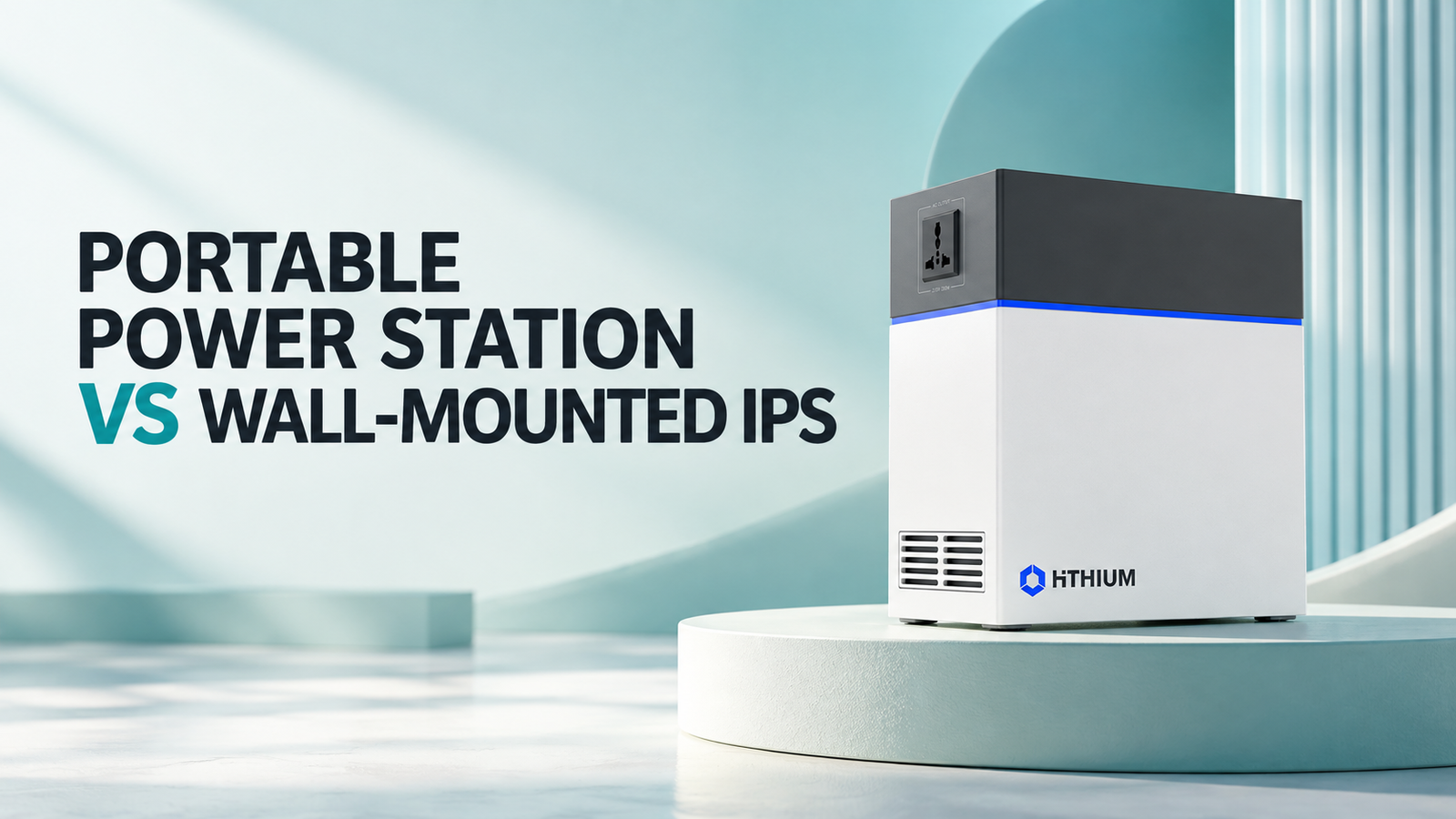
Portable Power Station vs Wall-Mounted IPS for Bangladesh Homes — Which Is Right for You?
Bangladesh faces some of the most frequent and prolonged load shedding in South Asia, with urban areas averaging 4–8 hours of daily power cuts during summer months. Choosing the right backup power solution can mean the difference between a productive home and constant frustration. Two popular options dominate the Bangladeshi market: portable power stations (like the HiTHIUM HeroEE series) and wall-mounted IPS (Intelligent Power Station) units.
Both keep your lights, fans, phones, and essential appliances running during outages — but they serve fundamentally different needs, budgets, and living situations. In this comprehensive guide, we compare portable power stations and wall-mounted IPS systems across capacity, portability, cost, installation, battery lifespan, solar integration, and real-world suitability for Bangladeshi households.
By the end of this article, you’ll have a clear understanding of which solution fits your specific situation — whether you’re renting a Dhaka apartment or managing a suburban home with heavy appliance loads.
What Is a Portable Power Station?
A portable power station is a self-contained, all-in-one battery unit that combines a lithium battery pack, a pure sine wave inverter, a charge controller, and multiple output ports (AC outlets, USB-A, USB-C, and DC car ports) in a single compact enclosure. Think of it as a large, rechargeable power bank you can carry from room to room or take outdoors.
Popular portable power station models available in Bangladesh include the HiTHIUM HeroEE 1 (1kWh), the HeroEE 2 (2kWh), and the high-capacity HeroEE MaxPower 8 AIO (8kWh). These units are designed for plug-and-play operation — no wiring, no professional installation, and no permanent mounting required.
Modern portable power stations in Bangladesh increasingly use LiFePO4 (Lithium Iron Phosphate) chemistry, which offers several advantages over traditional lead-acid batteries: 11,000 charge cycles (compared to 500–1,000 for lead-acid), lighter weight, faster charging, and a typical lifespan of 25+ years with proper maintenance. Many models also feature built-in MPPT solar charge controllers, making solar integration straightforward and efficient.
What Is a Wall-Mounted IPS?
An Intelligent Power Station (IPS) is a wall-mounted inverter-battery combo system designed for permanent residential installation. It typically houses a tubular or lithium battery, a pure sine wave inverter, and a charge controller within a single wall-mounted enclosure. The IPS is wired directly into your home’s electrical circuit, providing automatic backup power to selected rooms or the entire house when the grid fails.
Wall-mounted IPS systems have been the traditional backup power choice in Bangladesh for decades. Major brands include Luminous, HiTHIUM, Prano, and Exide. Most units offer capacities ranging from 1 kVA to 5 kVA, with the 1.5 kVA and 2 kVA models being the most popular for medium-sized homes. Newer lithium-based IPS models are gaining rapid adoption as their prices drop and awareness of long-term savings increases.
The key advantage of a wall-mounted IPS is its ability to provide whole-home backup through hardwired connections. Once installed, it automatically detects grid failure and switches to battery power within 20–50 milliseconds — fast enough to keep your computer, router, and sensitive electronics running without interruption.
Side-by-Side Technical Comparison
| Feature | Portable Power Station | Wall-Mounted IPS |
|---|---|---|
| Capacity Range | 500Wh – 2,000Wh (expandable to 8kWh+ with external batteries) | 1 kVA – 5 kVA (fixed, not easily expandable) |
| Power Output | 200W – 1500W (pure sine wave) | 1,000W – 5,000W (pure sine wave) |
| Portability | High — weighs 8–25 kg, carry handle built in | None — permanently mounted on wall, 20–50 kg |
| Installation Required | None — unbox, charge, plug in | Professional electrician needed, 2–4 hours |
| Battery Chemistry | LiFePO4 (11,000 cycles) | Tubular lead-acid (1,500–2,000 cycles) or LiFePO4 (newer models) |
| Battery Lifespan | 25+ years (LiFePO4) | 3–5 years (tubular lead-acid), 8–10 years (lithium IPS) |
| Noise Level | Silent — zero moving parts, fanless design on many models | Quiet solid-state inverter; some older models produce low hum |
| Solar Integration | Built-in MPPT or external panel via MC4 connector | Requires separate solar charge controller (most standard models) |
| Smart Monitoring | WiFi/Bluetooth app monitoring | Limited — basic LED indicators on most models |
| Price Range (BDT) | ৳33,000 – ৳1,20,000 | ৳25,000 – ৳80,000 |
| Best For | Light loads, portability, apartments, travel, solar enthusiasts | Whole-home backup, heavy appliances, fixed residential use |
| Maintenance | Zero — sealed unit, no servicing required | Tubular: periodic water top-up; Lithium: zero maintenance |
| Warranty | 5 years (HiTHIUM HeroEE series) | 1–2 years (tubular), 2–3 years (lithium IPS models) |
When to Choose a Portable Power Station
Portable power stations excel in specific scenarios where flexibility, silence, and ease of use matter more than raw capacity. Here’s when they make the most sense for Bangladeshi households:
- Renting an apartment or flat — No drilling, no wiring modifications, and no landlord permission required. When you move, simply take the power station with you. This is particularly relevant for young professionals living in Dhaka, Chittagong, or Sylhet apartments where electrical modifications are restricted.
- Light backup needs — If your essential load consists of 3–4 LED lights, 2 ceiling fans, a WiFi router, and phone/laptop charging (total ~200–400W), a 1kWh portable station like the HeroEE 1 provides 5 hours of backup depending on usage patterns.
- Room-by-room flexibility — Move the unit to the bedroom at night for charging and device backup, then roll it to the living room during the day. The HeroEE 1 at just 8.5 kg is easy to carry on its built-in handle.
- Outdoor and emergency use — Picnics, camping trips, religious gatherings (mehfil), or emergency disaster kits. Portable stations are silent and fume-free, making them safe for indoor and outdoor use alike.
- Solar charging enthusiasts — Pair any HeroEE model with HiTHIUM HC200 foldable solar panels for completely off-grid charging. The built-in MPPT controller extracts maximum power from the panels even in cloudy Bangladeshi conditions.
- Work-from-home setups — Keep your laptop, monitor, and router running during load shedding without noise disruption on video calls. The silent operation of LiFePO4 portable stations is ideal for professional environments.
When to Choose a Wall-Mounted IPS
Wall-mounted IPS systems remain the practical choice for many Bangladeshi households, particularly those with higher power demands or long-term ownership plans. Here’s when an IPS makes more sense:
- Whole-home backup — A wall-mounted IPS is wired into your home’s circuit, automatically powering lights, fans, and appliances in every room simultaneously. Portable stations can only power devices you plug directly into them.
- Heavy appliance support — Running a refrigerator (150–250W), a 1-ton AC (900–1,200W), a water pump (500–800W), or a microwave requires 1.5–3 kVA minimum continuous output. Most portable stations under 2kWh cannot sustain these loads for extended periods.
- Long-term cost efficiency — A quality lithium wall-mounted IPS costs less upfront than a comparable portable station and delivers lower total cost of ownership over 5+ years, especially when compared to tubular battery replacement cycles.
- Fixed residential use — If you own your home and plan to stay long-term, a permanently installed IPS provides “set it and forget it” reliability without needing to manually move or reposition equipment.
- Budget-conscious buyers — Entry-level tubular IPS units start around BDT 25,000, making them accessible for budget-conscious families who prioritize basic backup over portability features.
Real-World Load Scenarios in Bangladesh
Scenario 1: Small Apartment (1–2 BHK, Dhaka or Chittagong)
Typical essential load: 4 LED bulbs (40W each) + 2 ceiling fans (75W each) + WiFi router (10W) + 2 phone chargers (10W) = ~330W
Runtime analysis:
- HiTHIUM HeroEE Light 1 (1kWh): ~2.5–3 hours at full 330W load; 5 hours at reduced 150W load (fans off, lights only)
- 1.5 kVA wall-mounted tubular IPS with 150Ah battery: 4–6 hours for the same load
Recommendation: The HeroEE 1 at BDT ~৳33,725 is ideal for small apartments. It’s portable, silent, requires no installation, and handles light loads efficiently. If you need whole-home coverage, consider a 1.5 kVA lithium IPS instead.
Scenario 2: Medium House (3 BHK with Refrigerator)
Typical essential load: 6 LED bulbs + 3 ceiling fans + 1 refrigerator (150W average, 400W startup) + LED TV (60W) + WiFi router = ~600W
Runtime analysis:
- HiTHIUM HeroEE 2 (2kWh): ~2.5–3 hours at 600W load; 3 hours at 300W reduced load
- 1.5 kVA wall-mounted lithium IPS with 100Ah battery: 6–8 hours for the same load
Recommendation: The HeroEE 2 at BDT ~৳75,000–85,000 is excellent if portability and smart monitoring matter. For continuous whole-home backup with lower runtime concerns, a 1.5–2 kVA wall-mounted lithium IPS offers better value at BDT ~৳55,000–70,000.
Scenario 3: Large House with Air Conditioning
Typical essential load: 8 LED bulbs + 4 ceiling fans + 1 AC (1 ton, 900W running / 1,400W startup) + refrigerator + lights = ~1,500W+
Runtime analysis:
- Most portable stations under 2kWh cannot run a 1-ton AC sustainably — the startup surge alone (1,400W+) exceeds their continuous output rating
- HiTHIUM HeroEE MaxPower 8 AIO (8kWh, 5kVA): Can run 1 AC + refrigerator + lights simultaneously for 2 hours
- 3 kVA wall-mounted lithium IPS: Runs AC + fridge + lights for 2.5 hours
Recommendation: For homes requiring AC backup, the HeroEE MaxPower 8 AIO is a compelling portable option that bridges the gap between portable convenience and whole-home capacity. Alternatively, a dedicated 3 kVA wall-mounted lithium IPS is the most cost-effective solution for permanent AC backup.
Scenario 4: Home Office / Work-from-Home Setup
Typical essential load: Laptop (65W) + monitor (40W) + WiFi router (10W) + desk lamp (15W) + phone charger = ~130W
Runtime: A 1kWh portable station provides 6–7 hours of uninterrupted work — easily covering a full workday.
Recommendation: The HeroEE 1 is practically purpose-built for this use case. Its silent operation won’t disrupt video calls, and the built-in USB-C PD port can fast-charge laptops directly. At BDT ~৳33,725, it’s one of the best work-from-home investments a Bangladeshi professional can make.
Cost Analysis: 5-Year Total Ownership
| Cost Item | Portable Power Station (2kWh LiFePO4) | Wall-Mounted IPS (1.5 kVA + Lithium Battery) | Wall-Mounted IPS (1.5 kVA + Tubular Battery) |
|---|---|---|---|
| Upfront Equipment Cost | ৳33,000– ৳78,100 | ৳55,000 – ৳70,000 | ৳35,000 – ৳45,000 |
| Installation Cost | ৳0 (plug and play) | ৳2,000 – ৳5,000 | ৳2,000 – ৳5,000 |
| Maintenance (5 years) | ৳0 (sealed, no servicing) | ৳0–৳2,000 (occasional firmware update) | ৳5,000 – ৳15,000 (water top-up, terminal cleaning, possible acid replacement) |
| Battery Replacement (5 years) | None (LiFePO4 rated 8–10 years) | None (lithium rated 8–10 years) | ৳12,000 – ৳18,000 (tubular battery replacement at year 3–4) |
| Solar Panel Addition (optional) | ৳15,000 – ৳25,000 (100–200W foldable panel) | ৳15,000 – ৳25,000 (rigid panel + charge controller) | ৳15,000 – ৳25,000 (rigid panel + charge controller) |
| Total 5-Year Ownership Cost | ৳33,725 – ৳80,000 (with solar) | ৳57,000 – ৳75,000 (with solar: ৳72,000 – ৳1,00,000) | ৳52,000 – ৳63,000 (with solar: ৳67,000 – ৳88,000) |
Key insight: While portable power stations have a higher upfront cost, their zero-maintenance, zero-replacement 5-year ownership cost makes them competitive with tubular IPS systems. Against lithium wall-mounted IPS units, portable stations are slightly more expensive but offer unmatched flexibility and smart monitoring capabilities.
Solar Integration: Both Solutions, Different Approaches
Bangladesh receives an average of 4–5 peak sun hours daily, making solar integration highly viable for both portable and wall-mounted backup systems.
Portable power stations like the HeroEE series feature built-in MPPT (Maximum Power Point Tracking) charge controllers with MC4 solar input ports. Simply connect a compatible solar panel (60W–200W) and the unit automatically optimizes charging regardless of cloud cover or angle. The HiTHIUM HC200 200W foldable panel pairs perfectly with HeroEE units — it folds to suitcase size for easy storage and provides up to 800Wh of daily charging in ideal Bangladesh sunlight.
Wall-mounted IPS units typically require a separate solar charge controller (MPPT or PWM) and careful wiring between the panel, controller, and battery. This adds complexity, cost (৳3,000 – ৳8,000 for a quality MPPT controller), and potential points of failure. However, the HeroEE MaxPower 8 AIO integrates solar charging internally, offering the best of both worlds: wall-mounted convenience with plug-and-play solar compatibility.
Frequently Asked Questions
Can a portable power station run a refrigerator during load shedding?
Yes — most 1kWh+ portable power stations can run a standard household refrigerator (100–200W running wattage, 400–600W startup surge) for 3.5 hours depending on the model and fridge efficiency. The HeroEE 2 (2kWh) handles refrigerators comfortably with 6.5 hours of runtime. Always check your refrigerator’s wattage label (usually on the back or inside compartment) before purchasing a portable station to ensure adequate capacity.
Is a portable power station safer than a wall-mounted IPS for homes with young children?
Portable power stations have no exposed wiring, no wall mounting hardware, and comprehensive built-in protections against overcharge, overdischarge, short circuit, and overheating. They are generally safer for homes with young children compared to wall-mounted IPS units that require exposed circuit connections and higher-voltage wiring. However, always place portable units on stable, dry, elevated surfaces away from direct sunlight and keep them out of reach of toddlers to prevent tipping.
Can I use solar panels with a wall-mounted IPS system?
Yes, but most standard wall-mounted IPS units require a separate solar charge controller (MPPT recommended for efficiency) and careful electrical wiring between the solar panel array, controller, and battery. This adds ৳3,000 – 8,000 to the total cost and requires professional installation. The HeroEE MaxPower 8 AIO integrates solar charging internally with built-in MPPT, making it truly plug-and-play with solar panels — ideal for Bangladeshi homeowners who want solar backup without complex electrical work.
Which option performs better during Bangladesh’s monsoon season?
Both solutions perform reliably in humid monsoon conditions, but portable power stations have a distinct advantage: they can be moved indoors to dry, elevated locations during floods. Wall-mounted IPS units are fixed to walls — if your ground floor floods, the unit and its wiring may be damaged. During monsoon season (June–September), keep a portable station on an upper floor as emergency backup, and ensure your wall-mounted IPS is installed at least 1.5 meters above floor level with proper waterproofing.
Do I need a licensed electrician to install a portable power station?
No. Portable power stations require zero installation — simply unbox, charge via wall outlet or solar panel, and plug in your devices. This makes them ideal for renters, apartment dwellers, and anyone who wants backup power without modifying their home’s electrical system. Many Bangladeshi rental agreements explicitly prohibit electrical modifications, making portable stations the only legal backup option for those tenants.
How long does a portable power station take to recharge from empty?
From a standard 220V wall outlet, a 1kWh portable station takes approximately 1.5–2.5 hours to fully charge, while a 2kWh unit takes 3–4 hours. Solar charging times depend on panel wattage and sunlight conditions — a 200W panel in full Bangladesh sun (4–5 peak hours) can fully charge a 1kWh unit in 2–3 hours or a 2kWh unit in 4–6 hours. The HeroEE series includes smart charging algorithms that optimize charge speed while protecting battery longevity.
What happens when the portable power station battery degrades over time?
LiFePO4 batteries retain approximately 80% of their original capacity after 3,000 full charge cycles and 70% after 11,000 cycles. For a Bangladeshi household averaging one discharge cycle per day during load shedding season, this translates to 8–10 years of useful service before noticeable capacity reduction. Unlike tubular batteries that swell and lose capacity rapidly in Bangladesh’s heat, LiFePO4 cells are thermally stable and maintain performance even at 40°C+ ambient temperatures.
Energy Efficiency: Which Option Waste Less Power?
Both portable power stations and modern IPS units use pure sine wave inverters, which are highly efficient (90–95% conversion efficiency). However, there are subtle differences in standby power consumption:
- Portable power stations: Typically draw 1–3W in standby mode (display off). The HeroEE series can be put into deep sleep mode, drawing less than 0.5W — virtually zero waste over months of idle time.
- Wall-mounted IPS: Draw 5–15W in standby mode continuously, as the inverter circuit remains active 24/7 monitoring grid status. Over a year, this translates to 44–131 kWh of “hidden” electricity loss — roughly BDT 300–900 annually at Bangladesh electricity rates.
For energy-conscious households, portable power stations offer a slight efficiency advantage, particularly during extended grid-available periods when the unit sits idle.
Final Verdict: Which Should You Buy in 2026?
Choose a portable power station if:
- You live in a rented apartment or flat where electrical modifications are prohibited
- Your essential backup load is under 500W (lights, fans, router, phones)
- You value silence, portability, and smart app monitoring
- You want plug-and-play solar integration without extra controllers
- You need backup for work-from-home, outdoor activities, or emergency preparedness
- Budget allows BDT 33,725–90,000 for the unit
Choose a wall-mounted IPS if:
- You own your home and want permanent, whole-house backup coverage
- You need to run heavy appliances like ACs, water pumps, or microwaves
- You prioritize lowest upfront cost (tubular IPS starting at BDT 25,000)
- You prefer a “set it and forget it” solution with automatic transfer switching
- You have dedicated space for wall mounting and professional installation
Need personalized guidance? Visit our shop page to compare all HeroEE models side by side, read customer reviews, and check current pricing. Our team is available at +8801788-686788 for expert advice tailored to your specific home and budget. Free delivery across Dhaka; showroom visits welcome at our Banani location.
